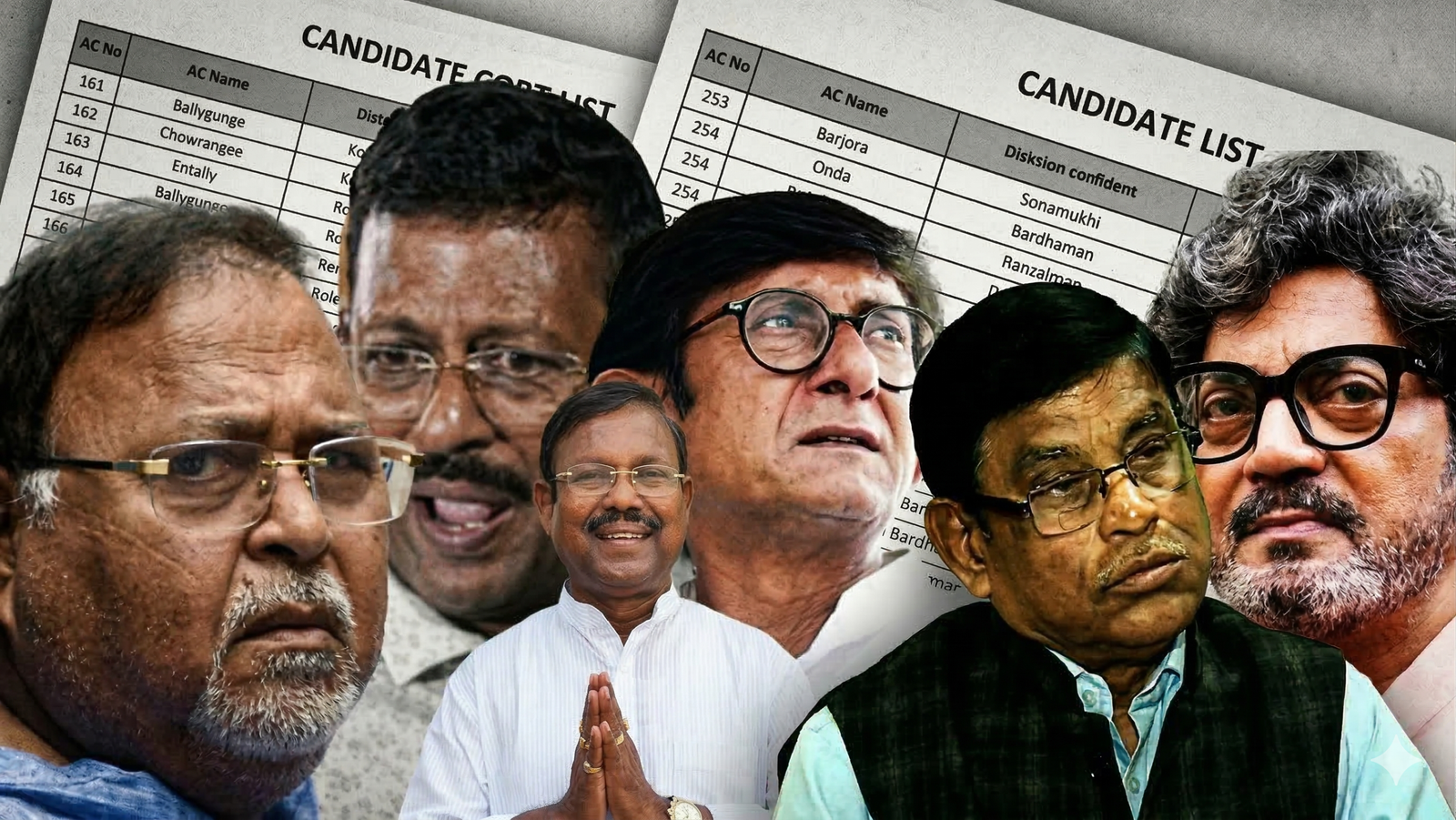
The 2026 West Bengal Assembly election candidate list released by the All India Trinamool Congress (TMC) signals what many political analysts describe as a strategic, high-stakes attempt by the party to “clean house” ahead of a challenging third-term defence. With the Election Commission of India announcing a two-phase poll on April 23 and 29, Mamata Banerjee has opted to drop 74 sitting MLAs—nearly one-third of the party’s current strength. Observers note that this move appears to balance political survival with a need to distance the party from recent controversies.
According to several political commentators, the most striking feature of the 2026 list is the removal of leaders whose names were associated with the “School Service Commission (SSC) recruitment scam.” This is widely interpreted as an attempt to neutralize a key line of attack from the Opposition. The party has effectively sidelined several of its former heavyweights:
Partha Chatterjee (Behala Paschim): The former Education Minister and once the party’s second-in-command is the most high-profile omission. Following his arrest and the recovery of significant cash and assets from associates, his removal was seen as strategically inevitable. The party has replaced him with Ratna Chatterjee, who has been shifted from Behala Purba, while Subhasish Chakraborty has been fielded from her former seat.
Manik Bhattacharya (Palashipara): The former President of the West Bengal Board of Primary Education, another central figure in the recruitment controversy, has been denied a ticket. The party has fielded Rukbanur Rahaman from the seat, in what analysts see as an attempt to project a fresh start in the constituency.
Jiban Krishna Saha (Burwan): Following his arrest and the widely reported incident involving the disposal of mobile phones during a CBI raid, Saha has been dropped. The seat will now be contested by Protima Rajak, a former Congress leader—a move seen as a tactical effort to strengthen the party’s image in Murshidabad.
In a move that has sparked debate among analysts, Jyotipriya Mallick (Balu) has been retained as the candidate for Habra despite his arrest in the multi-crore ration distribution scam. While earlier reports suggested he might be replaced, the final list continues to feature his name. Analysts believe this may be a strategic decision to retain his influence in North 24 Parganas, where his organisational grip remains significant.
The party has also sidelined several veterans, a move described by some as making way for a more media-savvy younger guard:
Paresh Paul (Beleghata): The three-term veteran has been replaced by Kunal Ghosh. Analysts believe this marks a shift in the constituency, with the party opting for a more articulate public defender of its policies.
Swarna Kamal Saha (Entally): The veteran leader has been replaced by his son, Sandipan Saha, who will be making his electoral debut.
Kanchan Mallick (Uttarpara): The actor-turned-politician has been denied a ticket. The party has instead fielded Sirsanya Bandyopadhyay, daughter of Kalyan Banerjee and a practising lawyer.
The list also reflects a strategic reshuffling of senior leaders to constituencies considered more politically significant:
Sovandeb Chattopadhyay: The veteran leader will now contest from Ballygunge, a seat vacated by Babul Supriyo, who is reportedly being moved to the Rajya Sabha.
Aroop Biswas (Tollygunge): Despite public backlash and his resignation as Sports Minister in late 2025, Biswas has been retained in his stronghold. Analysts point to his enduring influence and strong “Tollywood connect” as factors behind his continued candidature.
This development comes at a time when the Election Commission of India is scrutinising nearly 60 lakh “doubtful” voter cases in West Bengal. With over 58 lakh names already deleted from the draft rolls—the highest in the state’s history—the TMC’s 2026 strategy extends beyond candidate selection to navigating a significantly altered voter landscape. By dropping several controversial figures, the party appears to be betting that a “cleaner” slate can help counter anti-incumbency and mounting investigative pressure from central agencies.