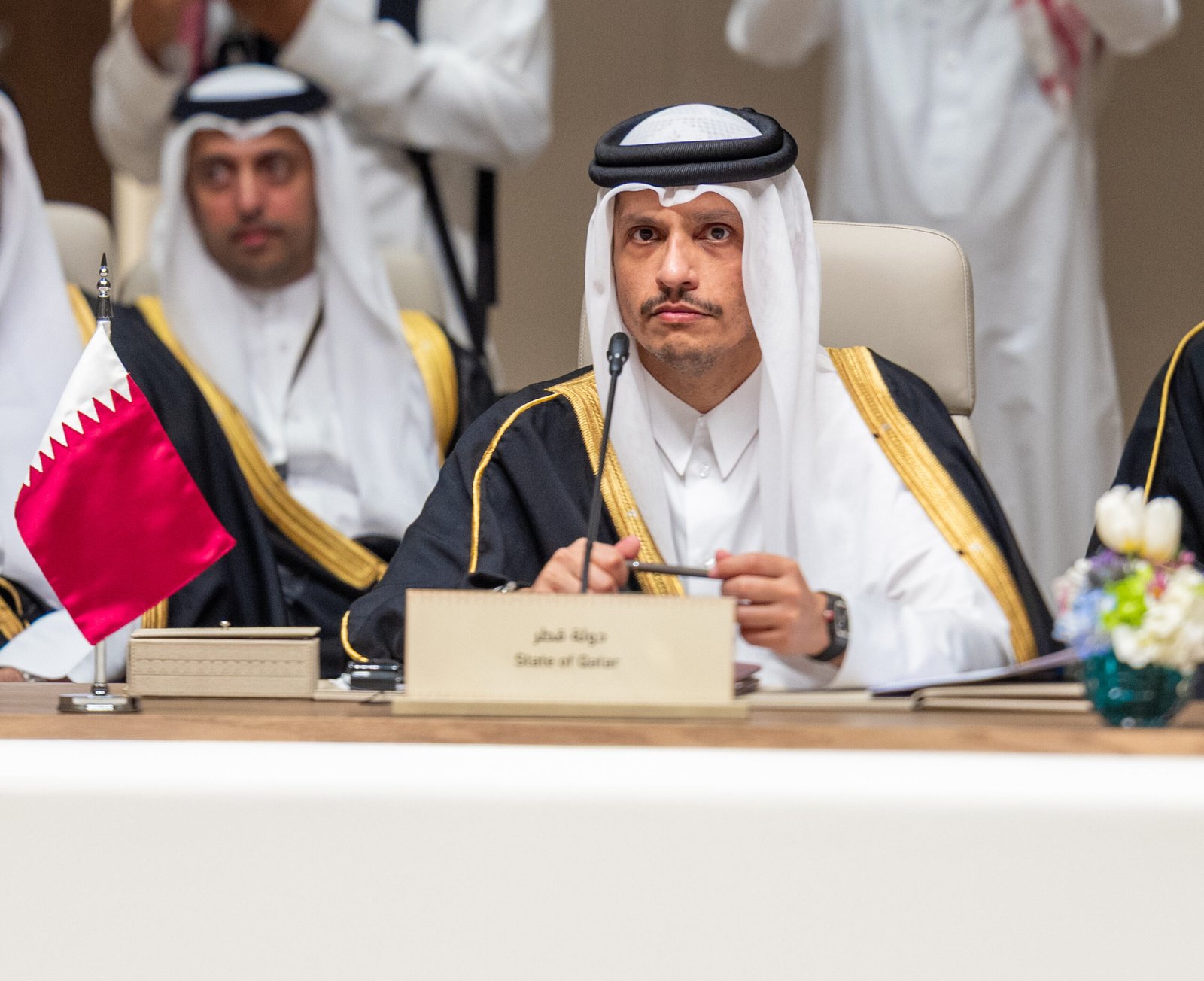
In a significant diplomatic show of unity amid rising tensions in the Middle East, senior leaders and foreign ministers from across the Arab and Islamic world convened in Riyadh to address the growing threat posed by Iran’s recent military actions.
Among the key participants was Sheikh Mohammed bin Abdulrahman bin Jassim Al-Thani, who joined the Consultative Ministerial Meeting alongside counterparts from Saudi Arabia, Azerbaijan, Jordan, the United Arab Emirates, Bahrain, Pakistan, Türkiye, Syria, Kuwait, Lebanon, and Egypt.

The high-level meeting, convened by Saudi Arabia, focused on Iran’s escalating missile and drone strikes and the urgent need for coordinated regional action to safeguard stability.
In a strongly worded joint statement, the participating nations condemned Iran’s attacks as a clear violation of sovereignty and international law, holding Tehran fully responsible for the resulting losses. The coalition called for an immediate and unconditional cessation of aggression, urging Iran to comply with relevant United Nations Security Council resolutions.
Joint Statement Issued by the Consultative Ministerial Meeting of the Foreign Ministers of a Group of Arab and Islamic Countries Regarding the Iranian Attacks
Riyadh | 19 March 2026
Their Highnesses and Excellencies the Ministers of Foreign Affairs of the State of Qatar, The… pic.twitter.com/Eik3eqtdlA
— Ministry of Foreign Affairs – Qatar (@MofaQatar_EN) March 19, 2026
The statement further warned of the broader implications of Iran’s actions, highlighting the dangers of supporting militias and undermining regional security frameworks. It stressed that continued violations of the principles of good neighborliness and respect for national sovereignty could have serious consequences not only for regional stability but also for Iran itself.
Leaders underscored that such actions risk isolating Iran diplomatically, casting a shadow over its relations with neighboring countries and their populations. The joint message made it clear that regional powers would not remain passive in the face of threats to their security and sovereignty.
The Riyadh meeting reflects a growing consensus among Arab and Islamic nations to adopt a unified and firm stance, combining diplomatic pressure with strategic coordination to prevent further escalation in an already volatile region.