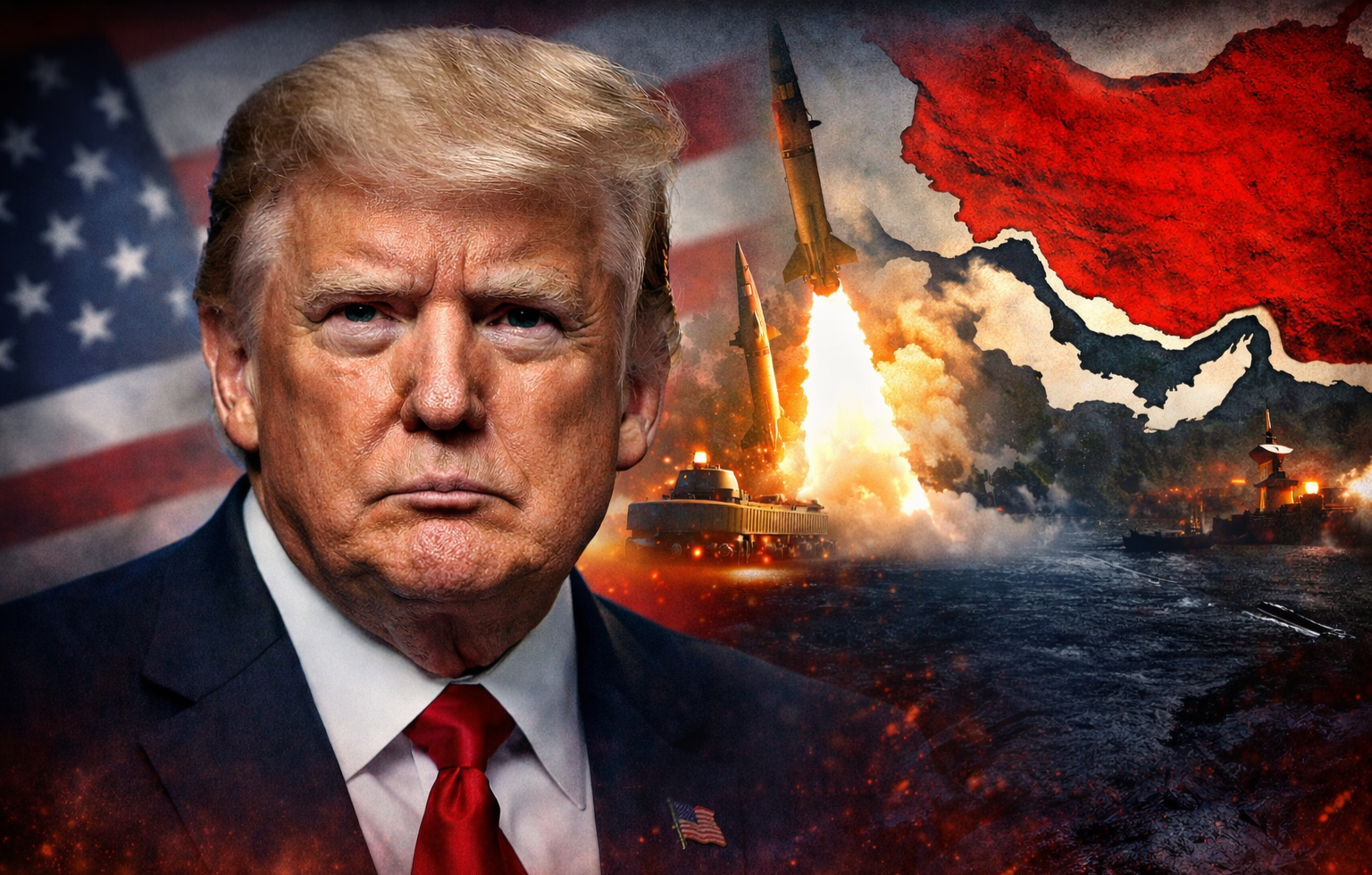
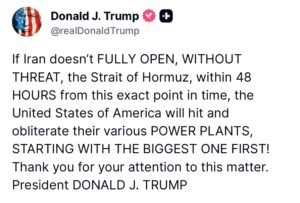
U.S. President Donald Trump has reportedly issued a stark 48-hour ultimatum to Iran, demanding the full and unconditional opening of the Strait of Hormuz. In a strongly worded statement, Trump warned of severe consequences, including targeted strikes on Iran’s power infrastructure, if the demand is not met within the stipulated timeframe.
The statement, which has triggered widespread global concern, emphasizes that the Strait of Hormuz—one of the world’s most critical oil transit chokepoints—must remain fully operational and free from any threats or restrictions. Any disruption in the passage is likely to have significant implications for global energy markets and geopolitical stability.
The Strait of Hormuz is a vital maritime route through which a large portion of the world’s oil supply is transported daily. Any blockage or disruption could lead to sharp spikes in global oil prices, supply chain disruptions, and heightened tensions across international markets.
Trump’s ultimatum comes amid already heightened tensions in West Asia, with concerns growing over potential military escalation between the United States and Iran. Analysts warn that such rhetoric could further destabilize the region and prompt retaliatory actions.
International observers and diplomatic channels are closely monitoring the situation, urging restraint and dialogue to prevent further escalation.
Financial markets have reacted cautiously to the developments, with energy traders closely watching the situation. Any military conflict in the region could have a cascading effect on global economies, especially those heavily dependent on oil imports.