Global concerns are mounting as tensions in the Middle East intensify following reported strikes near key nuclear-linked sites, including Iran’s Natanz Enrichment Complex and the Israeli city of Dimona, home to a sensitive nuclear installation.
The International Atomic Energy Agency confirmed it is closely monitoring the incidents reported in southeastern Iran and Dimona. Importantly, no abnormal or elevated off-site radiation levels have been detected so far, offering some immediate reassurance amid escalating fears.
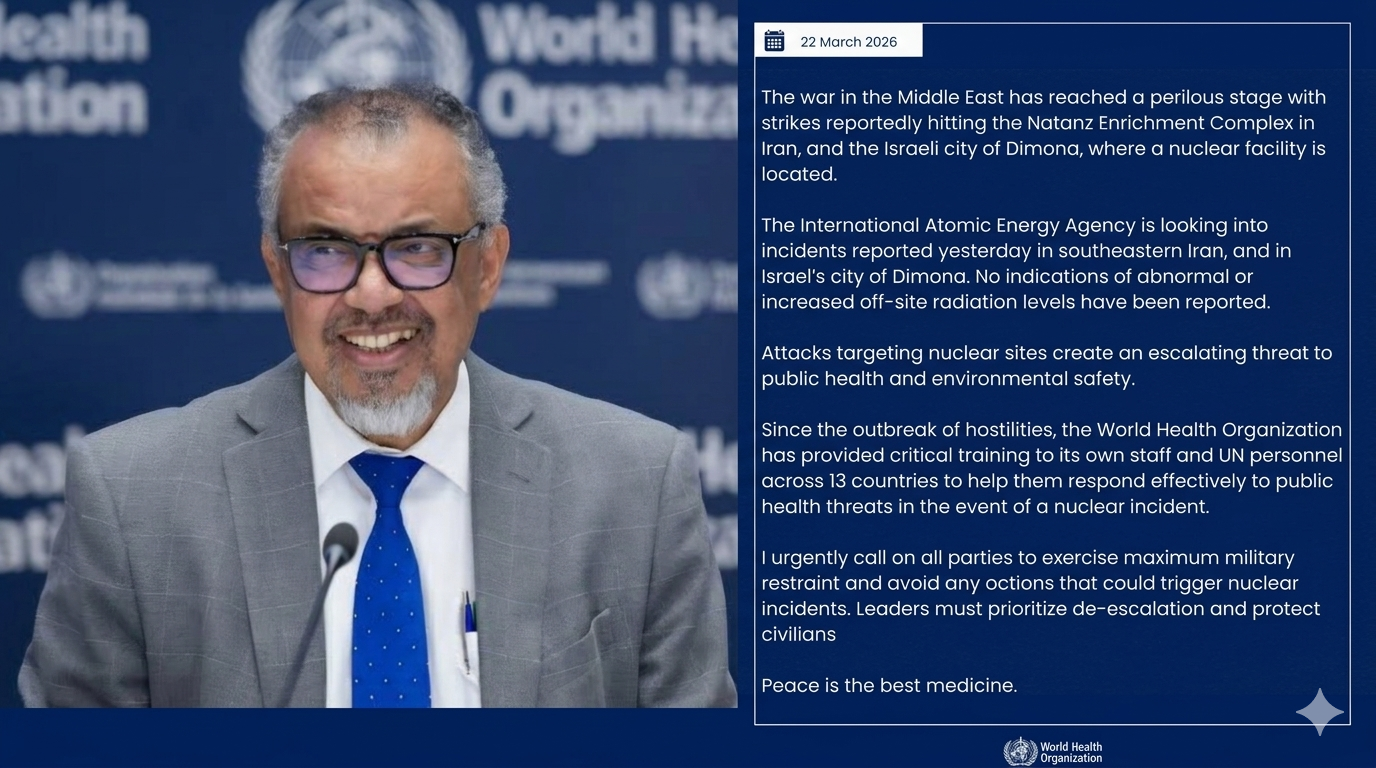
Amid the growing crisis, World Health Organization Director-General Tedros Adhanom Ghebreyesus issued a strong appeal for restraint, warning of the grave risks associated with military actions targeting nuclear facilities.
“Attacks on such sites pose a serious threat to public health and environmental safety,” he stated, emphasizing the potentially catastrophic consequences of any nuclear incident in an already volatile region.
Since the onset of hostilities, the WHO has proactively trained its personnel and United Nations staff across 13 countries to respond effectively to potential public health emergencies stemming from nuclear-related incidents. This preparedness effort underscores the seriousness with which global health authorities are treating the situation.
Tedros urged all parties involved to exercise maximum military restraint and prioritize de-escalation, stressing the need to safeguard civilian populations from the far-reaching impacts of conflict.
“Leaders must act responsibly to avoid triggering a nuclear crisis. Peace is the best medicine,” he added.
As geopolitical tensions continue to rise, the international community remains on high alert, closely watching developments that could have far-reaching consequences for regional stability, environmental safety, and global public health.