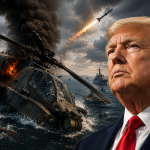
In a fresh escalation of rhetoric amid ongoing geopolitical tensions, U.S. President Donald Trump has publicly questioned the status and legitimacy of Iran’s newly announced Supreme Leader Mojtaba Khamenei, stating that he is “unavailable” and that “nobody knows what happened to him.”
JUST IN: 🇺🇸🇮🇷 President Trump says Iran’s Supreme Leader Mojtaba Khamenei is “unavailable,” adding “nobody knows what happened to him”
I don't consider him the leader. pic.twitter.com/FAV369MFIO
— Donald J Trump Posts TruthSocial (@TruthTrumpPost) March 23, 2026
Speaking in the context of evolving U.S.-Iran negotiations, Trump said he does not recognize Mojtaba Khamenei as Iran’s leader, describing him as “a lightweight” and “unacceptable.” He further indicated that Washington is instead engaging with what he termed a “top person” within the Iranian establishment, suggesting a possible shift in diplomatic channels.
The controversy follows the dramatic developments earlier this month, when Mojtaba Khamenei was announced as Iran’s third Supreme Leader on March 8, succeeding his father Ali Khamenei. The leadership transition came in the aftermath of a reported U.S.-Israeli airstrike on February 28 that allegedly resulted in the assassination of Ali Khamenei—an incident that has significantly heightened tensions across West Asia.
Trump also issued a stark warning, stating that if ongoing negotiations fail to yield results, the United States could resume military operations, including potential strikes on Iranian infrastructure. The remarks underscore the fragile state of diplomacy and the high stakes involved in the region.
The situation remains fluid, with uncertainty surrounding Iran’s internal leadership dynamics and the direction of U.S.-Iran engagement. Analysts suggest that conflicting narratives and limited official clarity from Tehran are contributing to global speculation and market unease.
As the geopolitical landscape continues to evolve, the international community is closely monitoring developments, particularly given their implications for regional stability, energy markets, and global security