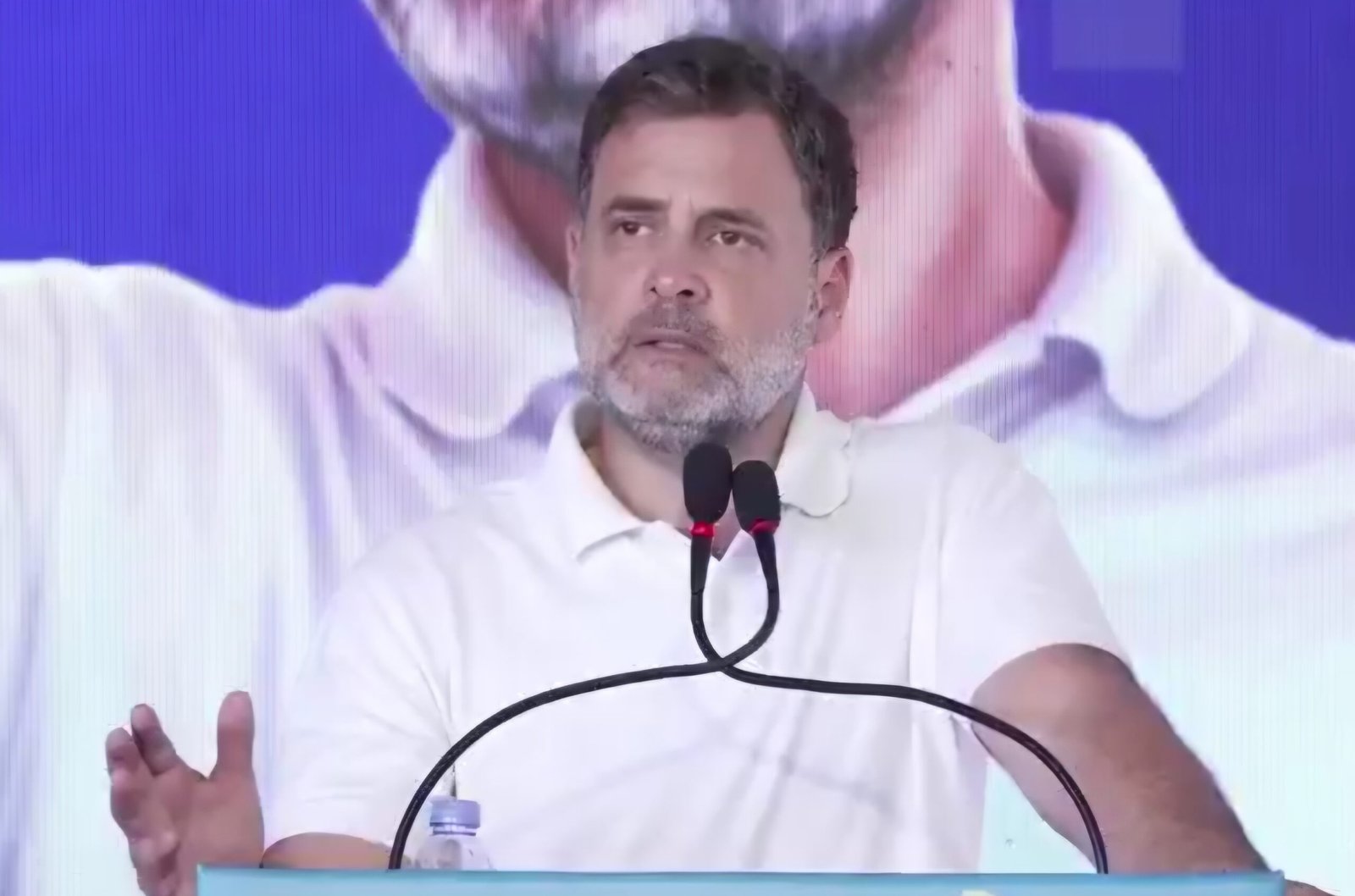
Thrissur, Keralam — Leader of Opposition Rahul Gandhi launched a scathing attack on both the CPM leadership in Keralam and the central leadership of the BJP during a public rally in Thrissur.
Emphasising the importance of people-centric governance, Rahul Gandhi stated that true leadership lies in recognising the wisdom of citizens and working alongside them. He highlighted the legacy of veteran Congress leaders like K. Karunakaran, Oommen Chandy, and A. K. Antony as examples of inclusive and responsive leadership, asserting that this is the model proposed by the UDF.
Narendra Modi treats his colleagues very badly. He has no rights to humiliate senior BJP leaders like this.
Narendra Modi and Amit Shah believe they're meant to rule the country.
This mentality is playing havoc with our country. It's leading to governments that don't listen… pic.twitter.com/1qMIZT5Fuy
— Congress (@INCIndia) April 6, 2026
Taking aim at the ruling CPM government, he criticised billboards across Keralam featuring the Chief Minister with the slogan “Who else?”, calling it an insult to the people of the state. He remarked that no single individual has the exclusive right to govern Keralam and urged the Chief Minister to withdraw the campaign, stating that it undermines the dignity and capability of every Keralite.
Rahul Gandhi also extended his criticism to the national leadership of the BJP, targeting Narendra Modi and Amit Shah. He alleged that their leadership style promotes a mindset of centralised power and disregard for democratic values. He further claimed that such an approach results in governments that fail to listen to citizens and act without adequate understanding.
Leaders must understand that the wisdom is in the people, and a leader's job is to understand this wisdom and work with the people of this country.
There are examples of such leadership in the UDF. K Karunakaran's legacy, Oommen Chandy's legacy, and A K Antony's legacy are… pic.twitter.com/LKfuxP636j
— Congress (@INCIndia) April 6, 2026
Drawing parallels, he also mentioned Himanta Biswa Sarma, accusing him of representing a similar political mindset. Gandhi concluded by warning that this style of governance poses a threat to democratic institutions and the participatory nature of Indian politics.