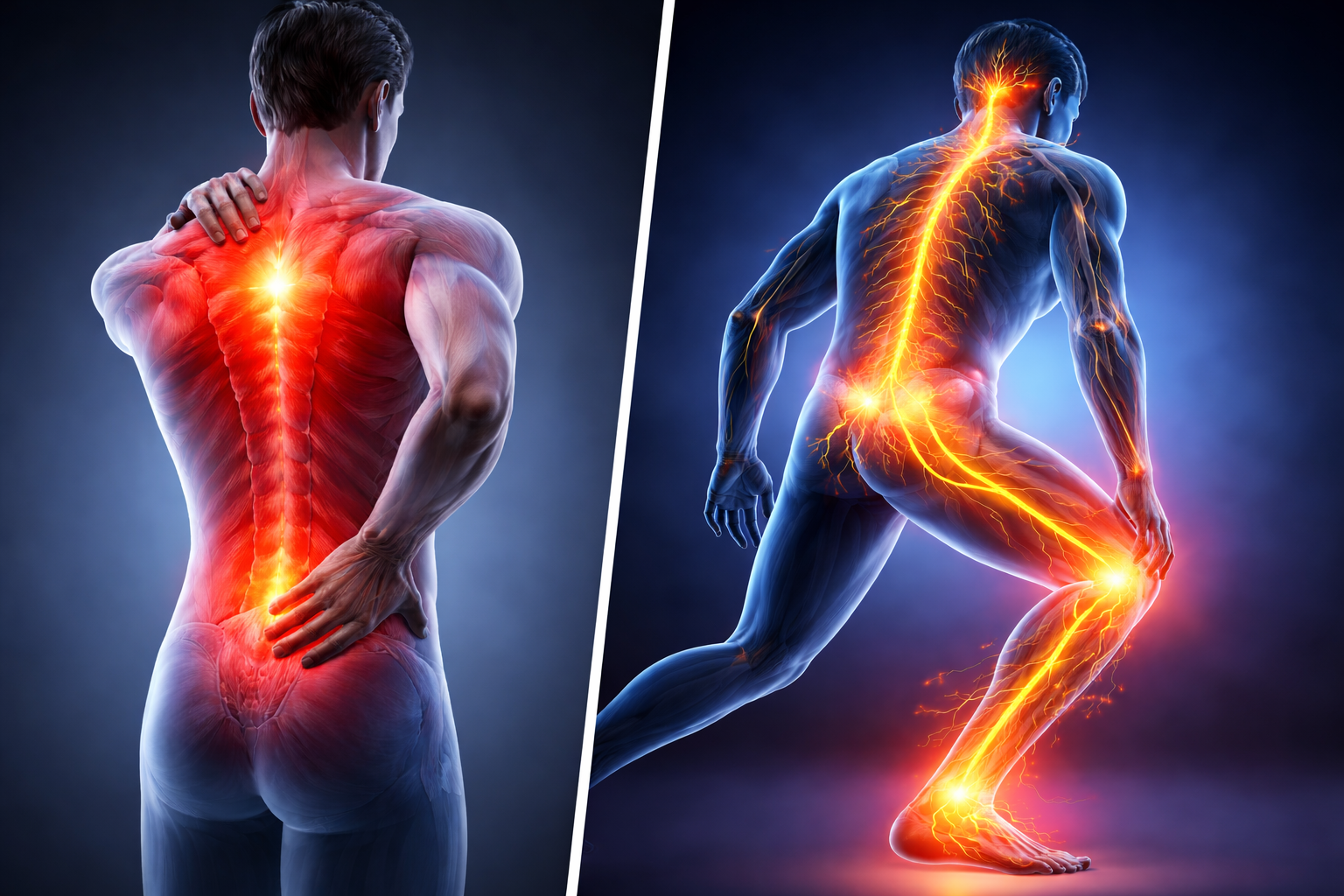
Understanding how to identify different types of pain can help you find the right cause and treatment faster.
Whenever you experience discomfort in the body, identifying the type of pain is important to understand its root cause and choose the right treatment. Pain can arise from various sources, including organs, muscles, or nerves. Knowing the difference between muscle pain and nerve pain comes down to how it feels, where it occurs, and what triggers or relieves it.
In an interview with HT Lifestyle, Dr Abhay Nene, Consultant Spine Surgeon associated with WeAreSpine, Lilavati Hospital, Breach Candy Hospital, and HN Reliance, explained how to distinguish between the two.
What Does Muscle Pain Feel Like?
Muscle pain, medically known as myalgia, is commonly caused by overexertion, minor injuries, or inflammation.
- Usually felt in a specific, localised area
- Described as a dull, aching pain
- Worsens with movement
- Improves with rest
According to Dr Nene, muscle pain follows a predictable pattern and is often familiar, making it easier to recognise.
What Does Nerve Pain Feel Like?
Nerve pain, or neuropathy, feels very different from muscle pain and is often less predictable.
- Starts with tingling or “pins and needles” sensation
- May include burning or sharp pain
- Often begins in hands or feet and spreads upward
- Can be accompanied by numbness
Unlike muscle pain, nerve pain does not stay in one place and may travel along the nerve pathways.
Common Causes of Nerve Pain:
Nerve pain can result from a variety of conditions, including:
- Diabetes and peripheral neuropathy
- Vitamin deficiencies, especially Vitamin B12
- Chronic lifestyle-related conditions
Dr Nene noted that Vitamin B deficiency can sometimes mimic nerve pain symptoms, making diagnosis tricky.
Key Differences at a Glance:
- Location:
Muscle pain is localised; nerve pain spreads. - Sensation:
Muscle pain feels dull and throbbing; nerve pain feels tingling or burning. - Triggers:
Muscle pain worsens with movement; nerve pain may persist regardless of activity.
Why It Matters:
Understanding whether your pain is muscle- or nerve-related is essential for proper treatment. While muscle pain is often temporary and resolves with rest, nerve pain may indicate underlying health issues that require medical attention.
Disclaimer:
This content is intended for informational purposes only and should not be considered medical advice. Please consult a qualified healthcare professional for diagnosis and treatment.