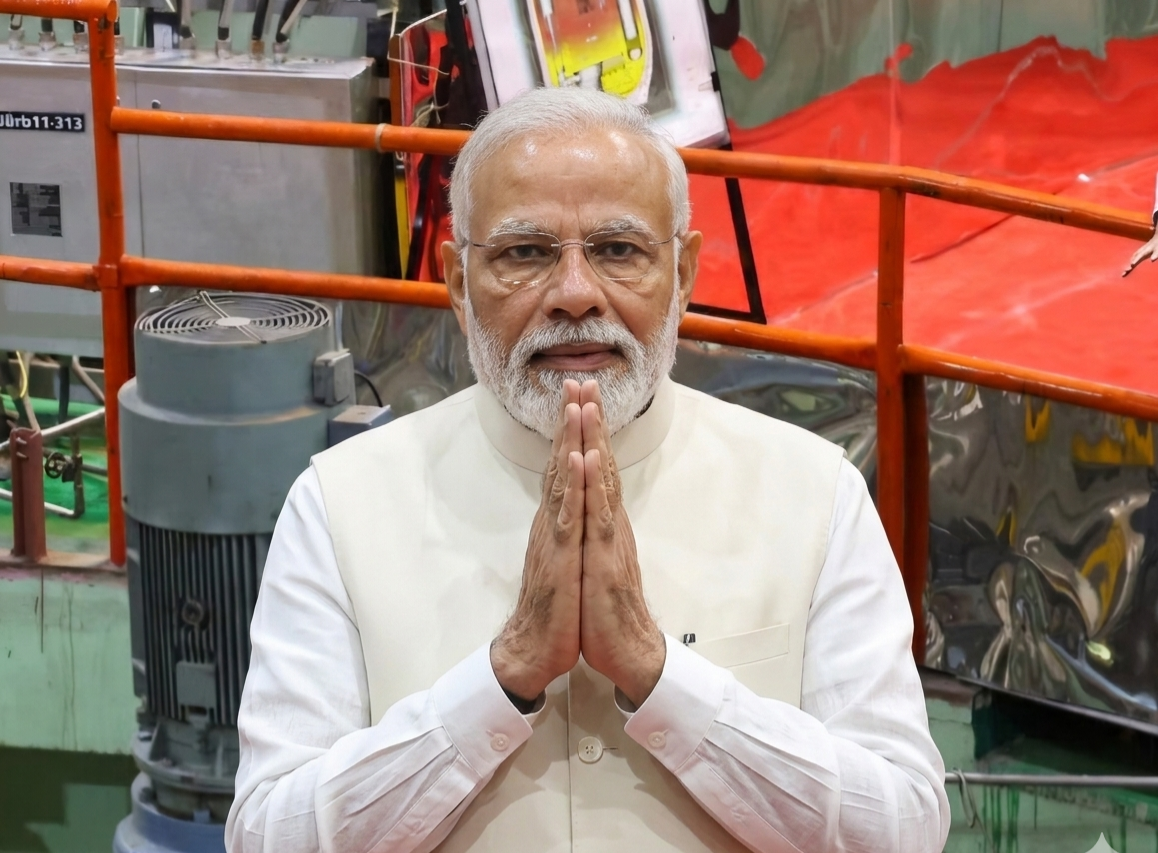
Narendra Modi on Monday hailed a major milestone in India’s civil nuclear journey, announcing that the indigenously developed Prototype Fast Breeder Reactor (PFBR) at Kalpakkam has successfully attained criticality.
Sharing the development on social media, the Prime Minister described the achievement as a “defining step” in advancing the second stage of India’s three-stage nuclear programme. He emphasized that the advanced reactor has the unique capability to produce more fuel than it consumes, showcasing India’s growing prowess in nuclear science and engineering.
Today, India takes a defining step in its civil nuclear journey, advancing the second stage of its nuclear programme.
The indigenously designed and built Prototype Fast Breeder Reactor at Kalpakkam has attained criticality.
This advanced reactor, capable of producing more fuel…
— Narendra Modi (@narendramodi) April 6, 2026
India has, over the decades, developed comprehensive capabilities across the entire spectrum of the nuclear fuel cycle. In a major institutional step, the Government of India approved the creation of Bharatiya Nabhikiya Vidyut Nigam Limited (BHAVINI) in 2003 to construct and operate the country’s most advanced nuclear reactor—the PFBR—marking a strategic push toward self-reliance in nuclear energy.
PM Modi highlighted that the breakthrough strengthens India’s long-term vision of utilizing its vast thorium reserves in the third stage of the programme, a strategy aimed at achieving sustainable and self-reliant energy security.
Calling it a proud moment for the nation, the Prime Minister congratulated the scientists and engineers behind the project, recognizing their contribution to strengthening India’s strategic and clean energy capabilities.
The successful criticality of the PFBR marks a significant leap in India’s nuclear energy roadmap, positioning the country among a select group of nations with advanced fast breeder reactor technology.