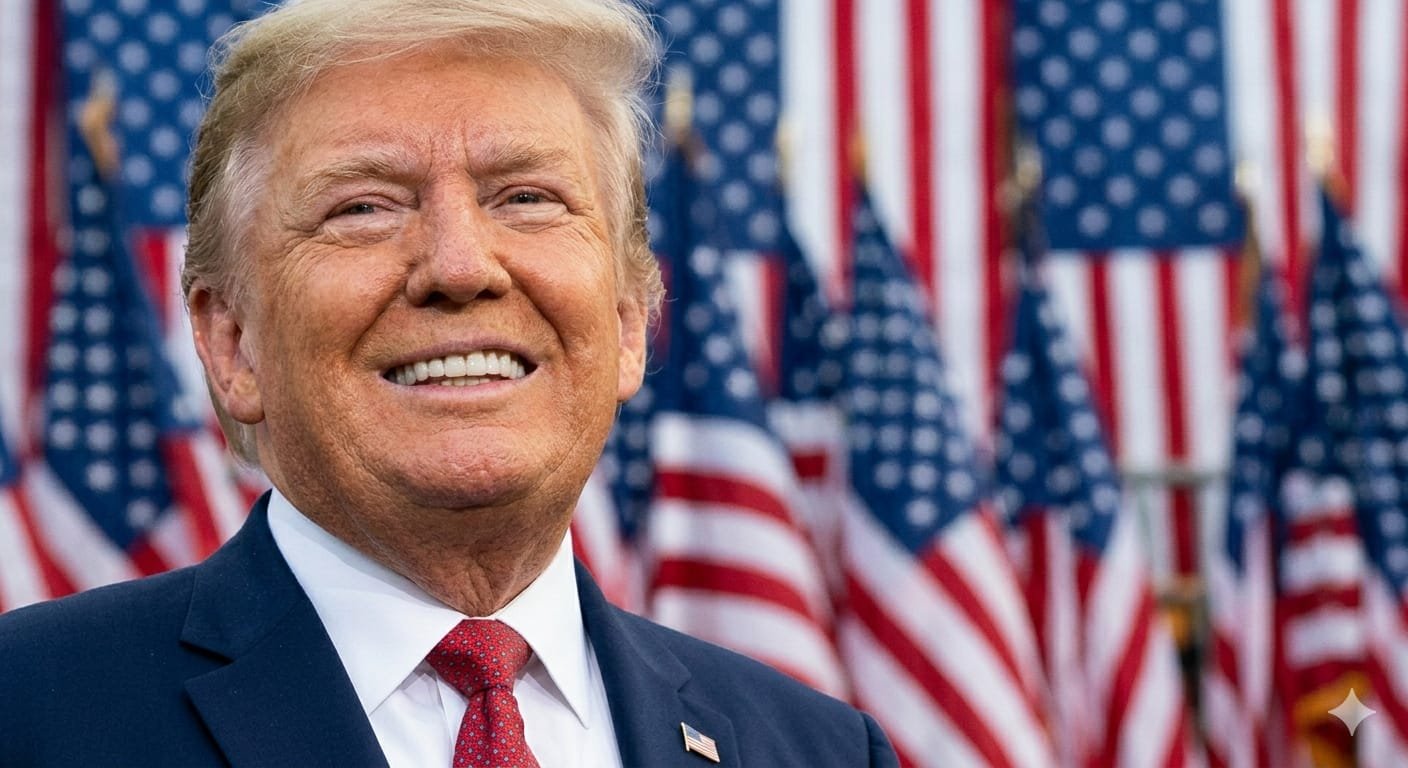
In a bold and optimistic statement, President Donald J. Trump has signaled a potential turning point for international relations in the Middle East.
Highlighting a shared desire for stability, the President announced that the United States will play a pivotal role in easing tensions and fostering economic growth in the region, specifically addressing the long-standing bottlenecks in the Strait of Hormuz.
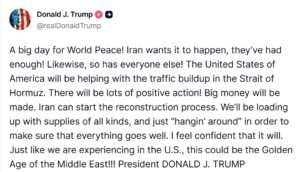
The President’s vision centers on a transition from conflict to commerce. With Iran reportedly looking toward a peaceful resolution, the path is clearing for massive reconstruction efforts. “Big money will be made,” Trump noted, suggesting that the normalization of the region will open up unprecedented markets for infrastructure, supplies, and global trade.
Key Pillars of the “Golden Age” Plan
Maritime Security: U.S. forces will assist with “traffic buildup” in the Strait of Hormuz, ensuring the free flow of global oil and goods.
Economic Reconstruction: A massive influx of supplies is expected to head toward Iran to jumpstart their rebuilding process.
Stabilizing Presence: The U.S. will maintain a supportive presence to ensure the transition remains peaceful and productive.
Shared Prosperity: The President compared the potential growth in the Middle East to the current economic “Golden Age” being experienced within the United States.
While the logistics of this “positive action” continue to develop, the sentiment is clear: the administration is betting on a future defined by trade rather than turmoil. If successful, this shift could redefine the geopolitical landscape of the 21st century.