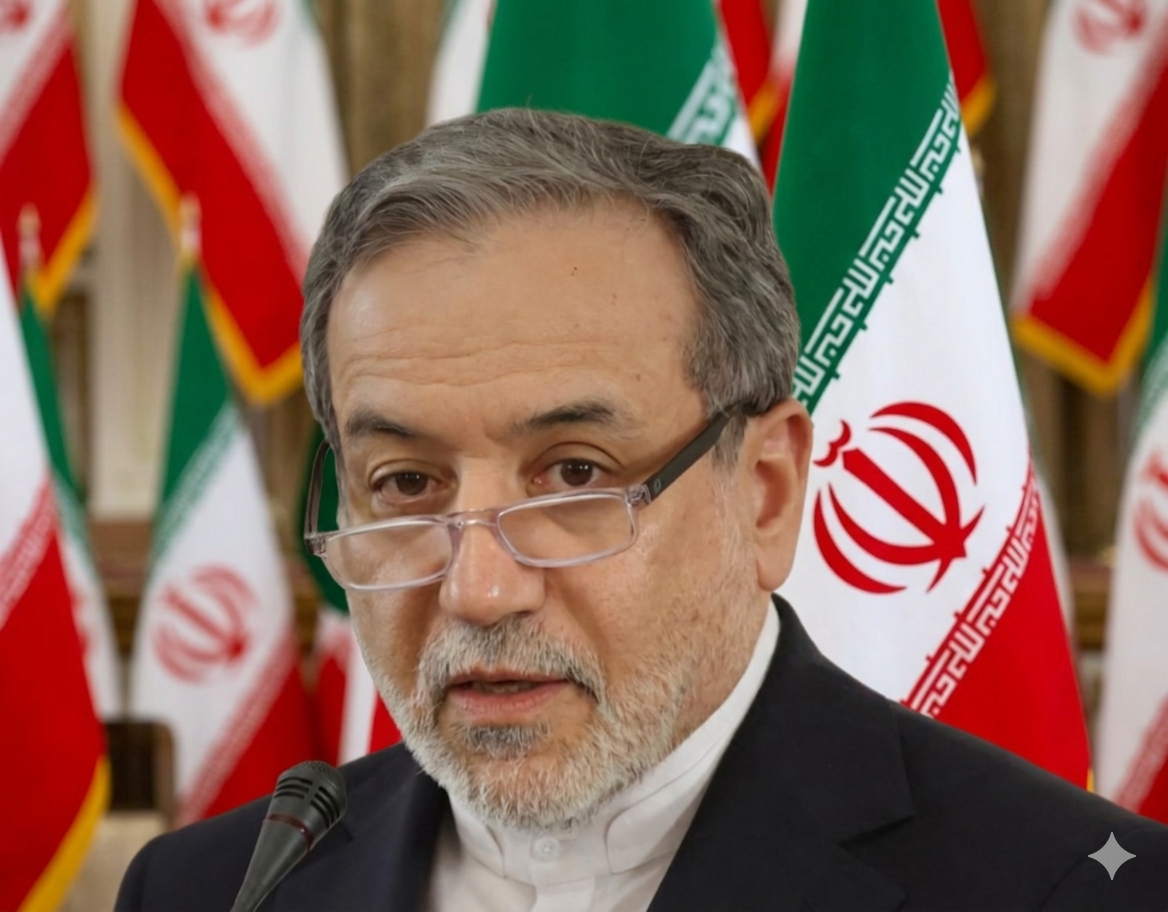
In a significant diplomatic development amid rising tensions in West Asia, Iran’s Foreign Minister Seyed Abbas Araghchi issued a formal statement on behalf of the Supreme National Security Council, outlining Tehran’s conditional willingness to de-escalate hostilities.
The statement expressed gratitude to Shehbaz Sharif and Asim Munir for their sustained diplomatic efforts aimed at ending the conflict in the region.
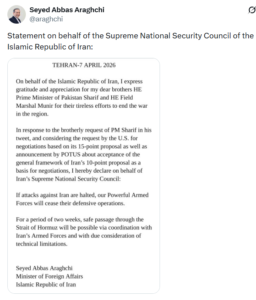
Responding to what was described as a “brotherly request” from Pakistan’s leadership, and ongoing diplomatic engagement involving the United States under Donald Trump, Iran indicated openness to negotiations. These talks are expected to be based on a proposed 15-point framework from Washington and a corresponding 10-point proposal from Tehran.
Crucially, Iran announced that if attacks against its territory are halted, its armed forces will suspend defensive operations. As part of this de-escalation framework, Tehran has also agreed to facilitate safe maritime passage through the Strait of Hormuz for a two-week period, subject to coordination with Iranian forces and technical considerations.
The Strait of Hormuz remains one of the world’s most critical oil transit chokepoints, and any assurance of stability in the region is expected to have far-reaching implications for global energy markets and international trade.
This development signals a potential diplomatic opening, with regional and global stakeholders closely watching whether the temporary pause can evolve into a broader ceasefire and structured peace negotiations.