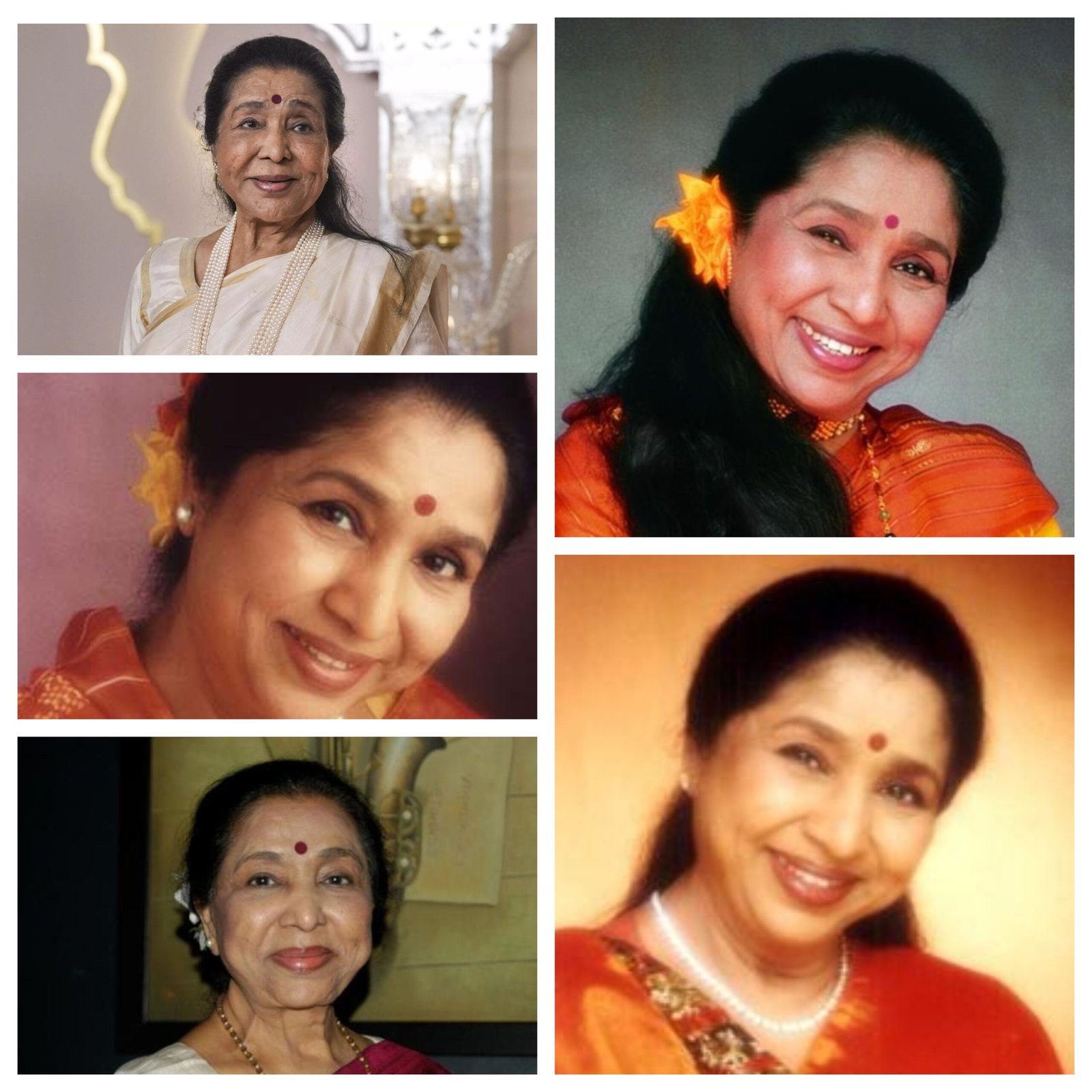
The silence that fell over the Indian musical landscape on April 12, 2026, was not merely the passing of a singer, but the conclusion of a sonic era. Asha Bhosle, the woman whose voice defined the aspirations, heartbreaks, and celebrations of a billion people for over seven decades, passed away at the age of 92. Her life was a masterclass in resilience, a journey that saw her transform from a young girl in the shadow of a legendary sibling into a global icon of versatility.
The Sangli Roots and the Mangeshkar Legacy
The story of Asha Bhosle began on September 8, 1933, in the small hamlet of Goar in Sangli, Maharashtra. Born into the illustrious musical family of Pandit Deenanath Mangeshkar, a classical singer and theater actor, music was her first language. However, the stability of her early years was short-lived. Following her father’s death when she was just nine, the family moved from the quietude of Sangli to the bustling, often unforgiving, environment of Bombay (now Mumbai) to seek a livelihood.
Alongside her elder sister, Lata Mangeshkar, Asha began her career in film music to support the family. Her first song, “Chala Chala Nav Bala,” for the Marathi film Majha Bal (1943), was recorded when she was only ten years old. It was the start of a marathon that would eventually lead her to the Guinness World Record for the most studio recordings in music history.
The Struggle and the “Rebel” Identity
The 1950s were a period of intense professional tension. While Lata Mangeshkar was the preferred voice for the “pure” and demure leading ladies of the era, Asha was often relegated to singing for vamps, cabaret dancers, or in secondary roles. Rather than allowing these limitations to define her, she used them as a laboratory for innovation.
Working in the high-pressure recording studios of mid-century Mumbai, she developed a unique “edge” to her voice—a rhythmic, jazz-influenced style that set her apart. Her breakthrough came with films like C.I.D. (1956) and Naya Daur (1957), where her collaboration with composer O.P. Nayyar showcased a sensuality and peppiness that Indian cinema had never heard before.
The Burman Era and Global Stardom
The most dynamic chapter of her life unfolded through her partnership with R.D. Burman. Together, they pushed the boundaries of the Indian soundscape, incorporating rock and roll, Latin beats, and western pop into the traditional Bollywood structure. From the rebellious energy of “Dum Maro Dum” to the haunting, classical depth of Umrao Jaan (1981), Bhosle proved that her range was limitless.
Her career was not confined to the borders of India. She took her music to international stages, from the Royal Albert Hall in London to collaborations with global artists like Boy George and the Kronos Quartet. In every location, she remained a purposeful ambassador of Indian culture, blending tradition with a modern, global sensibility.
A Legacy Beyond the Microphone
Journalistic accounts of her life often highlight her as more than a vocalist; she was a survivor and an entrepreneur. Outside the recording booth, she found success as a restaurateur, with her “Asha’s” chain becoming a staple for Indian cuisine in the Middle East and Europe.
Her contributions were recognized with the highest honors, including the Dadasaheb Phalke Award (2000) and the Padma Vibhushan (2008). In her later years, even as she mourned the passing of her sister and her husband, she remained an “inspiring and glamorous voice,” as described by contemporary leaders, continuing to perform well into her late 80s.
The Final Bow
Asha Bhosle’s passing at 92 marks the end of a glorious chapter. She leaves behind a discography of over 11,000 songs in 20 languages, ranging from soul-stirring Bengali Adhunik songs to high-octane Bollywood anthems. Her life serves as a testament to the power of reinvention. She didn’t just sing the songs of India; she gave voice to its evolution. As the nation pays its final respects at Shivaji Park, the world remembers a woman who turned every challenge into a melody and every location into a stage.