

"Not an Old-Age Home": Leander Paes Unveils Bold Blueprint to Resurrect Bengal’s Sporting Glory
For over thirty years, the world watched a "Bengal boy" rewrite the history of tennis. From the grass of Wimbledon to the hard courts of Atlanta, where he ended India’s 44-year individual Olympic medal drought, his journey has been one of defying odds. Now, the man who holds the record for the most Davis Cup doubles wins in history is stepping into a new arena, carrying a vision that extends far beyond the baseline.
In a landmark press conference on Saturday, Leander Paes addressed the state of West Bengal not with the optimism of a champion, but with the urgency of a reformer. Fresh from joining the Bharatiya Janata Party (BJP), Paes delivered a stinging critique of the state’s current sporting landscape while outlining a high-stakes mission: bringing the Olympics to Indian soil.
The Infrastructure Gap: Beyond Cricket and Football
Paes pointed out a glaring stagnation in Bengal’s development. While the state boasts iconic venues like Eden Gardens and the Salt Lake Stadium, he argued that a two-sport focus is no longer enough for a modern India.
"We have the legacy, but where is the variety?" Paes asked. "To get India ready for the Olympics, we must look past the traditional boundaries of cricket and football."
He highlighted the lack of resources affecting the state, expressing deep concern that the lack of diverse infrastructure is forcing the youth to seek excellence elsewhere. His mission is clear: to ensure West Bengal stops being a "feeder state" for other regions and starts retaining its own talent.
The Century of Stagnation
In a sobering moment, Paes reflected on the history of the Games. Since 1900, West Bengal has produced only a handful of Olympic medalists—a statistic he finds unacceptable for a state with such a rich intellectual and physical heritage.
The Reality: Only 4 individuals from Bengal have reached the Olympic podium since the 1990s.
The Warning: "We are not doing enough for the Asia Cup, the Olympics, or the youth in general," he remarked. "I will not let West Bengal turn into an old-age home. We must build a future where the youth can thrive here."
A New Partnership: The 2036 Vision
Paes spoke passionately about his recent meetings with Prime Minister Narendra Modi, expressing gratitude that a "kid from Bengal" was given the platform to discuss national policy. He credited the Prime Minister’s vision for India's rise into the top five global economies as the catalyst for his own political journey.
The Prime Minister has reportedly entrusted Paes with a monumental task: India’s team for the 2036 Olympics.
"The Honourable Narendra Modiji has a clear vision for the youth. He wants the 2036 Olympics in India, and for the team to win, and I am here to make that happen," Paes stated. He also confirmed his involvement in the upcoming Commonwealth Games and other major international games.
Ready for the "Political Game"
Paes acknowledged his "rookie" status in politics but promised to bring the same tenacity that saw him compete in seven consecutive Olympic Games. He emphasized a "work-first" philosophy, citing his inspiration to serve the country for the next 15 years without engaging in petty rivalries.
"I have learned a lot on the field," he concluded. "I am ready to face every obstacle that comes my way to make this country—and my home state—a true sporting superpower."
Related News
 OCT 10, 2026
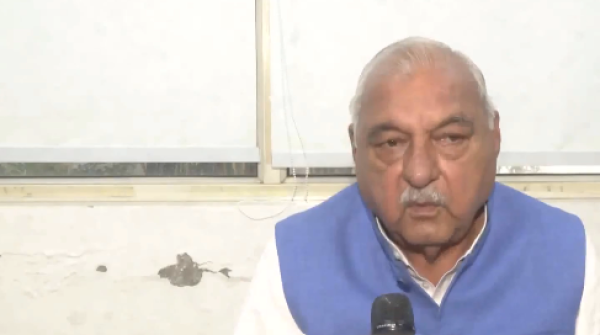
Bhupinder Singh Hooda Targets Haryana Govt Over MSP Procurement
Bhupinder Singh Hooda alleged that Haryana farmers are being forced to sell crops below MSP and also criticised detentions linked to opposition protests in Delhi.
 OCT 10, 2026
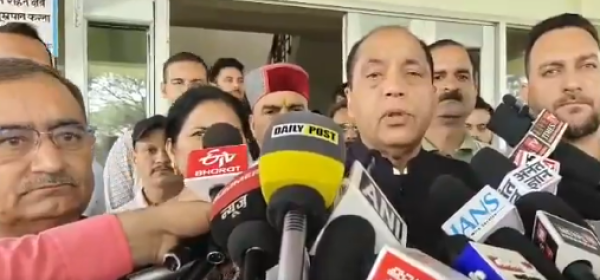
Jairam Thakur Targets Rahul Gandhi Over Delhi Protests
Jairam Thakur Rahul Gandhi remarks in Hamirpur accused the Congress leader of trying to create anarchy for political power and defended the Centre’s law-and-order actions.
 OCT 10, 2026
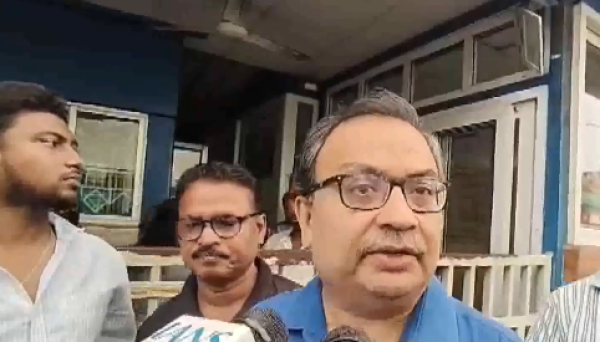
Mamata Banerjee Detention Sparks Strong Reaction From TMC
Mamata Banerjee detention during the Delhi protest triggered criticism from TMC MLA Kunal Ghosh, who demanded her immediate release and condemned the police action.
 OCT 10, 2026
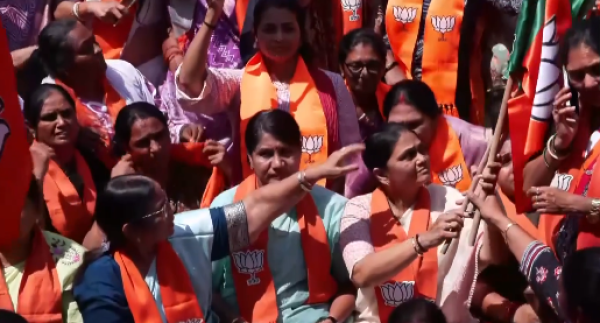
BJP Mahila Morcha Ahmedabad Protest Targets Congress Over JNU Case
BJP Mahila Morcha Ahmedabad protest took place outside Rajiv Gandhi Bhavan in Paldi over sexual harassment allegations involving Congress MP Angomcha Bimol Akoijam.
Comments (0)