

Zelenskyy Clinches Strategic Defense Agreements in High-Stakes Gulf Tour
The agreements, spanning at least 10 years, mark a significant shift in defense cooperation between Ukraine and the Gulf, with a strong focus on countering emerging aerial threats and strengthening regional security frameworks.Прибув до Саудівської Аравії. Заплановані важливі зустрічі. Ми цінуємо підтримку та підтримуємо тих, хто готовий працювати разом із нами заради безпеки. pic.twitter.com/dRAwm0mLcs
— Volodymyr Zelenskyy / Володимир Зеленський (@ZelenskyyUa) March 26, 2026
A central pillar of the agreements is Ukraine’s battlefield-tested expertise in countering unmanned aerial systems (UAVs) and missile threats. Drawing from its ongoing conflict experience, Ukraine will provide advanced tactics, operational intelligence, and training to Gulf partners, particularly in neutralizing Iranian-made drones—similar to those increasingly targeting the region.We have reached an important Arrangement between the Ministry of Defense of Ukraine and the Ministry of Defense of the Kingdom of Saudi Arabia on defense cooperation. The document was signed ahead of our meeting with the Crown Prince of Saudi Arabia, Mohammed bin Salman Al Saud.… pic.twitter.com/j3aXzLXSNr
— Volodymyr Zelenskyy / Володимир Зеленський (@ZelenskyyUa) March 27, 2026
The deals also include ambitious plans to establish joint production facilities and defense manufacturing lines across Ukraine and the Gulf. These will focus on electronic warfare systems and drone interception technologies, enabling localized production and long-term technological collaboration between defense industries. President Zelenskyy described the agreements as “strategic-level contracts” worth billions, expected to provide a significant boost to Ukraine’s defense exports and industrial base. The partnerships are seen as a crucial economic lifeline amid the ongoing war with Russia. Ukraine has already deployed more than 200 anti-drone specialists to the region, with teams stationed across the UAE, Qatar, and Saudi Arabia. Additional deployments are expected in Kuwait and Jordan, signaling a broader regional security footprint.I met with the President of the UAE, Mohamed bin Zayed Al Nahyan @MohamedBinZayed.
— Volodymyr Zelenskyy / Володимир Зеленський (@ZelenskyyUa) March 28, 2026
The President thanked our team for its work here in the Emirates. For Ukraine, this is also a matter of principle: terror must not prevail anywhere in the world. Protection must be sufficient… pic.twitter.com/qSsOU1OTUq
The agreements come at a time of escalating regional tensions involving Iran. Gulf countries are increasingly seeking cost-effective alternatives to expensive Western defense systems. While a single Patriot missile can cost nearly $4 million, Ukrainian counter-drone solutions are estimated to neutralize threats at approximately $2,000 per unit—offering a compelling economic advantage. In return, Ukraine is expected to receive financial investments, access to advanced technologies, and potentially more sophisticated air defense systems to strengthen its own protection against Russian ballistic missile attacks. The Gulf tour highlights Ukraine’s evolving role not just as a recipient of defense aid, but as an emerging exporter of modern warfare expertise—reshaping strategic alliances amid shifting global security dynamics.I met with the Amir of the State of Qatar, Sheikh Tamim bin Hamad Al Thani @TamimBinHamad, in Doha. The Prime Minister, Sheikh Mohammed bin Abdulrahman Al-Thani, was also present at the meeting.
— Volodymyr Zelenskyy / Володимир Зеленський (@ZelenskyyUa) March 28, 2026
We discussed issues that could further strengthen the protection of life in both… pic.twitter.com/33vWX3BvgA
Related News
 OCT 15, 2026
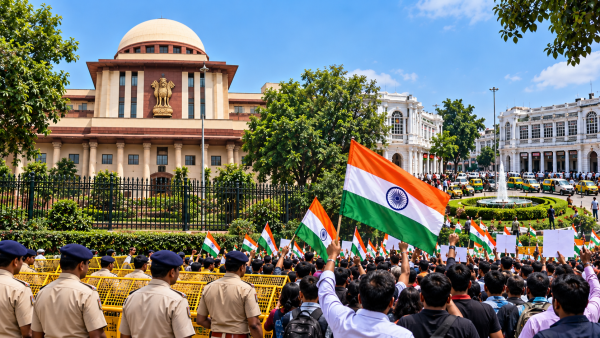
Delhi High Court Refuses to Stop CJP Protest at Connaught Place
The Delhi High Court refused to restrain CJP and founder Abhijeet Dipke from holding an October 16 protest at Connaught Place Central Park, while recording police assurances on crowd control.
 OCT 15, 2026
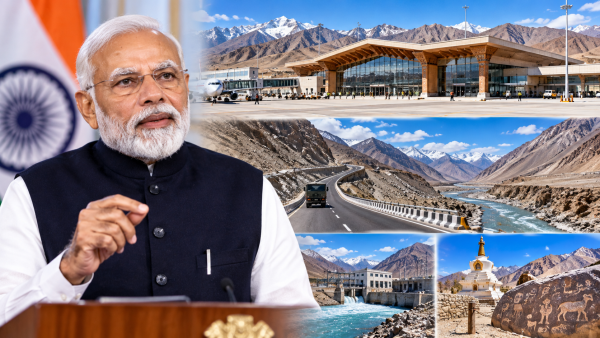
PM Modi Inaugurates ₹3,350 Crore Ladakh Development Projects
Prime Minister Narendra Modi virtually inaugurated five Ladakh development projects worth around ₹3,350 crore, boosting connectivity, energy, water security and heritage conservation.
 OCT 15, 2026
Vishvajit More earns India's first Greco-Roman silver at U23 wrestling worlds
Vishvajit More secured a landmark 55kg silver at the U23 wrestling worlds in Las Vegas, losing the Greco-Roman final 12–13 to Koba Karumidze.
 OCT 15, 2026
Erika Kirk shares birthday remembrance of late husband Charlie Kirk
Erika Kirk posted a video compilation and personal memories on X to mark what would have been Charlie Kirk's 33rd birthday.
Comments (0)