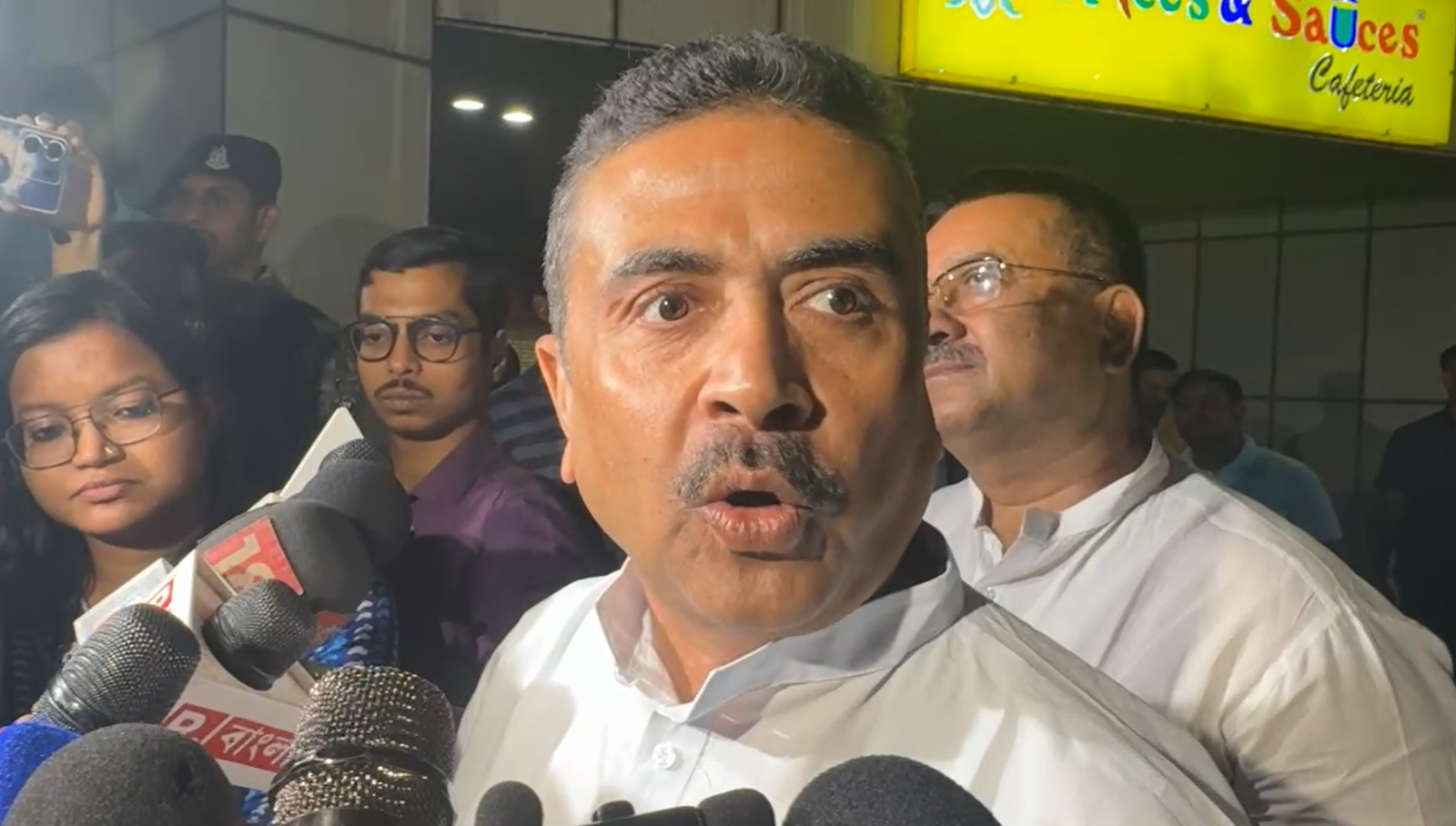
Leader of the Opposition Suvendu Adhikari on Monday addressed the media, outlining the Bharatiya Janata Party’s strategy for the upcoming West Bengal Assembly Elections 2026, while addressing key questions on candidate selection and campaign priorities.
Support for ‘Abhaya’s’ Family
Responding to speculation surrounding a BJP ticket for the mother of the R.G. Kar victim—referred to as “Abhaya”—Adhikari confirmed the family’s alignment with the BJP.
“Both of Abhaya’s parents have chosen to support the BJP this time,” he said, adding that final decisions regarding candidates for the remaining 38 constituencies, including the closely watched Panihati seat, will be taken by the party’s central election committee in the presence of Prime Minister Narendra Modi.
Dual Contest: Bhawanipur and Nandigram
Suvendu Adhikari, who is contesting from both Bhawanipur and his political stronghold Nandigram, expressed strong confidence in his electoral prospects.
“I am standing on well-built political ground this year,” he remarked, drawing a contrast with the 2021 elections. He also took a swipe at Chief Minister Mamata Banerjee, asserting that voters in Nandigram can no longer be “misled.”
Dismissing any speculation of internal discord within the BJP, Adhikari emphasized unity, stating that previous candidates remain an integral part of the party and have extended full support to his campaign.
The ‘60-Day Development Guarantee’
In a key policy pitch, Adhikari unveiled a “60-day guarantee,” promising rapid administrative action if the BJP comes to power after the May 4 results.
He claimed that within two months, a BJP government would clear pending approvals for major infrastructure projects, including Railways, Airports, deep-sea ports, and National Highways—projects he alleged have been delayed under the All India Trinamool Congress government.
High-Stakes Electoral Battle Ahead
With West Bengal set to vote in two phases on April 23 and April 29, the 2026 Assembly elections are shaping up to be a high-stakes political contest, with sharp narratives around governance, development, and political accountability dominating the campaign.