

PM Modi Highlights Rising Global Demand for AYUSH and Herbal Products
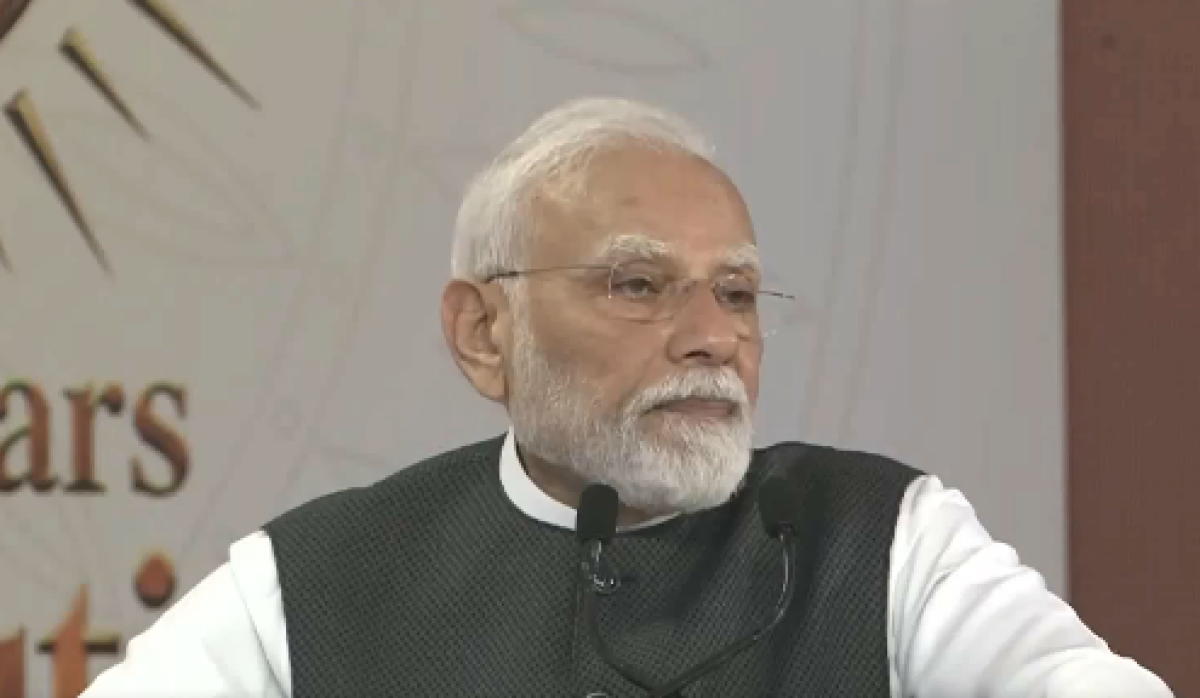
Prime Minister Narendra Modi on Friday highlighted the growing global demand for India’s AYUSH and herbal products, saying the traditional wellness sector had expanded into a major economic ecosystem.
Speaking in Bengaluru, Modi said products rooted in Indian households and traditional practices were gaining wider international acceptance.
He specifically referred to turmeric, noting that an ingredient used routinely in Indian kitchens and traditional practices was witnessing increasing global demand.
Remarks Made at Prashanti Kutiram Golden Jubilee
Modi made the remarks while participating in the Golden Jubilee celebrations of Prashanti Kutiram, the residential headquarters campus of Swami Vivekananda Yoga Anusandhana Samsthana, or S-VYASA, in Bengaluru.
The November 13 programme marked 50 years of the institution’s work in yoga education, research and wellness.
The Prime Minister also laid the foundation stone for a Golden Jubilee Administrative Block and launched S-VYASA’s off-campus centre in Thiruvananthapuram.
AYUSH Economy Has Expanded Sharply
Official data shows that the AYUSH sector has recorded significant growth over the past decade.
According to the Ministry of AYUSH, the overall AYUSH market increased from $2.85 billion in 2014 to $43.4 billion in 2023.
A separate 2026 study by the Research and Information System for Developing Countries estimated the AYUSH services economy at $36.92 billion in FY2024–25.
The study said the services segment had grown at a compound annual growth rate of nearly 17% since FY2022–23.
AYUSH and Herbal Exports Reach $688.89 Million
India’s exports of AYUSH and herbal products have also increased.
Official Commerce Ministry figures show exports rose from $649.2 million in 2023–24 to $688.89 million in 2024–25, representing growth of about 6.1%.
Major international markets include the United States, Germany, Italy, UAE, France and the United Kingdom.
Turmeric Gains Global Attention
Modi highlighted turmeric as an example of an everyday Indian product that has moved beyond domestic consumption to gain greater international recognition.
Turmeric has long been used in Indian cooking and traditional practices, while global interest has expanded around turmeric-based foods, supplements and wellness products.
The Prime Minister used the example to underline how traditional Indian products can find wider markets when combined with modern research, quality standards and international promotion.
Ayurveda Remains Largest AYUSH Segment
Within the AYUSH services economy, Ayurveda remains the largest individual system.
The 2026 RIS study estimated Ayurveda-related services at around $17.73 billion, accounting for nearly 48% of the total AYUSH services economy.
The wider sector also includes Yoga and Naturopathy, Unani, Siddha, Sowa-Rigpa and Homoeopathy.
Wellness and Medical Tourism Also Growing
The same study estimated that AYUSH-related medical value travel generated around $1.77 billion in FY2024–25.
Yoga centres, wellness resorts and spas offering AYUSH-based services were among the fastest-growing segments.
Government initiatives have increasingly focused on positioning India as a global destination for traditional medicine and wellness tourism.
Export Promotion Council Supporting Global Expansion
India has also established the AYUSH Export Promotion Council, or AYUSHEXCIL, to support manufacturers and exporters.
The council works on overseas product registration, international trade exhibitions, quality compliance and market access.
The government has also sought to include AYUSH products in trade agreements and strengthen internationally recognised standards.
Modi Links Traditional Knowledge With Global Opportunity
The PM Modi AYUSH exports remarks reflected his broader argument that India’s traditional knowledge systems can create economic opportunities when combined with scientific research and modern global markets.
He said growing demand for herbal products showed that practices familiar to Indian families for generations were gaining wider international acceptance.
Global Interest in Traditional Medicine Expands
The World Health Organization and India have also expanded cooperation on traditional medicine, including through the WHO Global Traditional Medicine Centre in Gujarat.
India has worked with international organisations on terminology, standards, research and practitioner training for systems including Ayurveda, Unani and Siddha.
These initiatives are intended to improve quality, evidence and regulatory acceptance in overseas markets.
AYUSH Positioned as Growing Economic Sector
Modi’s Bengaluru remarks placed AYUSH within a larger economic and export story rather than treating it solely as a healthcare tradition.
With rising exports, wellness tourism, research and international demand for Indian herbal products, the government is seeking to position the sector as an important contributor to healthcare, entrepreneurship and economic growth.
Related News
 NOV 13, 2026
Harry Kane Becomes England’s All-Time Appearance Leader
England captain Harry Kane makes history as the nation's most-capped player, describing the achievement as a dream come true and thanking everyone who supported his journey.
 NOV 13, 2026
Trump Backs Tim Cook to Replace Nvidia’s Jensen Huang
Donald Trump has suggested former Apple CEO Tim Cook as Jensen Huang's successor at Nvidia, declaring, "A Legend replaces a Legend." Colette Kress has taken over as interim CEO.
 NOV 13, 2026
Gunjan Creates History with Youth Olympics Boxing Gold
Gunjan makes history by becoming the first Indian woman to win Youth Olympic boxing gold. Alongside Lairenlakpam Ambekar Meetei, she completes a historic men's and women's boxing gold double for India.
 NOV 12, 2026
PM Modi Highlights India’s Agricultural Growth at Kisan Tak Bharat Conference 2026
Prime Minister Narendra Modi highlights India's agricultural achievements, noting that exports have crossed ₹4 lakh crore annually, while milk production has grown by 70% and fish production has more than doubled in the past decade.
Comments (0)