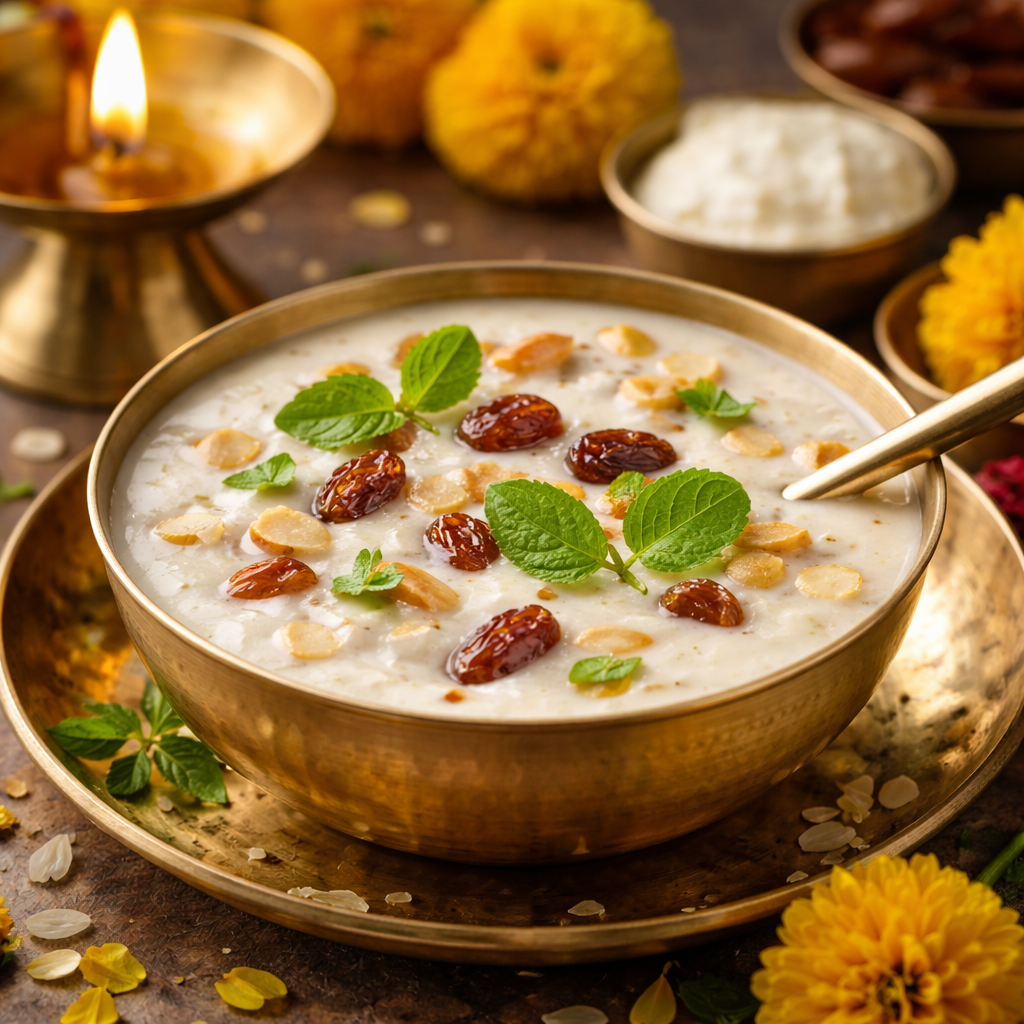
Panchamrit Recipe is a traditional sacred preparation made for Hindu pujas and festivals, especially during auspicious occasions like Akshay Tritiya. It is a holy mixture made using five simple ingredients: milk, curd, honey, sugar or jaggery, and ghee.
This divine offering is first presented to the deity during puja and later distributed as prasad among devotees. The word Panchamrit comes from Sanskrit, where “pancha” means five and “amrit” means nectar—symbolizing a spiritually pure and nourishing offering.
Significance of Panchamrit Recipe in Akshay Tritiya
Akshay Tritiya is considered one of the most auspicious days in the Hindu calendar. It represents eternal prosperity, abundance, and new beginnings. On this day, many families prepare Panchamrit Recipe as part of their puja rituals.
It is offered to the deity and then shared as prasad, symbolizing blessings and purity.
Why Panchamrit is Important in Puja:
- It is a sattvic and pure offering
- It represents devotion and gratitude
- It is deeply rooted in temple traditions
- It is believed to carry spiritual blessings
About Panchamrit Recipe
The Panchamrit Recipe is not just a ritual drink but also a symbolic blend of five sacred ingredients. Each ingredient carries spiritual meaning and contributes to the taste and texture.
It is mildly sweet, creamy, and smooth, making it a comforting prasad during festivals and temple rituals.
🌸 Meaning of the Five Sacred Ingredients
Each ingredient in Panchamrit has both spiritual and practical significance:
🥛 Milk
Represents purity and peace. It gives Panchamrit its smooth and creamy base and provides calcium and protein.
🥣 Curd
Symbolizes prosperity and strength. It adds thickness and contains natural probiotics that may support digestion.
🍯 Honey
Represents unity and sweetness in life. It adds natural flavor and provides quick energy along with antioxidants.
🍬 Jaggery or Sugar
Adds natural sweetness and positivity. Jaggery also contains small amounts of iron and minerals.
🧈 Ghee
Symbolizes devotion and purity. It enhances richness and provides healthy fats and energy.
🌿 Optional Additions
Tulsi leaves, chopped almonds, or raisins are sometimes added for extra aroma and nourishment.
Ingredients for Panchamrit Recipe
- 1 cup milk
- ½ cup curd
- 1 tbsp honey
- 1 tbsp grated jaggery (or 2 chopped dates)
- 1 tsp ghee
- 4–5 tulsi leaves
- 1 tbsp chopped almonds or raisins (optional)
Step-by-Step Panchamrit Recipe
1. Prepare the Base
Take a clean bowl and add milk and curd.
2. Add Sweeteners
Mix in honey and grated jaggery or chopped dates.
3. Add Ghee
Add ghee and mix gently until well combined.
4. Blend Gently
Stir slowly so jaggery dissolves and ingredients blend smoothly.
5. Add Sacred Elements
Add tulsi leaves and optional dry fruits like almonds or raisins.
6. Rest & Serve
Let it rest for 5–10 minutes. Serve fresh as prasad during puja.
Taste & Texture
The Panchamrit Recipe has a:
- Mildly sweet taste
- Smooth and creamy texture
- Light aroma of honey and ghee
- Refreshing feel due to tulsi leaves
- Soft crunch if dry fruits are added
It is light, soothing, and ideal as a sacred offering.
Expert Tips
- Always use fresh milk and curd for best taste
- Mix gently to maintain smooth texture
- Use jaggery or dates for a healthier version
- Add tulsi leaves only at the end
- Serve fresh for best spiritual and taste experience
Nutritional Value (Approx. per serving)
| Nutrient | Amount | Main Source |
|---|---|---|
| Calories | 120–150 kcal | Milk, honey, ghee |
| Protein | 3–4 g | Milk, curd |
| Calcium | 100–120 mg | Milk, curd |
| Healthy fats | 4–5 g | Ghee, milk |
| Natural carbs | 15–18 g | Honey, jaggery, dates |
| Antioxidants | Small amount | Honey, tulsi |
Health & Spiritual Benefits of Panchamrit Recipe
The Panchamrit Recipe is not only spiritually significant but also nourishing in nature:
- Provides instant energy
- Supports digestion (curd & honey)
- Strengthens bones (milk & curd)
- Offers natural antioxidants
- Promotes calmness and purity in rituals
It is consumed as prasad, making it both spiritually and physically meaningful.
FAQ – Panchamrit Recipe
1. Can I make Panchamrit without honey?
Yes, you can replace honey with jaggery or dates depending on preference.
2. Can Panchamrit be stored?
It is best consumed fresh, but can be refrigerated for a few hours.
3. Is Panchamrit Recipe only for festivals?
No, it is used in daily puja, temple rituals, and special occasions.
Final Thoughts
The Panchamrit Recipe is a sacred blend of five simple ingredients that carries deep spiritual meaning in Hindu tradition. Especially during Akshay Tritiya, it becomes an important part of puja rituals and offerings.
Pure, simple, and divine—this traditional prasad brings together taste, devotion, and positivity in every drop.
Also read our Chana Dal Halwa Recipe