

Ashwini Vaishnaw Announces 92 GWh Energy Storage Scheme, Critical Minerals Initiative
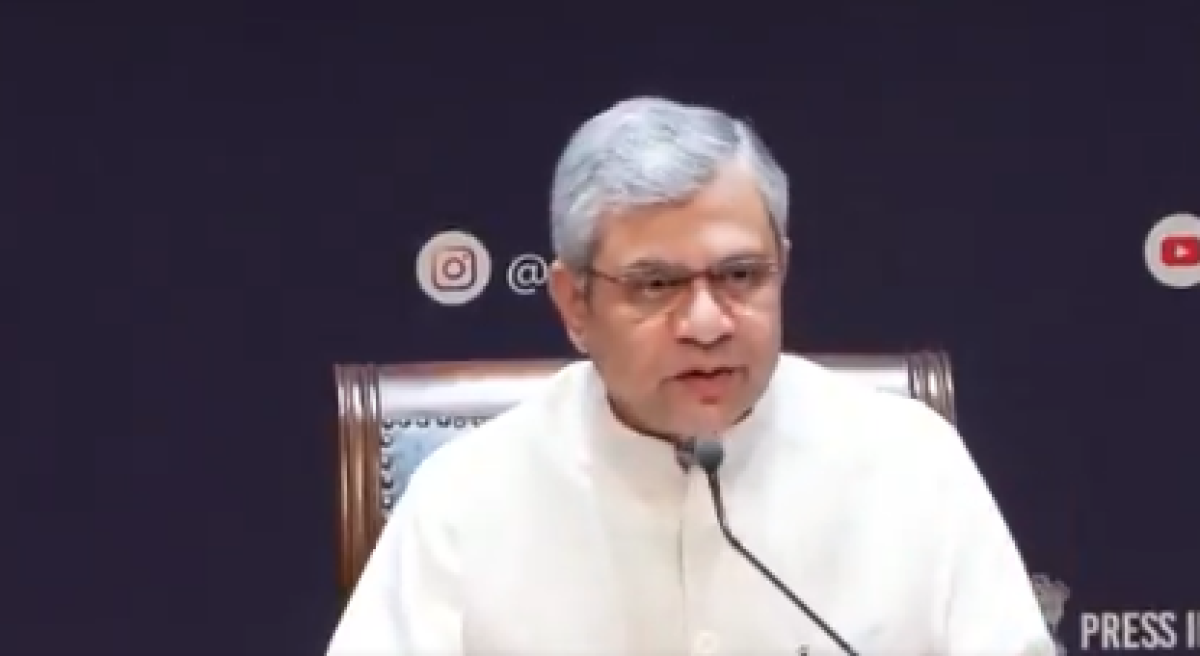
New Delhi: Union Minister Ashwini Vaishnaw has announced Cabinet approval for energy storage schemes with a combined capacity of 92 gigawatt-hours (GWh), alongside a new initiative to support the processing of critical minerals and strengthen India's manufacturing capabilities.
According to Vaishnaw, the grid-scale energy storage programme will combine battery storage and pumped-hydro storage, with implementation planned in collaboration with state governments. The Cabinet has also approved a scheme covering the processing of 24 identified critical minerals sourced through mining and recycling.
92 GWh Energy Storage Scheme Approved
Vaishnaw said the approved energy storage programme has a total capacity of 92 GWh. He described it as a grid-scale initiative intended to distribute storage capacity across the country in partnership with state governments.
The minister said the programme includes 30 GWh of battery storage and around 60 GWh of pumped-hydro storage, according to his statement. The two figures add up to 90 GWh, leaving a 2 GWh difference against the announced total of 92 GWh; the detailed allocation may require clarification.
Grid-scale energy storage can help balance electricity supply and demand by storing energy for use when it is needed. Such systems can also support the integration of renewable power into the electricity grid.
State Governments to Participate in Implementation
Vaishnaw said the energy storage scheme would be implemented in collaboration with state governments, with capacity distributed across different parts of India.
Coordination between the Centre and states will be important for planning and deploying storage infrastructure. The programme's eventual impact will depend on implementation details, project development and the integration of storage facilities into the power network.
Cabinet Approves Critical Minerals Processing Scheme
In another major decision, the Cabinet approved a scheme to support the processing of critical minerals, Vaishnaw said.
The initiative will focus on preparing raw critical minerals for use in manufacturing, whether the materials are obtained through mining or recovered through recycling. It will cover all 24 identified critical minerals, according to the minister.
Processing these materials into forms suitable for industrial production is an important step in developing domestic supply chains for advanced manufacturing.
Electronics, Semiconductors and Defence to Benefit
Vaishnaw said the critical minerals initiative could provide a significant boost to India's manufacturing sector, including electronics, semiconductors, batteries, defence equipment, heavy equipment and machinery.
These industries rely on critical minerals and processed materials for a range of components and industrial applications. Strengthening processing capacity could support domestic manufacturing and reduce supply-chain vulnerabilities, although the extent of the benefits will depend on the scheme's implementation and industry uptake.
Push for Energy Infrastructure and Domestic Manufacturing
The two Cabinet decisions highlight the government's focus on expanding energy storage infrastructure and supporting critical-mineral processing.
The energy storage initiative aims to strengthen grid-level storage capacity, while the minerals scheme seeks to improve the availability of processed raw materials for manufacturing industries.
Together, the initiatives could support India's energy infrastructure and industrial development. Further implementation details will be important in determining their timeline, funding arrangements and long-term impact.
Related News
 NOV 4, 2026
Pratap Bajwa Backs Rahul Gandhi at Sangrur Rally, Targets AAP and Amit Shah
Sangrur, Punjab: Congress leader Pratap Bajwa has launched a sharp attack on the Aam Aadmi Party (AAP) government in Punjab ahead of Rahul Gandhi's rally in Sangrur, accusing the party of betraying the state's people and failing to address key concerns.
 NOV 4, 2026
Saurabh Bhardwaj Alleges Manipulation of Delhi AQI Data, Seeks Action
Delhi: Aam Aadmi Party (AAP) Delhi president Saurabh Bhardwaj has questioned the accuracy of the national capital's air quality readings, alleging that the reported Air Quality Index (AQI) may not reflect the actual pollution levels.
 NOV 4, 2026
Priyank Kharge Challenges BJP Over Foreign Funding Allegations Against Congress
Bengaluru: Karnataka Home Minister Priyank Kharge has challenged the BJP to provide evidence for its allegations that the Congress receives funding from foreign agencies, questioning the basis of the claims and the role of India's intelligence agencies.
 NOV 4, 2026
Indian Stock Market Outlook: Crude Oil, US Yields and Dollar in Focus
Mumbai, Maharashtra: The Indian stock market outlook for the upcoming week will largely depend on global macroeconomic developments, crude oil prices, US bond yields and movements in the dollar, according to Shrikant Chouhan, Head of Equity Research at Kotak Neo.