

Crispy Dosa at Home: Chef Reveals the Perfect Dosa Batter Formula
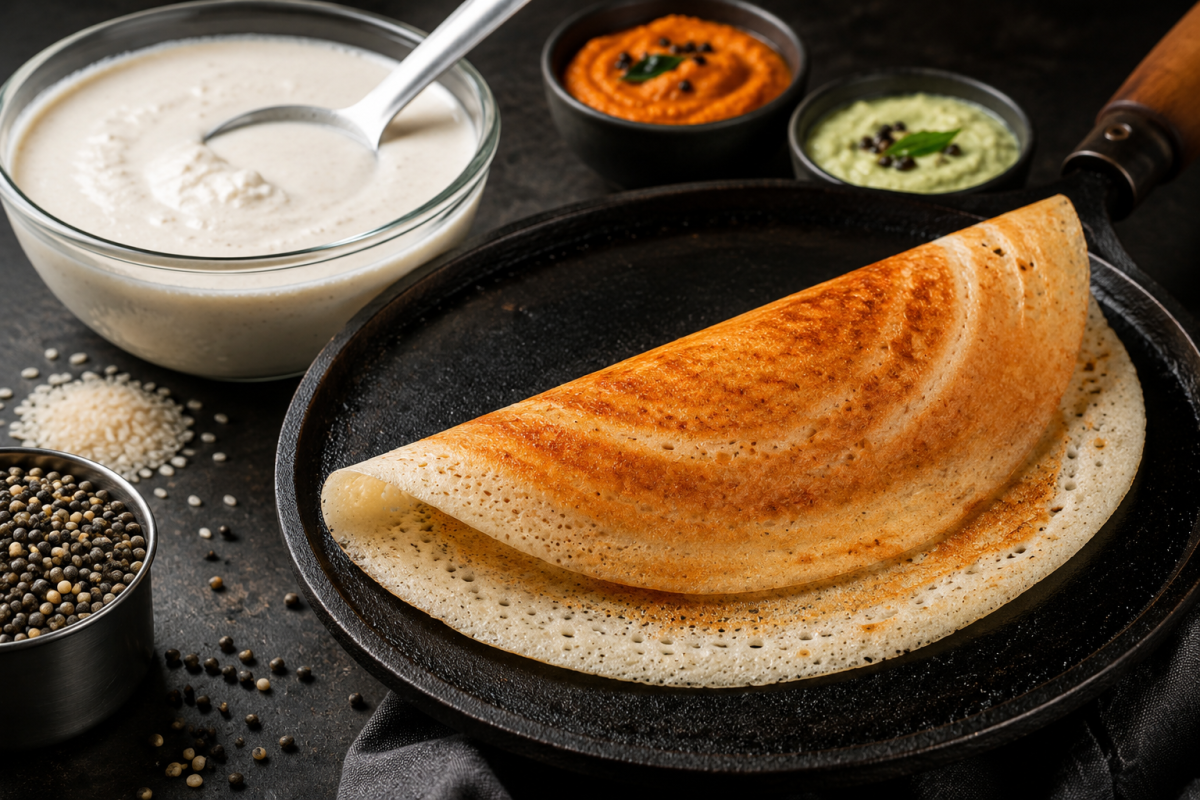
Dosa batter is the foundation of a crisp, golden dosa, but even a well-prepared batter can result in disappointment if it sticks to the pan. Instead of lifting cleanly, the dosa may tear, fold or remain stubbornly attached to the cooking surface.
For dosa lovers, this can turn an otherwise simple breakfast into a frustrating kitchen challenge. The good news is that sticking is usually not a mystery. According to chef Varun, the problem generally comes down to three crucial factors: the condition of the pan, the cooking temperature and the quality of the fermented batter.
Getting these elements right can make a noticeable difference. From choosing the right rice-to-urad dal ratio to understanding when the tawa is ready, a few simple adjustments can help you achieve dosas that spread smoothly, turn beautifully golden and release from the pan with ease.
Why Does Dosa Stick to the Pan?
There are several reasons why a dosa refuses to release from the pan. While the batter is often blamed first, the cooking surface and temperature are equally important.
Chef Varun points to three major causes: an improperly seasoned pan, incorrect cooking temperature and poorly fermented batter.
A cast-iron tawa that has not been seasoned properly can cause the batter to cling to its surface. Similarly, a pan that is too hot may cause the batter to set almost immediately, making it difficult to spread and release. If the pan is too cold, the dosa may cook unevenly and fail to develop the texture you expect.
The amount of oil also matters. Too much oil can interfere with the spreading process, while residue left behind from earlier dosas can create uneven patches on the surface.
Even a non-stick pan can become problematic when its coating begins to deteriorate. In such cases, the dosa may start sticking despite following the recipe correctly.
The three things to get right
For consistently good results, pay attention to:
- Batter consistency: It should be smooth and pourable enough to spread easily.
- Fermentation: Properly fermented batter develops the flavour and texture needed for a delicate, crisp dosa.
- Pan temperature: The tawa needs to be evenly heated before the batter is poured.
When these three elements work together, the dosa should naturally loosen from the pan as it cooks.
What Is the Best Pan for Making Dosa?
A well-seasoned cast-iron tawa remains one of the preferred choices for making traditional dosa. Its ability to retain heat makes it suitable for achieving an evenly cooked, crisp surface.
Before making the first dosa, make sure the cooking surface is clean. Any leftover batter or burnt residue from a previous batch can interfere with the next dosa.
The tawa should also be lightly greased rather than coated heavily with oil. A thin layer is generally enough to prepare the surface.
If you are using a cast-iron pan regularly, maintaining its seasoning is important. A properly seasoned surface becomes increasingly effective for dosa-making with regular use and care.
How to Prevent Dosa From Sticking
Making a non-sticky dosa is as much about technique as it is about the recipe. Follow these simple steps for better results.
1. Use a well-seasoned tawa
A properly seasoned cast-iron tawa provides a reliable cooking surface. Before starting, ensure it is clean and free from burnt batter or food residue.
2. Heat the pan evenly
Do not rush this step. The tawa should be heated evenly before you add the batter.
A pan that is excessively hot can cause the batter to cook instantly upon contact, making it difficult to spread. On the other hand, an underheated pan may prevent the dosa from spreading properly.
3. Lightly grease the surface
Use only a small amount of oil. Excess oil can make spreading difficult and may affect the final texture.
The goal is to create a lightly greased surface rather than an oily one.
4. Control the temperature between dosas
The tawa can become increasingly hot as you prepare multiple dosas. Chef Varun recommends lightly wiping the surface with a damp cloth between dosas to help bring the temperature back to the right level.
This small step can be particularly useful when making several dosas in succession.
What Is the Perfect Dosa Batter Ratio?
A good dosa begins well before the batter reaches the pan. The proportion of rice to urad dal plays a major role in determining the final texture.
Traditionally, a 3:1 ratio of rice to urad dal is used. A small quantity of fenugreek seeds can also be added to the mixture.
The ingredients are soaked and ground separately before being combined. The batter is then left to ferment naturally.
This process gives the dosa batter the characteristic lightness, mild tang and airy texture needed for a crisp exterior.
Traditional dosa batter ingredients
For a basic traditional batter, you can use:
- 3 parts rice
- 1 part urad dal
- A small quantity of fenugreek seeds
- Water, as required
The exact amount of water depends on the type of rice, urad dal and grinding method, so it is better to adjust gradually rather than adding a large amount at once.
How Long Should Dosa Batter Ferment?
Fermentation is one of the most important stages in preparing dosa batter.
Chef Varun recommends allowing the batter to ferment naturally for around 8–12 hours, although the exact time can vary depending on the climate and room temperature.
In warmer conditions, fermentation may happen more quickly. In cooler weather, the batter may require additional time.
A properly fermented dosa batter should look light and airy and develop a subtle tang. If the batter has not fermented sufficiently, the dosa may lack the characteristic crispness and delicate texture associated with a well-made dosa.
How to Know Your Batter Is Ready
Look for a few simple signs:
- The batter appears lighter and slightly aerated.
- Its volume may increase during fermentation.
- A mild, pleasant tang develops.
- The consistency remains smooth and spreadable.
Once fermented, the batter can be gently mixed before cooking. Avoid aggressively stirring it, as this can reduce some of the airiness developed during fermentation.
How to Get a Crisp, Golden Dosa
Once your dosa batter is ready and the tawa has reached the appropriate temperature, the spreading technique becomes important.
Pour a ladleful of batter onto the centre of the pan. Using the back of the ladle, spread the batter outward in quick, circular motions.
The pressure should be gentle and consistent. Spreading too slowly can result in an uneven dosa, while pressing too hard may cause the batter to scrape against the cooking surface.
Allow the dosa to cook until the edges begin to look crisp and golden. A light drizzle of oil around the edges can help with browning.
When the dosa has cooked sufficiently, it should begin releasing naturally from the pan. This is the moment to lift it rather than trying to force it off the surface too early.
Why Fermentation Matters So Much
Fermentation does more than add flavour to dosa batter. It influences the texture and how the batter behaves on the tawa.
A well-fermented batter produces a dosa that is crisp on the outside while remaining delicate inside. It also spreads more effectively when prepared at the right consistency.
Poorly fermented batter, by contrast, may produce a heavier or less crisp dosa and can make it harder to achieve the desired finish.
This is why simply changing the pan or adding more oil may not solve the problem if the underlying dosa batter has not been prepared correctly.
The Secret to a Perfect Dosa
There is no single magic ingredient responsible for a perfect dosa. Instead, the result comes from balancing several details.
Start with the traditional 3:1 rice-to-urad dal ratio, grind the ingredients smoothly, ferment the mixture for the appropriate amount of time and adjust the consistency before cooking.
Then focus on the tawa. It should be clean, lightly greased and evenly heated. Between dosas, manage the temperature so the surface does not become excessively hot.
Most importantly, give the dosa time to cook before attempting to lift it. If the batter, fermentation and temperature are all correct, the dosa should develop a crisp golden surface and release much more easily.
Final Takeaway
Perfecting dosa batter is ultimately about understanding balance. The right ingredient ratio creates the foundation, fermentation develops the batter's character, and careful control of the tawa determines how successfully that batter transforms into a crisp dosa.
If your dosa keeps sticking, do not immediately assume you need more oil. Check whether the pan is properly seasoned, whether the temperature is right and whether the batter has fermented adequately.
With these simple corrections, that frustratingly torn dosa can become a beautifully thin, golden and crisp favourite—ready to be enjoyed with sambar, coconut chutney or tomato chutney.
Related News
 OCT 13, 2026
Avneet Kaur Steals the Spotlight With Her Radiant Beauty, Chic Style, and Effortless Charm
Avneet Kaur is once again capturing attention with her stunning appearance, infectious smile, and effortlessly fashionable style
 OCT 13, 2026
Jacqueline Fernandez Turns Heads With Golden Glamour, Radiant Beauty, and Effortless Elegance
Jacqueline Fernandez continues to embody the captivating blend of glamour, confidence, and sophistication that makes her one of Bollywood’s most recognizable style personalities.
 OCT 12, 2026
9 Must-Visit Devi Temples in India for Every Devotee
From the sacred cave of Mata Vaishno Devi to the magnificent Meenakshi Amman Temple, discover nine revered Devi temples in India that showcase the country's spiritual heritage, ancient traditions and diverse forms of Goddess worship.
 OCT 12, 2026
Sabudana Dosa Recipe: Make Crispy Vrat-Friendly Dosa at Home
Try this easy sabudana dosa recipe for a crispy and delicious vrat-friendly meal that offers a tasty break from the usual puri and potato dishes.