

India WPI Inflation Rises to 11.39% in September 2026
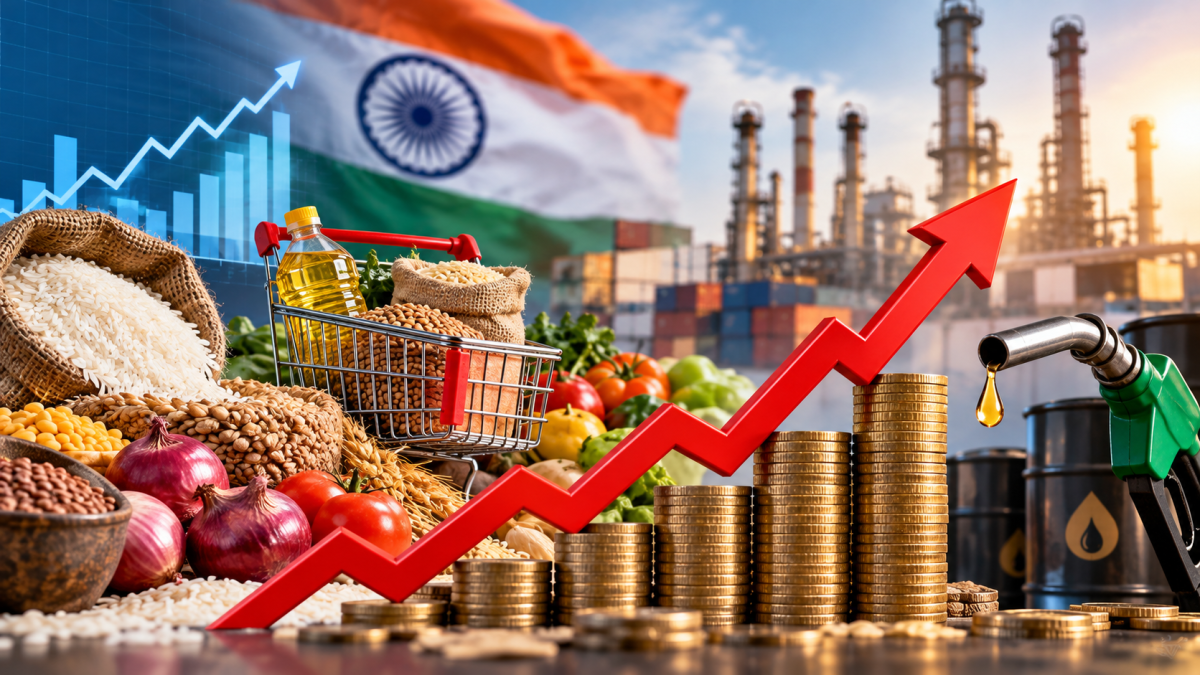
India WPI inflation September 2026 climbed to 11.39 per cent, up sharply from 9.92 per cent in August, as prices of food products, manufactured goods, fuel and power continued to rise, according to government data released on Wednesday.
The increase highlights continuing inflationary pressure across key sectors of the economy, with food and energy costs emerging as major contributors.
Food Inflation Rises to 8.66%
Inflation in the food index rose to 8.66 per cent in September, compared with 7.05 per cent in August.
The increase in food prices has added to cost pressures for households and businesses, particularly as higher fuel and transport costs can also affect the prices of essential commodities.
Manufactured Products Inflation Hits Series High
Wholesale inflation in manufactured products rose to a series high of 9.76 per cent in September.
This was significantly higher than the 8.37 per cent recorded in August.
The rise reflects higher prices across several industrial categories, including basic metals, chemicals and chemical products, textiles, rubber and plastic products, and electrical equipment.
Fuel and Power Inflation Jumps to 25.85%
The fuel and power basket recorded one of the sharpest increases.
WPI-based inflation in this category rose to 25.85 per cent in September, compared with 22.93 per cent in August.
Higher prices of mineral oils, including petroleum products, along with crude petroleum and natural gas, contributed significantly to the rise in wholesale inflation.
Key Drivers of WPI Inflation
The Commerce and Industry Ministry said several commodity groups were responsible for the increase in India WPI inflation September 2026.
These included mineral oils, food articles, crude petroleum and natural gas, coal and lignite, basic metals, chemicals, textiles, rubber and plastic products, and electrical equipment.
The broad-based nature of the increase indicates that inflationary pressure is affecting both consumption-related and industrial goods.
West Asia Conflict Adds to Cost Pressure
Wholesale inflation has been on an upward trajectory since the beginning of the current fiscal year.
The ongoing conflict in West Asia and the blockade of the Strait of Hormuz have pushed up global crude oil and fertiliser costs.
As India imports a large portion of its crude oil requirements through this route, higher international prices have had a spillover effect on fuel, food and commodity prices domestically.
RBI Raises Repo Rate to 5.50%
The latest WPI data comes days after the Reserve Bank of India’s Monetary Policy Committee increased the benchmark policy rate by 25 basis points to 5.50 per cent.
The rate hike reflects the central bank’s concern over rising inflationary pressures and the need to contain broader price increases.
Retail Inflation Also Rises
Retail inflation has also moved higher.
Data released earlier this week showed that consumer inflation rose to a 23-month high of 5.54 per cent in September, up from 4.83 per cent in August.
The rise was driven largely by higher food prices, adding to concerns that inflation is becoming more widespread across the economy.
Inflationary Pressure Remains a Key Concern
The rise in India WPI inflation September 2026 to 11.39 per cent shows that price pressures remain elevated across food, fuel and manufactured products.
With global crude and fertiliser costs still high, inflation trends are likely to remain closely watched by policymakers, businesses and consumers in the coming months.
Related News
 OCT 14, 2026
Supreme Court to Hear Delhi SIR Voter Notice Plea on October 28
The Supreme Court will hear on October 28 a plea seeking publication of the Delhi SIR voter notice list, including names of electors issued notices and specific reasons.
 OCT 14, 2026
Air India AI2030 Diverted to Jaipur After Hijack Alert
Air India flight AI2030 from Frankfurt to Delhi made an emergency landing in Jaipur after transmitting Squawk Code 7500. The alert was later found to be false.
 OCT 14, 2026
Rajnath Singh Proposes Joint India-ASEAN Defence Research Agenda
Union Defence Minister Rajnath Singh has proposed a joint India-ASEAN defence research agenda to strengthen cooperation in maritime security, cybersecurity, emerging technologies and disaster response. Speaking at the ASEAN-India Defence Think Tank Forum, he called for practical initiatives that translate dialogue and shared understanding into collaborative research and solutions.
 OCT 14, 2026
Rahul Gandhi Backs CJP Leaders Jailed Over Jantar Mantar Protest
Rahul Gandhi criticised the five-day judicial custody of CJP leaders Saurav Das and Ashutosh Ranka, saying peaceful protest and waving the Tricolour are not crimes.