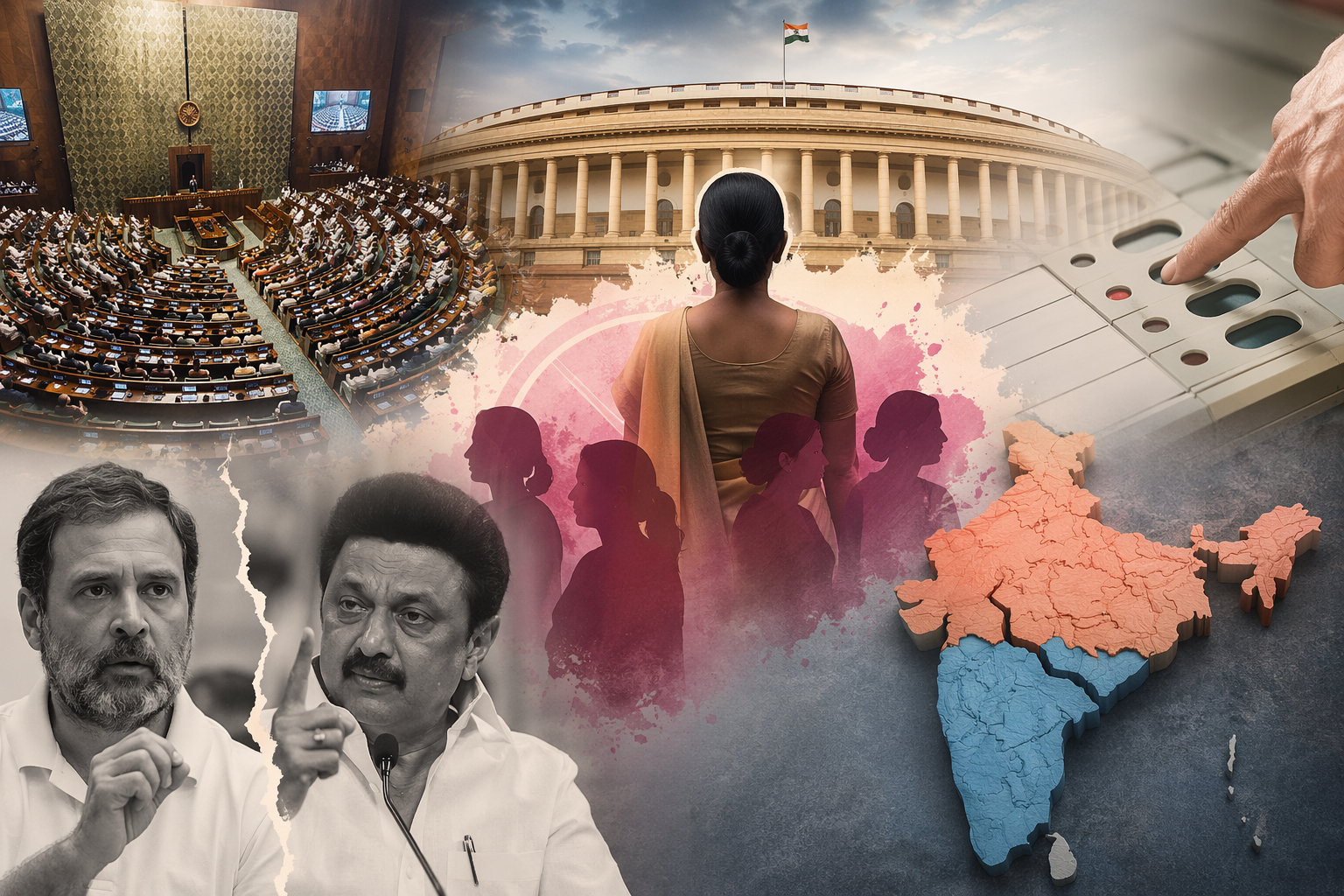
In a significant development on April 17, 2026, the Lok Sabha rejected the proposed Constitution (131st Amendment) Bill, which sought to fast-track 33% reservation for women in Parliament and state assemblies.
The bill aimed to expand the total number of seats to nearly 850 and redraw constituency boundaries based on the latest census data. Despite securing 278 votes in favor, it fell short of the required two-thirds majority mark of 362 votes, with 211 members voting against it.
Several opposition parties boycotted the voting process, alleging that the bill was structured to disproportionately benefit northern states while penalizing southern states that have effectively controlled population growth.
Congress leader Rahul Gandhi termed the bill’s rejection a “constitutional victory,” arguing that the proposal lacked fairness and transparency. Meanwhile, Tamil Nadu Chief Minister M. K. Stalin strongly opposed the bill, warning that it would politically marginalize southern states, particularly Tamil Nadu.
The failure of the bill has delayed the implementation of women’s reservation beyond the 2029 general elections, raising concerns among advocates for gender representation in Indian politics.
The outcome has also intensified the ongoing debate over regional balance, with critics pointing to a growing North-South divide in India’s political landscape.