

Supreme Court Says Compulsory Retirement Is Neither Punitive Nor Stigmatic
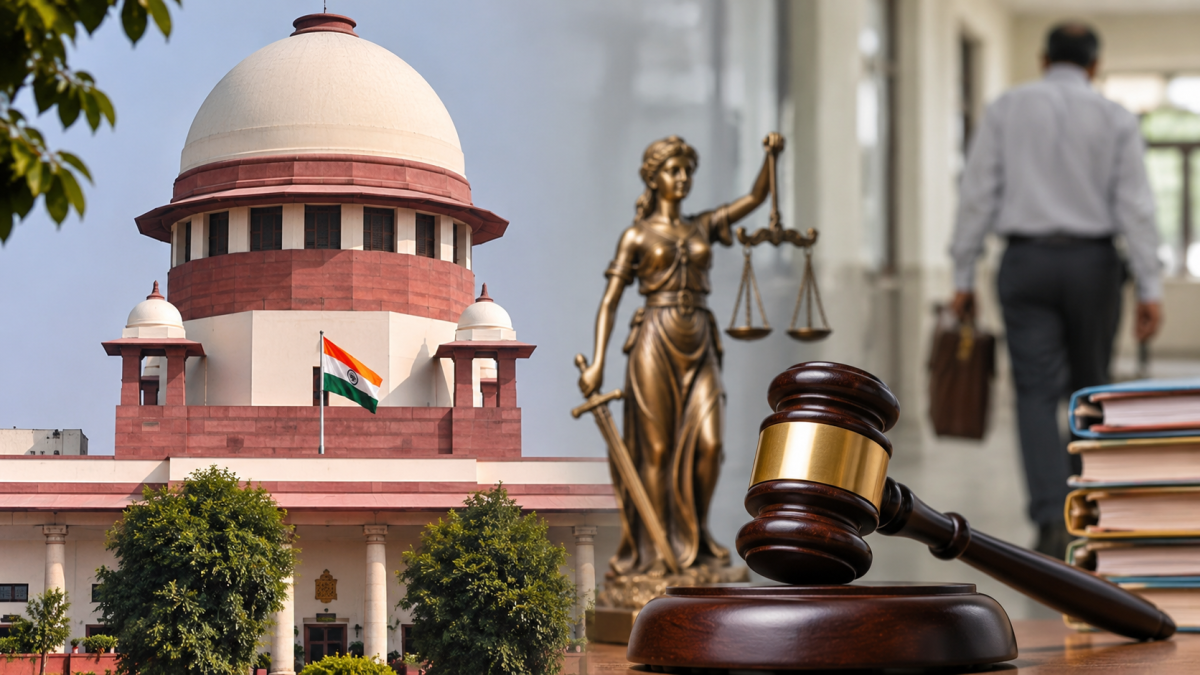
The Supreme Court has held that an order of compulsory retirement is neither punitive nor stigmatic and does not amount to a finding of misconduct against a government employee.
A bench of Justices Manmohan and Shree Chandrashekhar delivered the ruling while dismissing appeals challenging the Chhattisgarh government’s decision to compulsorily retire employees under its service rules.
The judgment was delivered on November 6, 2026, in Chatur Singh Dhruw v. State of Chhattisgarh & Others and a connected appeal.
Compulsory Retirement Does Not Imply Misconduct
The court said a compulsory retirement order does not cast any aspersion on an employee’s conduct or automatically suggest wrongdoing.
It observed that such action is taken when the competent authority forms an opinion that continuing the employee in service is no longer in the public interest.
The bench therefore distinguished compulsory retirement from disciplinary punishment.
Executive Can Assess Whether Employee Remains Useful
Under the Supreme Court compulsory retirement ruling, the executive has the authority to assess whether an officer has become what service-law judgments describe as “dead wood” or whether continued employment could adversely affect administrative efficiency.
However, the court stressed that such satisfaction cannot be based merely on conjecture, personal preference or whim.
The decision must rest on objective and relevant material available in the employee’s service record.
Judicial Review Remains Available
The Supreme Court clarified that courts can still review compulsory retirement decisions.
Judicial scrutiny may examine whether:
Relevant material existed
The competent authority actually considered that material
Prescribed standards and procedures were followed
A reasonable authority could have reached the same conclusion
The decision was arbitrary, mala fide or based on no evidence
However, courts should not reassess the employee’s record as though hearing an appeal against the administrative decision.
Chhattisgarh Employees Challenged 2017 Retirement Orders
The dispute arose from compulsory retirement orders issued by the Chhattisgarh government in October 2017.
A screening exercise examined the service records of 14 employees under Fundamental Rule 56 and Rule 42(1)(b) of the Chhattisgarh Civil Services (Pension) Rules, 1976.
The screening committee ultimately identified employees whose records fell below the prescribed benchmark and recommended compulsory retirement.
Supreme Court Upholds High Court Decision
The employees challenged the action before the Chhattisgarh High Court.
A single judge upheld the government’s decision, and a Division Bench subsequently affirmed that ruling on April 12, 2023.
The Supreme Court has now upheld the High Court’s decision and dismissed the appeals.
‘Similar Employee Was Retained’ Argument Rejected
One of the arguments raised by the employees was that other officers with comparable records had not been compulsorily retired.
The Supreme Court rejected this contention.
It said an employee cannot successfully challenge compulsory retirement merely because another apparently similarly placed officer was retained.
The assessment of utility, integrity, efficiency and overall service performance must be made individually for each employee.
Article 14 Does Not Create ‘Negative Equality’
The bench also referred to the principle of negative equality under Article 14 of the Constitution.
It said that even if another employee was wrongly allowed to continue in service, that mistake could not automatically become a basis for requiring identical treatment for someone else.
A previous error or omission cannot be relied upon to perpetuate another unlawful outcome, the court said.
Entire Service Record Can Be Examined
The judgment further clarified that authorities may consider an employee’s entire service record while deciding compulsory retirement.
Annual Confidential Reports, integrity assessments, performance evaluations and other relevant material can form part of that review.
Greater importance may also be attached to performance in more recent years when determining whether continued service remains in the public interest.
Uncommunicated Adverse Entries May Also Be Considered
The Supreme Court also held that an order of compulsory retirement does not become invalid merely because the authority considered adverse entries that had not previously been communicated to the employee.
The bench distinguished compulsory retirement from promotion-related decisions, where communication of adverse entries can raise different legal considerations.
Earlier Promotion Does Not Erase Later Poor Performance
The employees also relied on their earlier promotions and regularisation.
The court said promotion may reduce the relevance of adverse material recorded before that promotion, but it does not erase adverse performance recorded afterwards.
Similarly, regularisation of service does not amount to a continuing certification of efficiency or suitability for future retention.
Court Finds Screening Exercise Valid
In the cases before it, the Supreme Court found that the screening committee had examined relevant service material and applied the prescribed standards.
The court found no sufficient basis to conclude that the compulsory retirement orders were punitive, discriminatory or a disguised disciplinary proceeding.
The appeals were therefore dismissed and the Chhattisgarh government’s retirement orders remained in force.
Ruling Clarifies Scope of Compulsory Retirement
The Supreme Court compulsory retirement ruling reinforces the distinction between disciplinary punishment and administrative retirement in the public interest.
While the government retains considerable discretion in determining whether an employee should continue in service, that discretion must be exercised on the basis of genuine, relevant and objective material and remains subject to limited judicial review.
Related News
 NOV 7, 2026
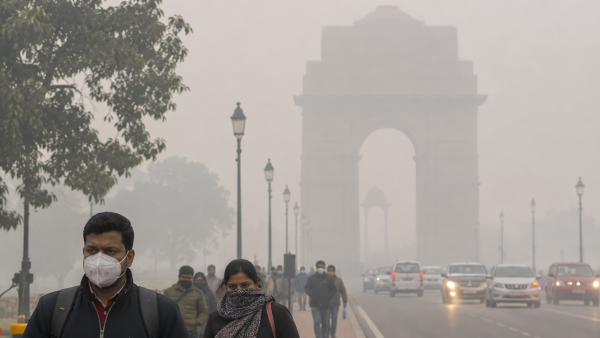
Delhi AQI at 364, Air Remains ‘Very Poor’ Before Diwali
Delhi’s air quality remained very poor a day before Diwali, with the AQI at 364 and several monitoring stations recording severe pollution levels.
 NOV 7, 2026
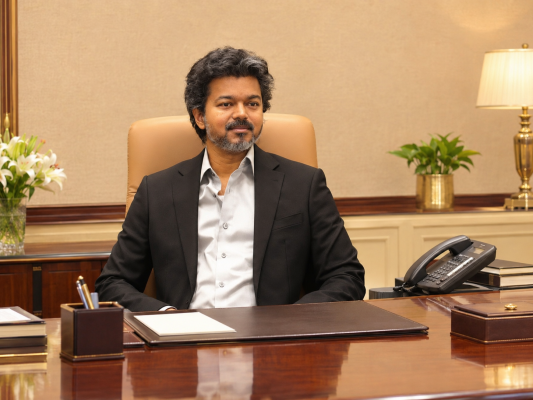
Tamil Nadu CM Vijay Orders ₹2,000 Crore Vetri Laptop Scheme for College Students
Tamil Nadu Chief Minister C Joseph Vijay has ordered implementation of the ₹2,000 crore Vetri Laptop Scheme, providing free laptops to eligible college students.
 NOV 7, 2026
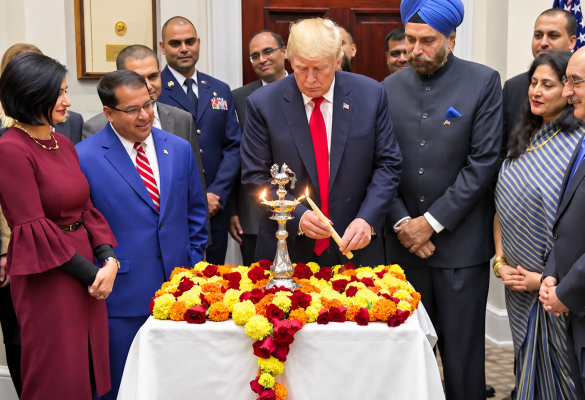
Donald Trump Celebrates Diwali at the White House
US President Donald Trump marked Diwali at the White House with a ceremonial diya-lighting ceremony attended by prominent members of the Indian-American community and India's Ambassador Vinay Kwatra.
 NOV 7, 2026
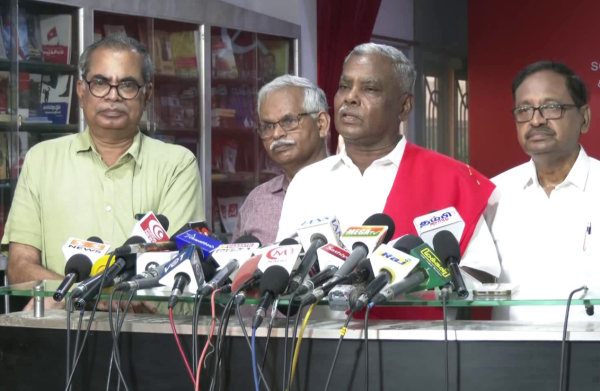
Tamil Nadu CPI(M) Marks November Revolution, Opposes Dissolution of Centre-State Panel
Tamil Nadu CPI(M) secretary P Shanmugam marked the November Revolution in Chennai and opposed the TVK government's decision to dissolve the Centre-State relations committee.
Comments (0)