

Trump Threatens Iran’s Energy Infrastructure Amid Strait of Hormuz Tensions, Signals Escalation if No Deal Reached
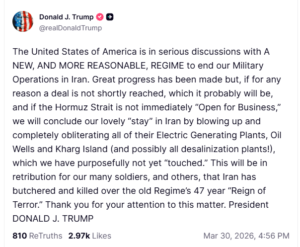
Donald Trump has issued a stark warning to Iran, threatening widespread destruction of the country’s critical energy and infrastructure facilities if a deal to end ongoing military tensions is not reached soon.
In a post on Truth Social, Trump stated that the United States is currently engaged in “serious discussions” with what he described as a “more reasonable regime” in Tehran. While he expressed optimism about progress, he made it clear that failure to reach an agreement could trigger severe military consequences.
Trump warned that key Iranian assets—including electric generating plants, oil wells, and the strategically vital Kharg Island—could be targeted. He also mentioned the possibility of striking desalination plants, which are crucial for water supply.
The escalating rhetoric comes amid heightened tensions over Iran’s control of the Strait of Hormuz, a critical global oil transit route. Any disruption in the strait has significant implications for international energy markets.
The ongoing conflict has already begun to ripple across the global economy. Oil and natural gas supplies face uncertainty, fertiliser production has been disrupted, and international air travel routes have been affected due to security concerns in the region.
Market volatility has increased as investors closely monitor developments, with fears that any further escalation could trigger a broader energy crisis.
In a post on Truth Social, Trump stated that the United States is currently engaged in “serious discussions” with what he described as a “more reasonable regime” in Tehran. While he expressed optimism about progress, he made it clear that failure to reach an agreement could trigger severe military consequences.
Trump warned that key Iranian assets—including electric generating plants, oil wells, and the strategically vital Kharg Island—could be targeted. He also mentioned the possibility of striking desalination plants, which are crucial for water supply.
The escalating rhetoric comes amid heightened tensions over Iran’s control of the Strait of Hormuz, a critical global oil transit route. Any disruption in the strait has significant implications for international energy markets.
The ongoing conflict has already begun to ripple across the global economy. Oil and natural gas supplies face uncertainty, fertiliser production has been disrupted, and international air travel routes have been affected due to security concerns in the region.
Market volatility has increased as investors closely monitor developments, with fears that any further escalation could trigger a broader energy crisis. Related News
 OCT 11, 2026
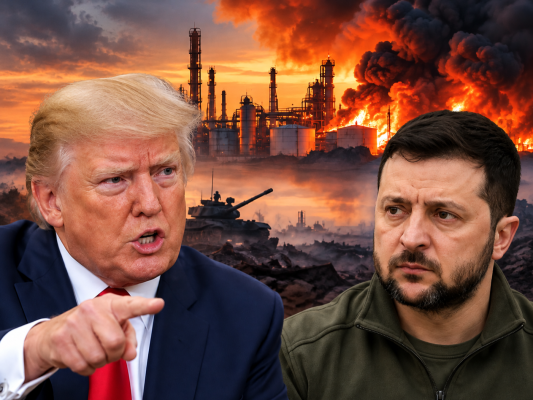
Trump Says Zelenskyy Could Have Ended Ukraine War Several Times
US President Donald Trump has accused Volodymyr Zelenskyy of missing opportunities to end the Ukraine war and warned against attacks on refineries and diesel fuel infrastructure.
 OCT 10, 2026
Mithun Chakraborty Says ‘Fear-Free Bengal Has Truly Arrived’
West Bengal government cultural advisor Mithun Chakraborty said the large festive turnout in Kolkata showed that a “fear-free Bengal” had arrived.
 OCT 10, 2026
Suvendu Adhikari Praises Mahalaya Arrangements at Kolkata Ghats
West Bengal CM Suvendu Adhikari praised police, civic and river-security arrangements during Mahalaya, saying traditional Tarpan rituals passed peacefully across Kolkata’s ghats.
 OCT 10, 2026
Piyush Goyal Slams Rahul Gandhi Over President Murmu Remarks
Piyush Goyal criticised Rahul Gandhi over his remarks following an Opposition meeting with President Droupadi Murmu, accusing him of disrespecting constitutional authority.
Comments (0)