

Assam Secures $71.9 Million ADB Loan for Wetland and Fisheries Project
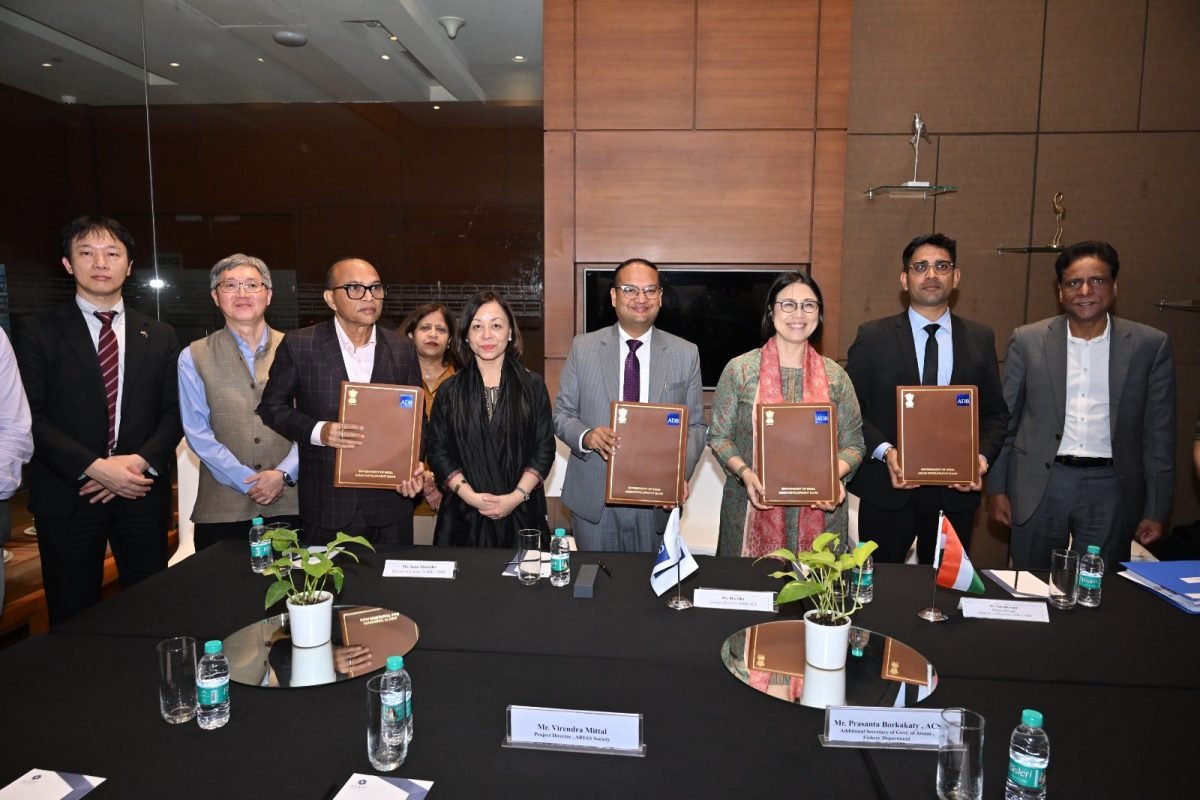
The Assam wetland fisheries project has received a major financial boost with a $71.9 million loan from the Asian Development Bank for the Sustainable Wetland and Integrated Fisheries Transformation, or SWIFT, Project.
The initiative aims to improve community-based management of Assam’s floodplain wetlands, locally known as beels, while strengthening fisheries productivity, rural livelihoods and environmental conservation.
ADB says the project will operate across at least 102 beels in Assam and support thousands of people who depend directly on wetland fisheries.
At Least 8,000 Beel-Dependent Beneficiaries to Gain
According to the Asian Development Bank, the project is expected to improve the livelihoods of at least 8,000 beel-dependent beneficiaries.
The programme will focus on increasing fishery productivity, improving market access and expanding alternative income opportunities so that communities are less dependent on intensive extraction from wetland resources.
Wetland Restoration Across 102 Beels
A major component of the project is the ecological restoration and conservation of Assam’s wetlands.
Planned interventions include:
Desilting and de-weeding of beels
Improving water inflow and outflow
Building water-retention structures and peripheral bunds
Installing silt traps and biofilters
Restoring connectivity between wetlands and adjoining rivers
ADB says these measures are intended to improve wetland biodiversity and fish productivity while introducing nature-based conservation practices.
Fisheries Value Chain to Receive Major Support
The project will also strengthen fisheries businesses and cooperatives.
Support is planned for better fishing equipment, improved inputs, fish landing sites, aggregation centres, processing infrastructure, branding and marketing.
Private-sector participation will also be encouraged through matching grants for hatcheries, feed mills, primary processing and other value-added fisheries activities.
Climate-Resilient Fishing Practices in Focus
The Assam wetland fisheries project will introduce climate-resilient fisheries management techniques and build the capacity of local communities and government departments.
Research and training will cover climate adaptation, fish breeding, conservation techniques, digital monitoring and sustainable stocking practices.
ADB has said the wider goal is to combine higher fish production with long-term protection of Assam’s wetland ecosystems.
Women’s Participation and Livelihood Diversification
Women and marginalised communities are expected to play a significant role in the programme.
ADB’s project documents specifically call for stronger women’s participation in community institutions, fisheries businesses and alternative income-generating activities.
Women’s self-help groups will receive support to develop supplementary livelihoods, helping reduce pressure on wetland resources while increasing household income.
Assam’s Beels Are Vital Rural Resources
Assam has extensive floodplain wetlands that are crucial for both biodiversity and rural livelihoods.
ADB estimates that the state’s beels cover more than 100,000 hectares, while more than 2.5 million people are involved in fisheries and related activities across Assam.
These wetlands also contribute to food security, local employment and income generation, particularly in rural areas.
Himanta Biswa Sarma Welcomes Project
Assam Chief Minister Himanta Biswa Sarma welcomed the initiative, describing it as an important step towards conserving the state’s natural resources while creating sustainable economic opportunities.
The state government has positioned the programme as a combined environmental and livelihood intervention, linking wetland restoration with higher incomes for fishing communities.
ADB Project Approved at $71.9 Million
ADB approved the project in December 2025 with financing of $71.90 million from its ordinary capital resources.
Implementation is being undertaken through the Assam Rural Infrastructure and Agricultural Services Society, with fisheries and wetland institutions participating in project delivery.
The Assam wetland fisheries project is expected to strengthen community institutions, improve fisheries productivity and create a more sustainable model for managing some of the state’s most important natural ecosystems.
Related News
 NOV 4, 2026
Amit Shah Challenges Rahul Gandhi to Let Parliament Function, Offers Discussion on SIR
Home Minister Amit Shah has challenged Rahul Gandhi to allow Parliament to function, reiterating the Modi government's willingness to discuss every issue, including the Special Intensive Revision (SIR) of electoral rolls.
 NOV 3, 2026
Yogi Adityanath Orders Tight Security, 24-Hour Social Media Monitoring Ahead of Festivals
Uttar Pradesh Chief Minister Yogi Adityanath directed officials to ensure airtight security, cleanliness and round-the-clock social media monitoring ahead of upcoming festivals.
 NOV 3, 2026
Jagdish Devda Meets Dilip Puri’s Family, Promises Strict Action in Illegal Liquor Case
Madhya Pradesh Deputy Chief Minister Jagdish Devda met the family of slain police officer Dilip Puri and promised strict action against those linked to the alleged illegal liquor network.
 NOV 3, 2026
Yogi Adityanath Announces LPG Refill Subsidy for 1.89 Crore Ujjwala Families
Uttar Pradesh Chief Minister Yogi Adityanath announced LPG refill subsidy support for more than 1.89 crore eligible Ujjwala beneficiaries with an allocation of ₹1,500 crore.
Comments (0)