

FIFPRO Report Finds 49% of Women Footballers Consider Leaving Football Early
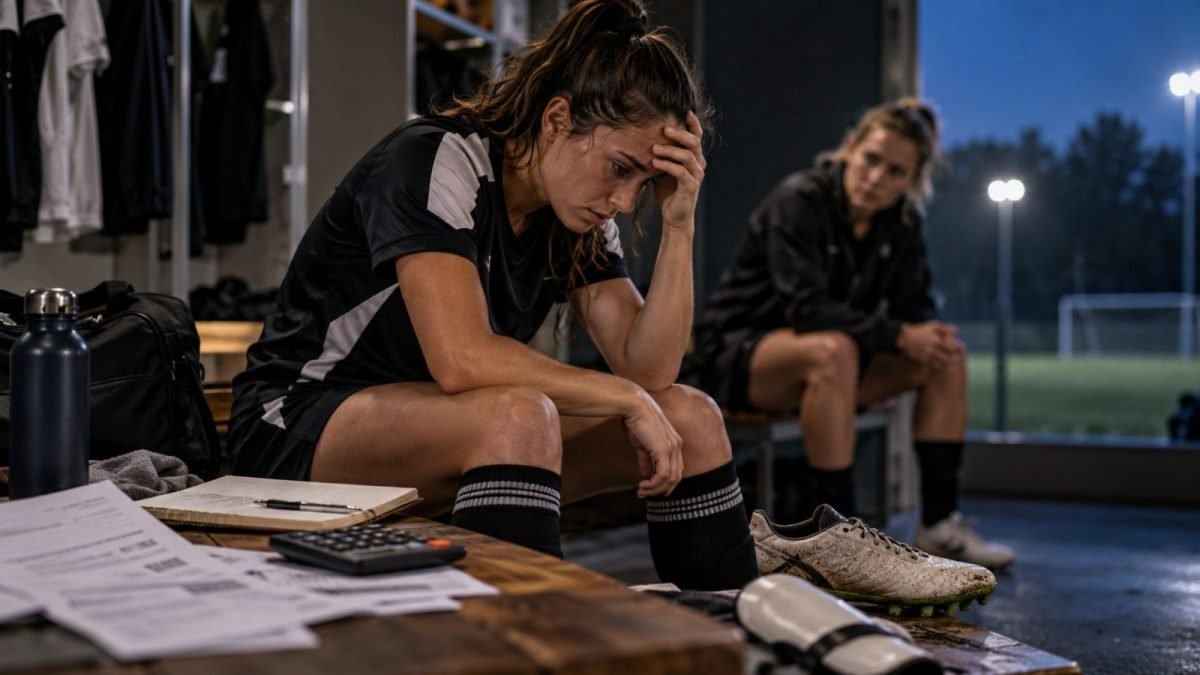
Nearly half of women footballers surveyed worldwide are considering leaving the sport earlier than planned, with financial difficulties and psychological stress emerging as major concerns. According to the 2026 FIFPRO Global Employment Report, the rapid commercial growth of women's football has not translated into consistent improvements in working conditions for players across the world.
The report, titled Working Conditions in Women's Football, draws on interviews with 800 players worldwide. It examines employment security, salaries, mental health support, maternity protection and other working conditions across the women's game.
Financial Pressure and Mental Health Concerns
The report found that 49% of surveyed players were considering leaving football earlier than planned. Among those considering an early exit, 59% cited their financial situation as a reason, while 46% identified psychological stress.
Mental health also emerged as a wider concern. Overall, 57% of players surveyed said they had experienced difficulties with their mental health, and half of those players reported that their clubs had not provided adequate support.
These findings highlight the challenges players face while balancing the demands of professional sport with financial uncertainty and emotional wellbeing.
Women's Football Salaries Show Uneven Growth
Although average monthly club wages have increased substantially since FIFPRO's previous global study in 2017, the benefits remain unevenly distributed.
According to the report, inflation-adjusted average monthly club wages have tripled to $2,601. However, the median monthly wage stands at $1,669, indicating that average figures do not reflect the earnings of a typical player.
The report also found that in 10 Eastern European countries analysed, average salaries remained below national minimum wages. In Western Europe and Asia/Oceania, average pay was not significantly higher than national minimum wages, despite the presence of some major women's football markets.
FIFPRO Director of Women's Football Alex Culvin said the professionalisation of women's football was accelerating in some regions, but the resulting benefits were not reaching players equally.
Employment Contracts and Player Benefits Remain Limited
The report identified gaps in basic employment protections across the women's game.
Key findings include:
56% of surveyed players have an employment contract.
13% receive a pension through their club.
47% said their clubs lacked sufficient staffing.
19 months is the average contract length, up from 12 months in 2017.
41% of players have agents, compared with 14% in 2017.
These findings suggest that many players continue to face uncertainty around employment security, financial planning and access to essential professional support.
The report also noted that access to written contracts, pensions, medical coverage and parental leave can depend heavily on the country and club in which a player competes.
Conditions Improve for a Small Group of Players
While the women's game has made progress at the highest level, FIFPRO said the improvements have not been experienced equally across the wider player population.
Culvin highlighted the gap between professional expectations and the resources available to many players. Some athletes are expected to train and compete at professional standards without adequate facilities, staffing or support systems.
The report describes these conditions as a source of instability, raising concerns about fair remuneration, player treatment and the quality of working environments.
FIFPRO Calls for Stronger Minimum Standards
FIFPRO is calling for enforceable minimum employment standards covering salaries, facilities, staffing and healthcare. It wants these protections incorporated into employment agreements at national level.
The report found that only eight of the 30 national women's leagues analysed had a collective agreement negotiated with players through their unions.
The organisation has also called for mandatory psychological support. It highlighted the National Women's Soccer League in the United States, where mental health practitioners work alongside club staff and players have access to up to six months of mental health leave under the league's provisions.
Maternity Protection Shows Signs of Progress
Maternity protection was identified as an area where regulation has contributed to positive change.
Since FIFA introduced global minimum maternity standards in 2021, the proportion of players considering leaving football to have a family has fallen to 19%, compared with 47% in 2017, according to FIFPRO.
The findings suggest that formal protections can help address some of the pressures that influence players' career decisions.
Balancing Commercial Growth With Player Protection
The expansion of women's football has created new commercial opportunities, increased visibility and growing professional ambitions. However, FIFPRO argues that these developments must be accompanied by stronger employment protections and better working conditions.
Culvin said commercial growth and player protection should progress together rather than be treated as competing priorities.
The report ultimately calls for a more equitable football industry in which players have access to fair pay, secure contracts, appropriate healthcare and mental health support, regardless of their location or club.
Related News
 OCT 12, 2026
How New Medical Technologies Are Transforming Heart Surgery and Improving Heart Health
Advances in cardiac imaging, minimally invasive procedures and multidisciplinary care are transforming heart treatment. Discover how modern heart surgery technology helps doctors diagnose valve disease, personalise treatment and monitor recovery.
 OCT 12, 2026
How Gummies, Wellness Shots and Oils Are Transforming India’s Wellness Habits
Gummies, wellness shots, oils and powders are reshaping India's wellness habits. As consumers seek convenient daily routines, transparency, product quality and informed choices are becoming increasingly important.
 OCT 10, 2026
Psychologists Explain Why “Stop Overthinking” Doesn’t Work and What You Should Do Instead
Being told to “stop overthinking” rarely helps when your mind keeps replaying conversations and imagining worst-case scenarios. Psychologists explain why repetitive thinking happens and share practical strategies to manage anxious thoughts, tolerate uncertainty, and regain control.
 OCT 10, 2026
An Ayurveda Expert Reveals Simple Daily Habits to Boost Your Body’s Natural Healing Abilities
Regenerative wellness is gaining attention as people seek sustainable ways to support healthy aging. Discover how Ayurveda, nutrition, yoga, sleep, stress management, and preventive healthcare can contribute to long-term well-being.