

Jairam Ramesh Targets PM Modi Over FICCI Speech, Says Policies Behind Weak Jobs and Investment
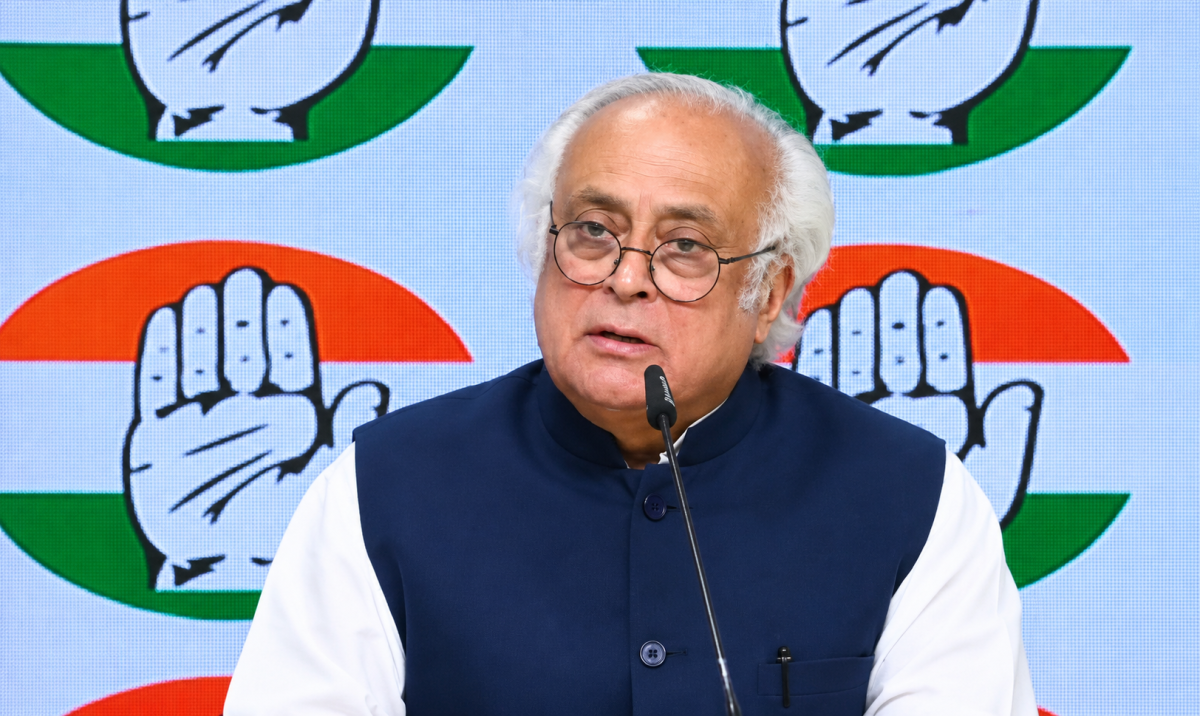
New Delhi: Congress leader Jairam Ramesh criticised Prime Minister Narendra Modi over his address at FICCI’s centenary convention, saying the Prime Minister had repeated concerns that Congress had raised earlier over stagnant wages, weak private investment and insufficient job creation.
In his Jairam Ramesh FICCI remarks, the Congress leader alleged that Modi appeared “rattled, disappointed and worried” and argued that the Prime Minister should examine his own government’s economic policies instead of placing responsibility on industry.
Ramesh Says Modi Echoed Congress Concerns
Ramesh said Modi’s remarks to industry leaders closely reflected issues highlighted in the Congress party’s Lok Sabha election manifesto, the Nyay Patra.
He pointed to three broad concerns: slow wage growth, private investment not rising sufficiently despite tax concessions, and employment not expanding at the desired pace.
At the FICCI convention, Modi had questioned corporate India over whether companies had sufficiently increased salaries, expanded hiring and invested more after receiving tax and policy support from the government.
Congress Blames Government Policies
Ramesh rejected the suggestion that industry alone was responsible for weak investment or employment growth.
He argued that the government’s policies and style of functioning had created conditions that discouraged investment and limited job creation. These are political claims made by the Congress leader, not independently established conclusions.
Ramesh also criticised what he described as increasing concentration of economic power and alleged that regulatory and investigative institutions had been used in ways that weakened competition and investor confidence.
Private Investment and Jobs at Centre of Political Row
The exchange has intensified a wider political debate over India’s economic performance.
Modi’s FICCI speech focused heavily on the role of private industry, urging businesses to take greater responsibility for job creation, salary growth, product quality, investment and global expansion.
Congress, however, has argued that subdued private investment and employment growth cannot be viewed separately from government policy decisions.
Ramesh said the Prime Minister should “look inwards” and assess why private investment and salaries had not risen at the expected pace.
Ramesh Raises Inflation, GST and China Trade Deficit
The Congress leader also linked the economic debate to inflation, GST, demonetisation and India’s trade deficit with China.
He alleged that these issues had put pressure on businesses, particularly MSMEs, and had contributed to weaker employment and investment conditions.
Congress has repeatedly used these issues to challenge the government’s economic record, while the BJP has pointed to strong headline GDP growth, infrastructure expansion and India’s position among the world’s fastest-growing major economies.
FICCI Speech Sparks Political Debate
Modi’s remarks at the FICCI centenary convention have drawn attention because of his unusually direct message to corporate leaders.
He asked whether businesses had passed the benefits of tax concessions and economic reforms on to employees through higher salaries and increased hiring, while urging industry to contribute more actively to India’s next phase of growth.
Ramesh said Congress had been raising similar concerns for years and accused the government of previously dismissing such criticism.
The exchange has now turned the FICCI address into a broader political debate over who bears greater responsibility for India’s employment, wage and private investment challenges.
Related News
 NOV 20, 2026
Suvendu Adhikari Thanks PM Modi and Nitin Gadkari for Approving ₹1,055 Crore Infrastructure Projects for West Bengal
West Bengal has secured over ₹1,055 crore in central infrastructure funding, including three road development projects and a new bridge over the Dwarakeshwar River in Hooghly.
 NOV 20, 2026
India Highlights Free and Open Indo-Pacific Vision at Expanded ASEAN Maritime Forum in Manila
India participated in the Expanded ASEAN Maritime Forum in Manila, highlighting maritime security, ASEAN cooperation and upcoming India-ASEAN initiatives.
 NOV 20, 2026
Delhi LG Inaugurates Yamuna Dialogue at Baansera, Calls for Scientific River Management
Delhi LG inaugurated the Yamuna Dialogue at Baansera, bringing together experts and stakeholders to discuss floodplain restoration and river rejuvenation.
 NOV 20, 2026
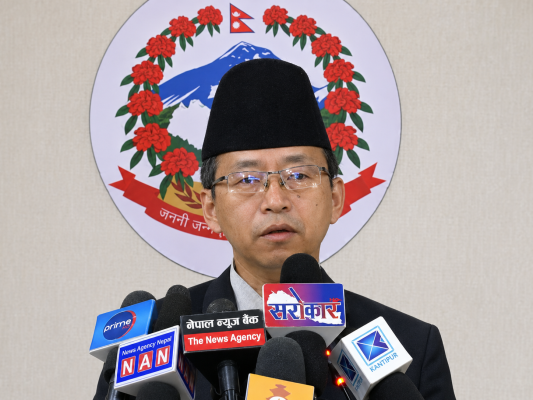
Nepal PM Balendra Shah to Visit India on November 22–23 for Talks With PM Modi
Nepal PM Balendra Shah will undertake a two-day State visit to India, leading a 34-member delegation for talks with PM Narendra Modi and other engagements.