

Mohan Bhagwat Recalls Early RSS Years, Says Swayamsevak Remains Sangh’s Identity
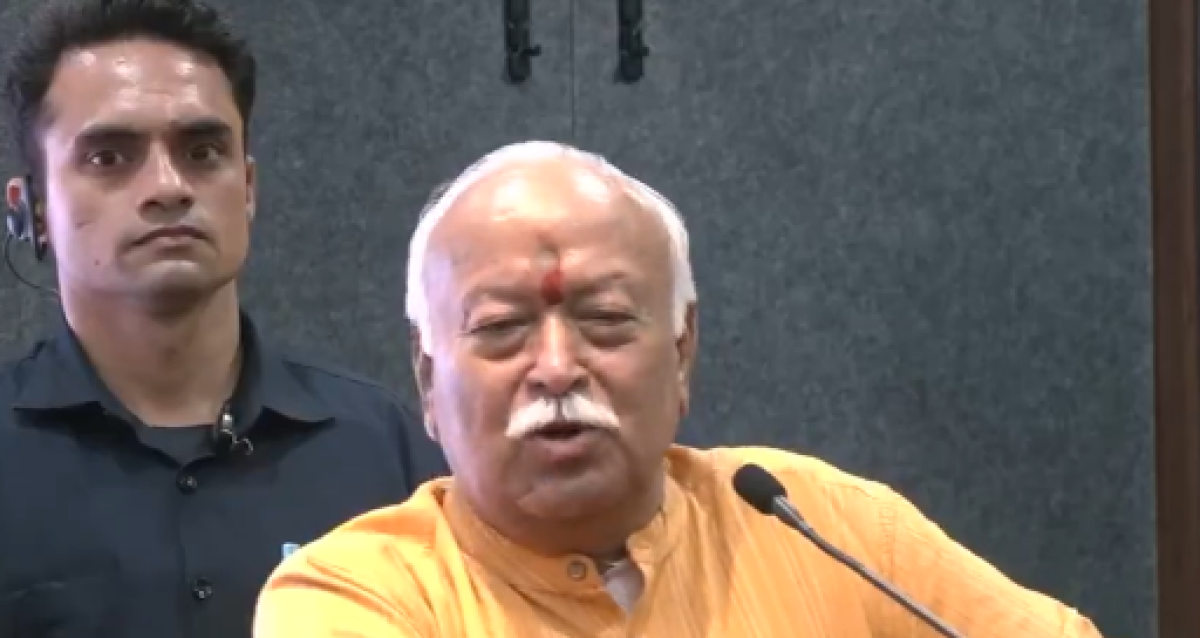
RSS chief Mohan Bhagwat on Monday recalled an episode from the organisation’s early years while speaking at the inauguration of the renovated headquarters and newly constructed auditorium of Nagpur Nagrik Sahakari Bank Limited in Nagpur.
Bhagwat said that during the 1930s, when the then Central Provinces administration attempted to restrict the Rashtriya Swayamsevak Sangh, the organisation was still relatively little known and had few people publicly defending it.
The RSS itself dates its foundation to Vijayadashami in 1925, when K.B. Hedgewar established the organisation in Nagpur.
Bhagwat Recalls Central Provinces Assembly Debate
Bhagwat referred to a legislative debate from the period when the Central Provinces government had sought to restrict government employees from associating with the RSS on the ground that it was a communal and political organisation.
Historical accounts confirm that the provincial government issued restrictions against government and district council employees joining the RSS in 1932 and 1933, and that the issue later became the subject of a cut motion in the legislature.
Bhagwat said a legislator named Ibrahim spoke against banning the Sangh and defended Hedgewar personally.
The specific wording of the anecdote cited by Bhagwat is best understood as his recollection of that episode; I did not find an independent archival source reproducing the full quotation exactly as he delivered it.
‘Everyone Knew Dr Hedgewar’
Bhagwat said the RSS was still a young organisation at the time and had not yet developed the public recognition it later achieved.
He argued, however, that Hedgewar himself was already widely known.
Historical material from the period shows that the RSS was still concentrated mainly in the Central Provinces during the early 1930s and expanded more broadly only later in that decade.
Swayamsevak Became the Sangh’s Identity
Bhagwat said that as the organisation expanded, the swayamsevak, or volunteer, became its defining public identity.
He said:
“Even today, after 100 years, Swayamsevak is Sangh’s identity.”
The RSS marked its centenary in 2025-26, a century after its establishment in Nagpur.
RSS Faced Government Restrictions in the 1930s
Records from the period show that British authorities closely monitored the RSS as it expanded.
A 1933 Central Provinces government order described the organisation as communal and restricted government employees from joining it. Another notification extended restrictions to teachers and local-body employees.
RSS-linked historical accounts state that the provincial government later faced opposition in the legislature over those restrictions.
Bhagwat Speaks at Nagpur Bank Event
Bhagwat made the remarks during the inauguration of the renovated headquarters and auditorium of Nagpur Nagrik Sahakari Bank.
The event was scheduled at the bank’s Central Avenue headquarters in Nagpur and included senior political and cooperative-sector figures.
His speech used the historical anecdote to emphasise continuity between the early RSS and its present-day volunteer network.
Centenary Focus on Organisational Identity
The Mohan Bhagwat RSS centenary remarks centred less on formal organisational structures and more on the role of individual volunteers.
Bhagwat argued that despite changes in scale and influence over the past century, the swayamsevak remains the Sangh’s most recognisable identity.
Related News
 NOV 9, 2026
Delhi AQI Nears Severe Mark After Diwali Celebrations
Delhi's average AQI climbed to 370 on Monday morning after Diwali, with several monitoring stations recording severe pollution levels. Firecracker emissions, vehicular pollution and unfavourable weather conditions are expected to worsen the situation.
 NOV 9, 2026
'You're Amazing Man': Carlos Alcaraz's Heartfelt Praise for Ben Shelton
Carlos Alcaraz paid a heartfelt tribute to Ben Shelton after the Paris Masters final, praising the American's resilience, professionalism and champion mentality.
 NOV 8, 2026
Carlos Alcaraz Beats Ben Shelton to Win Maiden Paris Masters Title
Carlos Alcaraz defeated Ben Shelton 7-6(5), 7-5 to win his maiden Paris Masters title. The Spaniard claimed his ninth Masters 1000 crown, avenged his US Open defeat and extended his winning streak to nine matches.
 NOV 8, 2026
Rashmika Mandanna Shares Heartwarming Diwali Wishes
Actress Rashmika Mandanna shared a series of pictures from her Diwali celebrations, sending heartfelt wishes of happiness, good health, joy and endless love to her fans and their families.
Comments (0)