

Asaduddin Owaisi Criticises Maharashtra UCC Questionnaire, Calls It ‘Hindu Civil Code’
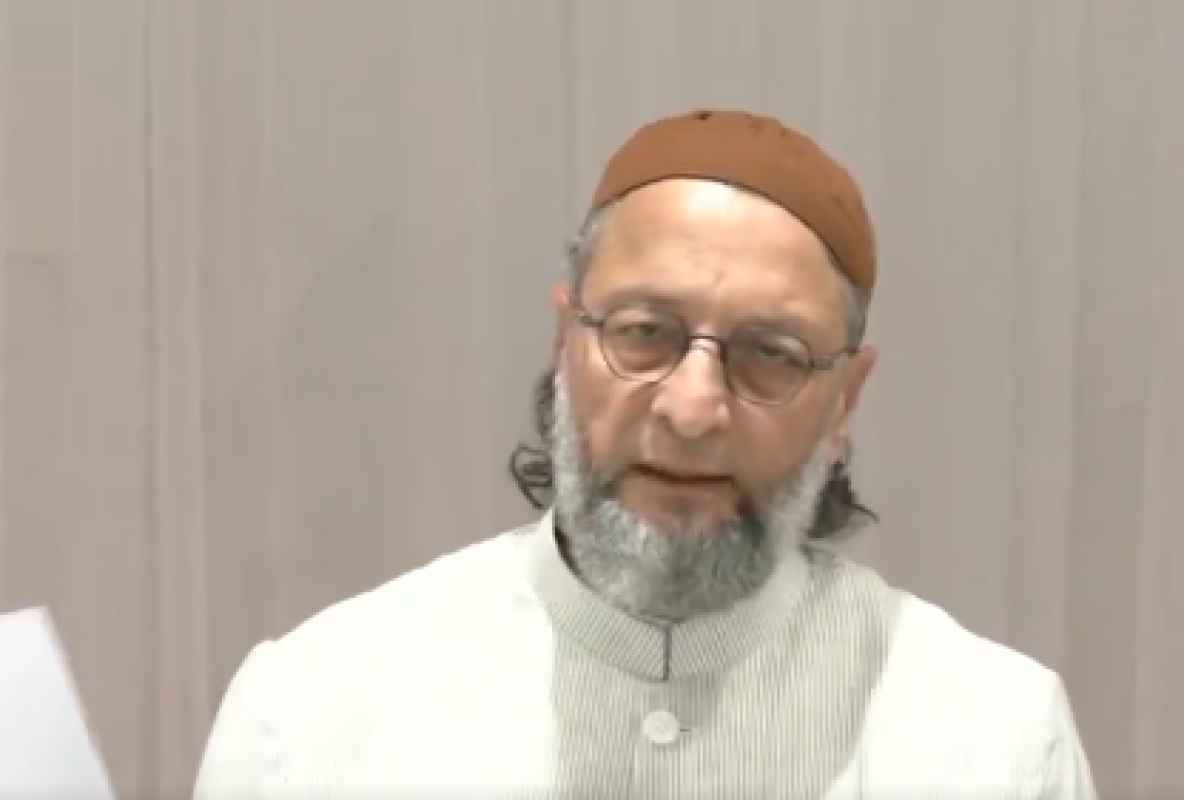
AIMIM president Asaduddin Owaisi on Tuesday criticised the Maharashtra government’s public consultation on a proposed Uniform Civil Code, alleging that the questionnaire reveals a predetermined intention to implement the law.
Speaking in Mumbai, Owaisi said the questions focus heavily on matters such as polygamy and extra-judicial divorce while, according to him, failing to address issues relating to the Hindu Undivided Family system.
He argued that this made the exercise unequal in scope and described the proposed framework as a “Hindu Civil Code”. That characterisation is Owaisi’s political assessment of the consultation, not an established legal finding.
Maharashtra UCC Panel Seeks Public Feedback
The Maharashtra government-appointed UCC committee, chaired by former Supreme Court judge Justice Ranjana Desai, launched its consultation portal in October.
The questionnaire contains 37 questions covering areas including:
Marriage
Divorce
Polygamy
Nikah halala
Live-in relationships
Maintenance
Inheritance
Adoption
Guardianship
Succession
Citizens and organisations can submit responses until November 15, 2026.
Owaisi Questions Absence of HUF Issue
Owaisi said the consultation should also examine the Hindu Undivided Family, particularly because HUF status has legal and taxation implications.
He argued that excluding that issue while asking detailed questions about polygamy and divorce practices creates an imbalance in the exercise.
The published questionnaire does contain questions on inheritance, wills, succession and equal property rights, but reporting on the 37 questions does not indicate a specific question focused on the HUF structure.
Majority of Questions Use Structured Responses
Owaisi also criticised what he described as the predominance of yes-or-no questions.
The consultation does use many structured responses such as “Yes”, “No” and “No Comment”, although it also includes a section allowing written suggestions on personal laws, inheritance and other issues.
He said complex issues involving family law and religious practices could not be adequately examined through binary answers alone.
Justice R.C. Chavan Resigned From UCC Panel
Owaisi linked his criticism to the earlier resignation of retired Bombay High Court judge Justice R.C. Chavan from the state’s UCC committee.
Chavan resigned on September 19, 2026, citing differences over the public-feedback process and questioning how the questionnaire had been finalised.
In his resignation communication, he objected to reducing complex social issues to yes-or-no responses and said he had expected a broader consensus-building exercise.
However, reports on his resignation indicate that his reasons also included concerns about the participation of a non-member at a committee meeting. His resignation was therefore not attributed solely to the absence of minority representation.
Committee Headed by Justice Ranjana Desai
The Maharashtra government formed the committee in July and gave it six months to prepare recommendations and a draft framework.
It is headed by retired Supreme Court judge Justice Ranjana Desai, who has also been associated with UCC exercises in other BJP-governed states.
The committee is expected to consider public feedback and conduct consultations before submitting its recommendations to the government.
Fadnavis Government Plans UCC Legislation
Chief Minister Devendra Fadnavis has said the Maharashtra government intends to bring a UCC Bill during the winter session of the state legislature.
The consultation is therefore part of the preparatory process before any draft legislation is placed before the Cabinet and Assembly.
Owaisi Says ‘Uniform’ Has Not Been Defined
The Owaisi Maharashtra UCC criticism also centred on what he described as a lack of clarity over the meaning of “uniformity”.
He argued that personal-law systems across communities contain different legal and customary structures and that the government had not adequately explained which elements would be retained, amended or abolished.
The questionnaire itself asks whether respondents support a UCC, whether it can be introduced without infringing religious freedom, and whether common rules should apply in areas such as marriage, divorce and inheritance.
Debate Over Maharashtra UCC Intensifies
The consultation has therefore become part of a broader political and legal debate over whether uniform personal laws can be introduced while protecting constitutional rights and religious practices.
The Maharashtra government says the exercise is intended to gather public views before finalising recommendations.
Owaisi and other critics argue that the wording and scope of the questionnaire raise concerns about whether the process treats different communities and legal traditions equally.
Related News
 NOV 10, 2026
Himachal Pushes Improved Dairy and Goat Breeds to Strengthen Rural Economy
Rampur SDM Harsh Amarender Singh said Himachal Pradesh is working with the Animal Husbandry Department to introduce improved dairy and goat breeds for farmers.
 NOV 10, 2026
Sarbananda Sonowal Launches Namo Yamuna River Safari in Delhi
Union Minister Sarbananda Sonowal launched the Namo Yamuna River Safari at Sonia Vihar, calling the project an example of India’s growing inland waterways vision.
 NOV 10, 2026
Yash Wore Costumes Weighing Up to 33 Kg as Ravana in Ramayana
Yash wore elaborate Ravana costumes weighing up to 33 kg for Nitesh Tiwari’s Ramayana, while his crown alone weighed 1.8 kg, designer Saniya Sardhariya revealed.
 NOV 10, 2026
Rekha Gupta Launches Namo Yamuna River Safari in Delhi
Delhi Chief Minister Rekha Gupta launched the Namo Yamuna River Safari, a new recreational cruise service between Sonia Vihar and Jagatpur.
Comments (0)