

Himachal Pushes Improved Dairy and Goat Breeds to Strengthen Rural Economy

Himachal Pradesh is focusing on improved livestock breeds and higher milk production as part of efforts to strengthen the rural economy, Rampur Sub-Divisional Magistrate Harsh Amarender Singh has said.
Speaking in Rampur, Singh said the state government had introduced several measures for dairy farmers, including substantial increases in milk procurement prices, and was now exploring ways to help livestock owners access more productive breeds.
He said discussions with the Animal Husbandry Department had also focused on bringing suitable high-yield goat breeds from Rajasthan to the region.
Focus on Better Dairy Breeds
Singh said improving livestock productivity was important for increasing farmers’ incomes.
The administration is looking at how farmers can gain access to better breeds of cows and dairy goats that can produce more while remaining economically viable under local farming conditions.
He said some goat breeds found in Rajasthan were attractive because of their comparatively efficient feed requirements as well as their potential for milk and meat production.
The specific Rajasthan breeds involved in the Rampur initiative were not identified in the remarks.
Himachal Has Raised Milk Procurement Prices
The state government has sharply increased procurement prices in recent years.
Himachal’s 2026-27 Budget said the procurement price of cow milk would rise from ₹51 to ₹61 per litre, while buffalo milk would increase from ₹61 to ₹71 per litre.
The government has presented the increases as part of its strategy to channel more income directly to rural households and make dairying a stronger source of regular earnings.
Milk Prices Have Nearly Doubled in Recent Years
The 2026 state Budget noted that the cow-milk procurement price had increased from ₹31.80 to ₹51 per litre over the preceding three years, while buffalo milk had reached ₹61 per litre.
During the same period, annual milk procurement by Himachal Pradesh Milkfed increased from around 4 crore litres to 8 crore litres, according to the government.
The government has linked that growth to higher farmer participation in organised dairy procurement.
Milk Incentive Also Increased
The state has also expanded its Milk Incentive Scheme for farmers associated with eligible cooperative institutions.
The incentive is being increased from ₹3 to ₹6 per litre through Direct Benefit Transfer, with the government saying the measure is intended to ensure that more of the benefit reaches producers directly.
Recent state reporting said the higher incentive would benefit thousands of livestock-rearing households.
Improved Breeds Seen as Next Step
The Himachal dairy goat farming initiative reflects an effort to complement higher procurement prices with improvements in livestock productivity.
Singh said simply raising purchase prices was not enough if farmers lacked access to animals capable of producing milk efficiently.
Better genetics, appropriate feeding, veterinary support and animal-health services can all influence productivity and profitability in dairy and goat farming.
Animal Husbandry Department Involved
According to Singh, the local administration has been working in consultation with the Animal Husbandry Department on bringing suitable improved goat breeds from Rajasthan.
The intention is to identify animals that can adapt to local conditions while providing farmers with better economic returns from both milk and meat.
Any introduction of breeds from outside Himachal would also require appropriate health checks, breeding management and adaptation to local climatic conditions.
Himachal Expanding Livestock Development
The state’s wider 2026-27 livestock strategy also includes measures for sheep and goat rearers.
The Budget announced the proposed PEHEL — Pastoralists Empowerment in Himalayan Ecosystems for Livelihood — Scheme, with an outlay of ₹300 crore, aimed at supporting more than 40,000 pastoralist families.
The government also proposed introducing improved sheep breeds while conserving indigenous livestock such as the Chegu goat and traditional Gaddi dogs.
Dairy Infrastructure Also Being Expanded
Himachal Pradesh has simultaneously expanded its milk-processing and collection infrastructure.
The state Economic Survey reports automatic and digital milk-collection units, bulk milk coolers and expanded processing capacity across several districts.
It also records increased procurement prices and growing financial benefits for dairy producers.
Rural Income at Centre of Livestock Policy
The Himachal dairy goat farming push therefore combines higher milk prices, producer incentives, improved breeds and stronger dairy infrastructure.
The state government says these measures are intended to make animal husbandry a more dependable source of income for rural families while reducing their dependence on traditional low-productivity farming alone.
Related News
 NOV 10, 2026
Asaduddin Owaisi Criticises Maharashtra UCC Questionnaire, Calls It ‘Hindu Civil Code’
AIMIM president Asaduddin Owaisi criticised Maharashtra’s UCC consultation, alleging the questionnaire unfairly focuses on practices affecting minority communities.
 NOV 10, 2026
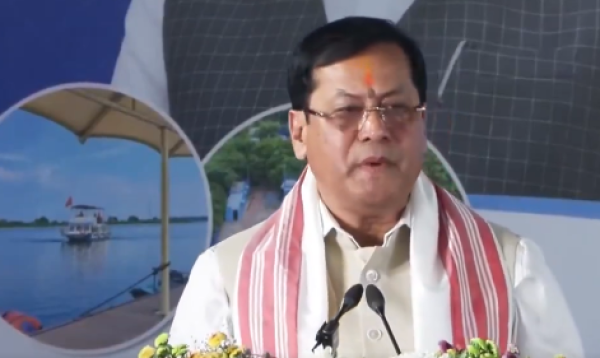
Sarbananda Sonowal Launches Namo Yamuna River Safari in Delhi
Union Minister Sarbananda Sonowal launched the Namo Yamuna River Safari at Sonia Vihar, calling the project an example of India’s growing inland waterways vision.
 NOV 10, 2026
Yash Wore Costumes Weighing Up to 33 Kg as Ravana in Ramayana
Yash wore elaborate Ravana costumes weighing up to 33 kg for Nitesh Tiwari’s Ramayana, while his crown alone weighed 1.8 kg, designer Saniya Sardhariya revealed.
 NOV 10, 2026
Rekha Gupta Launches Namo Yamuna River Safari in Delhi
Delhi Chief Minister Rekha Gupta launched the Namo Yamuna River Safari, a new recreational cruise service between Sonia Vihar and Jagatpur.
Comments (0)