

Piyush Goyal Questions Europe’s Carbon Footprint, Defends India’s Climate Record
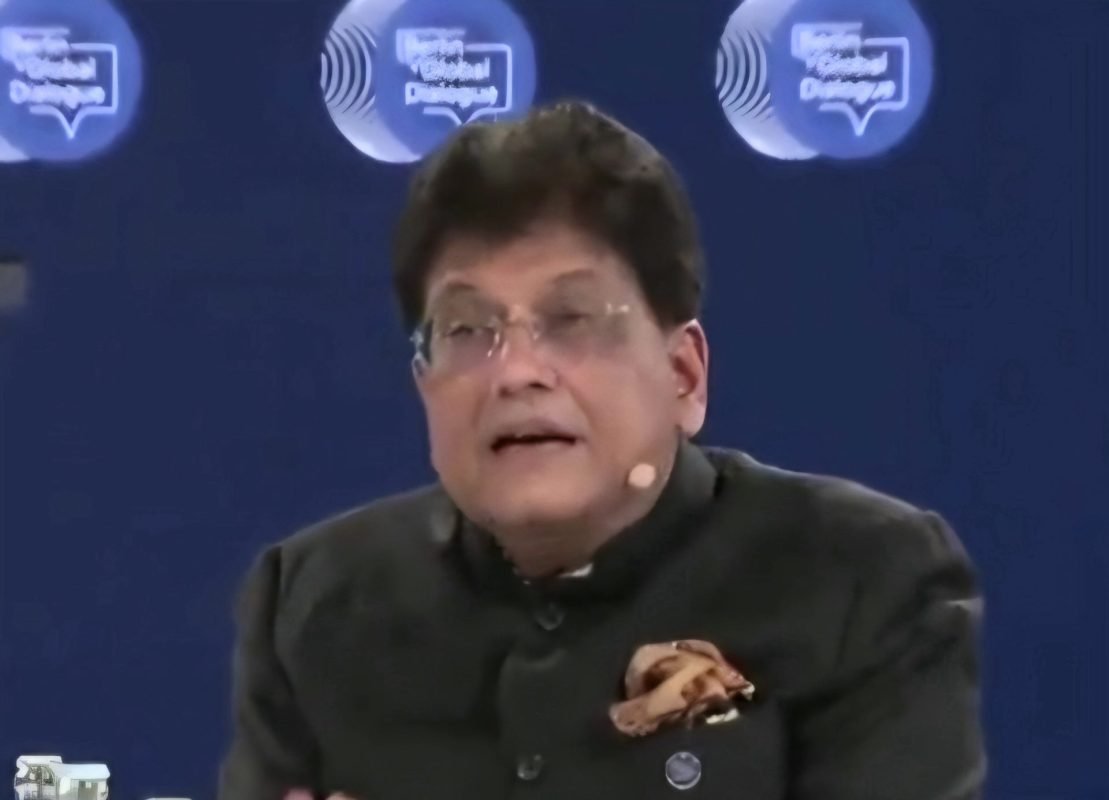
Union Minister of Commerce and Industry Piyush Goyal has strongly questioned Europe’s historical responsibility for global carbon emissions, arguing that developed economies must acknowledge their contribution to climate change while recognising the challenges faced by developing nations.
India is conscious of and committed to its role in climate action. https://t.co/ONx3nB0ik8
— Piyush Goyal (@PiyushGoyal) October 22, 2026
Speaking on the issue of climate responsibility, Goyal highlighted the disparity between India’s share of the global population and its contribution to worldwide carbon emissions. He said India accounts for approximately 17% of the world’s population but contributes less than 3% of global carbon emissions.
In contrast, he argued that Europe’s contribution to historical and current emissions has been disproportionately high compared with its share of the global population.
“Who’s responsible for this mess in the first place?” Goyal asked, questioning which countries had contributed most significantly to the accumulation of carbon in the atmosphere and the environmental damage associated with industrialisation.
The Union Minister also highlighted the difference in per capita emissions and environmental impact between India and Europe. According to Goyal, Europe’s per capita contribution to carbon emissions and its environmental impact remain substantially higher than India’s.
Goyal emphasised that India must balance its climate commitments with the responsibility of meeting the energy, food and security needs of approximately 1.4 billion people. He argued that developing countries should not be expected to shoulder the same burden as economies that industrialised earlier and contributed significantly to the climate crisis.
Despite these challenges, Goyal pointed to India’s expanding clean energy programme as evidence of the country’s commitment to sustainable development. He said India is pursuing one of the world’s fastest-growing clean energy programmes while continuing to address the development needs of its population.
His remarks underline India’s position on the principle of climate equity, which calls for countries to take account of their historical emissions, economic capabilities and differing development requirements when determining climate responsibilities.
The comments also add to the wider international debate over carbon emissions, climate justice and the European Union’s Carbon Border Adjustment Mechanism (CBAM), particularly its implications for developing economies seeking to expand their industries while transitioning towards cleaner energy.
Related News
 OCT 23, 2026
Sheetal Devi Shines with Three Medals at the Asian Para Games
Indian para-archery star Sheetal Devi signs off from the Asian Para Games with two gold medals, one silver and three record milestones—one world record equalled and two new world records set—celebrating a journey of resilience, belief and pride in India.
 OCT 23, 2026
India Soars on Day 4: Historic Medal Rush Propels Nation to 88 Medals at Asian Para Games 2026!
India delivered a spectacular performance on Day 4 of the Asian Para Games 2026, winning 26 medals across multiple disciplines. With 21 gold, 26 silver and 41 bronze medals, India reached 88 medals overall and climbed to fourth place in the standings.
 OCT 23, 2026
Netanyahu Invites PM Modi to Honour Indian Pilot Smit Machchhar in Israel
Benjamin Netanyahu has reportedly invited Narendra Modi to honour Captain Smit Machchhar at Israel’s 2027 Independence Day ceremony, recognising the Indian pilot’s reported bravery during an onboard attack.
 OCT 23, 2026
Katherina Reiche: “India’s Growth Story Is Impressive,” Sees Scope to Double Trade
German Economic Affairs Minister Katherina Reiche has praised India’s rapid economic growth and called for stronger trade, investment and industrial partnerships, expressing confidence that India and Germany could at least double their €31 billion trade volume.