

Priyank Kharge Accuses Centre of Misleading Public Over Ethanol Blending
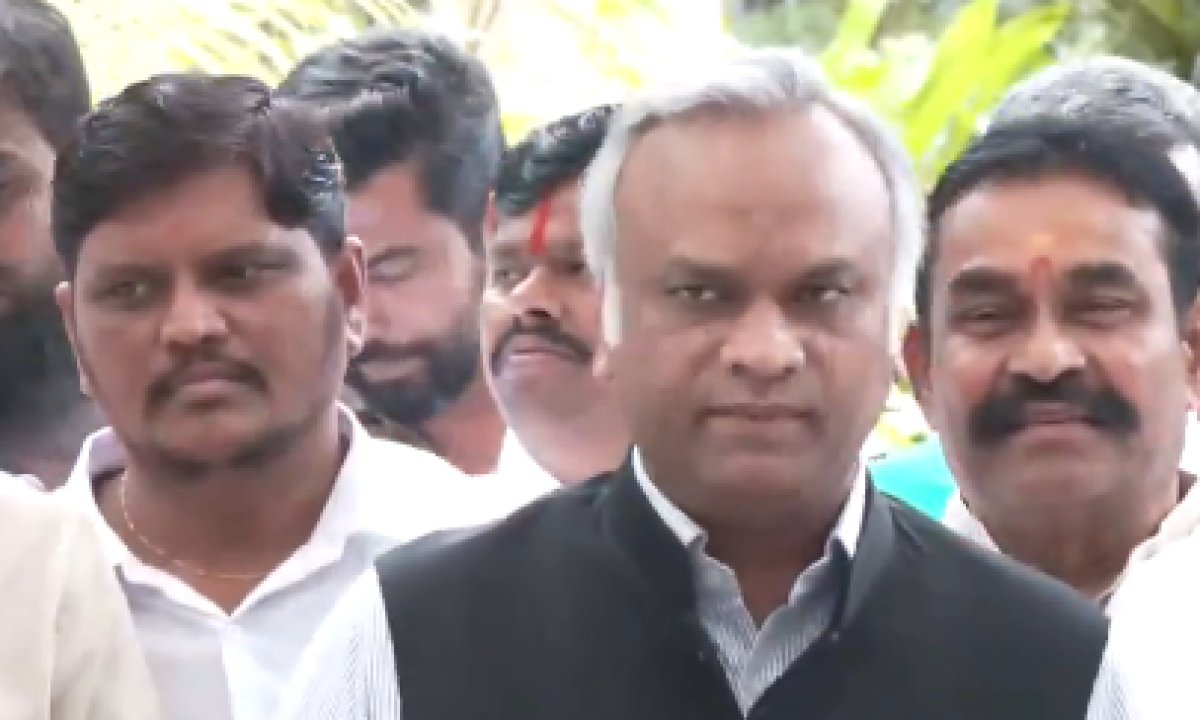
Karnataka Minister Priyank Kharge on Saturday accused the Union government of misleading consumers over India’s ethanol-blended petrol programme, citing laboratory tests commissioned by the Karnataka government that reportedly found ethanol levels above the prescribed 20% E20 blend in several fuel samples.
Speaking in Bengaluru, Kharge alleged that the government had assured consumers that ethanol blending would not exceed specified levels but that laboratory findings indicated higher concentrations in some samples.
His claims come amid a dispute between the Karnataka government and major oil marketing companies over fuel samples tested in the state.
Karnataka Tests Find Ethanol Above 20%
Karnataka officials said samples collected from petrol pumps across seven districts were tested at a NABL-accredited and ISO-certified laboratory.
According to results cited by the state government, some samples showed ethanol content of up to 31.2%, including samples associated with major public and private fuel retailers.
Reported readings included:
31.2% in one Indian Oil sample
30.5% in one HPCL sample
27% in another HPCL sample
26.5% in a BPCL Speed sample
26.1% in a Nayara sample
25.5% in a Shell sample
The findings prompted Karnataka officials to question whether fuel exceeding E20 specifications could affect vehicles designed for blends of up to 20%.
Kharge Refers to Blends of 35–40%
During his remarks, Kharge said ethanol levels had reached “35%, 40% in some cases.”
However, the publicly reported Karnataka laboratory results reviewed so far show a maximum of 31.2%.
His higher figures should therefore be understood as part of his political statement unless additional laboratory reports establish those levels.
Oil Companies Dispute Karnataka Findings
Major oil marketing companies have challenged Karnataka’s test results.
According to Reuters, Indian Oil, Bharat Petroleum and Hindustan Petroleum said their testing of 56 samples showed ethanol content between approximately 19% and 20%.
The companies reportedly questioned the state’s sampling and testing methodology and sought access to the records, while proposing joint testing.
The dispute therefore remains unresolved.
Centre Says E20 Is the Current National Standard
The Union government has repeatedly said that 20% ethanol blending is the current nationwide target.
The Petroleum Ministry said in July that no decision had been taken to increase the regular nationwide blend beyond E20 and that any future increase would follow technical studies and consultations with automakers, oil companies and research institutions.
The Centre has also maintained that E20 was introduced after laboratory testing, field trials and consultation with bodies including ARAI, SIAM, Indian Oil and the Indian Institute of Petroleum.
Kharge Accuses Centre of Favouring Private Interests
Kharge went further by alleging that the ethanol programme had been structured to benefit companies linked to Union ministers.
That is a political allegation by the Karnataka minister. No evidence establishing such a connection was presented in the remarks provided, and it should not be treated as a proven finding.
He also accused the Centre of pursuing the policy for “profiteering”.
The Union government, by contrast, says ethanol blending is intended to reduce crude-oil imports, improve energy security, support farmers and lower environmental impact.
Dispute Over Supreme Court ‘Experiment’ Remark
Kharge also referred to reports that the government had described ethanol blending as an “experiment” before the Supreme Court.
There was controversy over this issue in June after some media reports said the government had called the E20 programme an ongoing experiment.
The Office of the Attorney General subsequently issued an official clarification, saying no such submission had been made and that reports describing the programme as an experiment were incorrect.
The court proceedings concerned ethanol allocation disputes involving oil marketing companies, rather than a judicial finding on whether E20 itself was safe.
Centre Says Programme Is Scientifically Validated
The Petroleum Ministry has defended E20 as scientifically validated and monitored.
According to the government, India’s average ethanol blending rose from about 8.1% in 2020-21 to 20% during the 2025-26 supply year, following a phased rollout.
The ministry has also said there have been no verified widespread engine failures attributable to specification-compliant E20 petrol.
Karnataka Seeks Clarity on Fuel Quality
The Priyank Kharge ethanol blending remarks add to growing scrutiny of whether petrol being sold at individual fuel stations consistently meets prescribed E20 specifications.
Karnataka’s laboratory findings and the oil companies’ counter-tests currently present conflicting evidence.
The key issue now is whether further independent or jointly supervised testing confirms that some retail fuel contains ethanol substantially above the 20% level prescribed for nationwide E20 petrol.
Related News
 NOV 7, 2026
Mukhtar Abbas Naqvi Backs SIR, Targets Sonia Gandhi Memoir
BJP leader Mukhtar Abbas Naqvi defended the removal of ineligible names from electoral rolls and criticised Sonia Gandhi’s forthcoming memoir amid the SIR political dispute.
 NOV 7, 2026
Dhami Highlights Roads, Tourism and Connectivity Push in Uttarakhand Border Villages
Uttarakhand Chief Minister Pushkar Singh Dhami highlighted improved roads, telecom connectivity and tourism initiatives in border areas including Mana, Gunji, Malari and Niti.
 NOV 7, 2026
Pushkar Singh Dhami Celebrates Diwali With Soldiers, Hails Agniveer Decision
Uttarakhand Chief Minister Pushkar Singh Dhami celebrated Diwali with soldiers, praised their dedication and welcomed the Centre’s additional two-year engagement for Agniveers.
 NOV 7, 2026
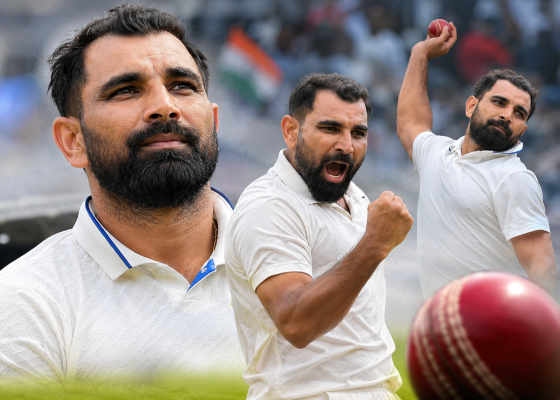
Mohammed Shami Announces Retirement from Red-Ball Cricket
Mohammed Shami announces his retirement from red-ball cricket on the anniversary of his Test debut in 2013, concluding his career with 229 wickets in 64 Tests.
Comments (0)