

Public Examinations Amendment Bill 2026 Passed in Parliament
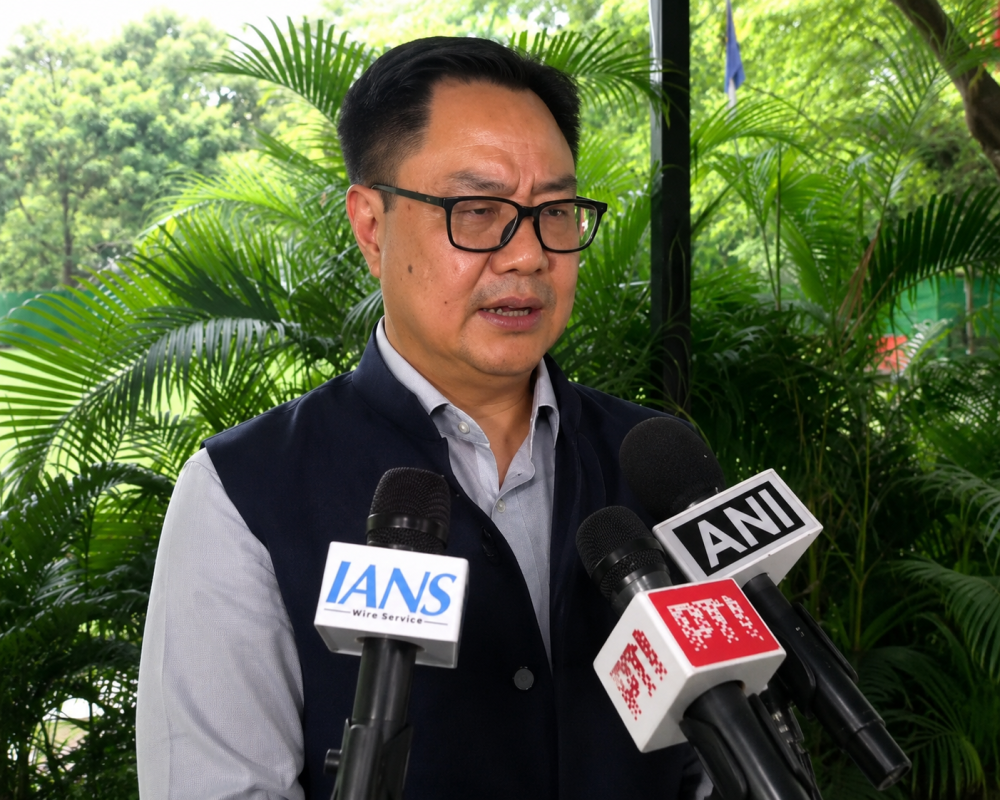
Public Examinations Amendment Bill 2026 has been passed by Parliament, with Parliamentary Affairs Minister Kiren Rijiju describing the legislation as an important step towards tackling examination paper leaks and protecting students' interests.
Speaking after the passage of the bill, Rijiju said the legislation received the support of a majority of MPs. He maintained that there was no substantial opposition to the objective of preventing unfair means in public examinations, while suggesting that disagreements expressed during the proceedings were politically motivated.
Public Examinations Amendment Bill 2026 Gets Parliamentary Approval
The Public Examinations Amendment Bill 2026 seeks to strengthen measures against unfair practices associated with public examinations, particularly the issue of examination paper leaks.
Kiren Rijiju said the bill had been passed with the support of the majority of Members of Parliament.
According to the minister, the issue of examination paper leaks has serious implications for students and the credibility of competitive examinations.
Kiren Rijiju Calls for Action Against Paper Leaks
Rijiju emphasised the need for effective implementation of the legislation once it comes into force.
He said the government's immediate priority should be to implement the provisions of the Public Examinations Amendment Bill 2026 as quickly as possible.
The minister highlighted the need to protect students and ensure that examination systems remain fair and credible.
Focus on Students' Future
According to Rijiju, examination paper leaks can have a significant impact on students who prepare for competitive examinations.
He stressed that protecting students' interests should remain a priority and that all stakeholders should work together to strengthen the examination system.
Minister Appeals to Opposition Parties
The Parliamentary Affairs Minister also appealed to Opposition parties to cooperate with the functioning of Parliament.
While acknowledging that Opposition parties have the right to raise issues and concerns, Rijiju urged them not to disrupt important parliamentary business.
He specifically appealed for cooperation during:
Question Hour.
Consideration and passage of bills.
Parliamentary debates.
Other scheduled legislative business.
Rijiju argued that Parliament should be allowed to conduct its listed business while Opposition parties continue to raise issues through appropriate parliamentary mechanisms.
Political Differences Over the Bill
The passage of the Public Examinations Amendment Bill 2026 comes amid continued political disagreements in Parliament.
According to Rijiju, there was broad agreement on the need to address examination paper leaks, although he claimed that some objections raised during the proceedings were politically motivated.
The Opposition, meanwhile, has continued to raise various issues during the ongoing Parliament session.
The contrasting positions have contributed to repeated disruptions of parliamentary proceedings.
Why the Public Examinations Bill Matters
Examination paper leaks have emerged as a major concern for students, parents and educational institutions.
A leak can undermine the credibility of an examination and create uncertainty for candidates who have prepared for months.
The Public Examinations Amendment Bill 2026 is therefore being positioned by the government as part of a broader effort to strengthen the examination system and deter unfair practices.
Strengthening Examination Integrity
The legislation is expected to provide a stronger legal framework for dealing with unfair means associated with public examinations.
The government's stated objective is to ensure that examinations are conducted transparently and that students receive a fair opportunity based on their preparation and performance.
Government Seeks Smooth Parliamentary Functioning
Rijiju also referred to other important bills listed for consideration in Parliament.
He appealed to Opposition parties to allow legislative business to proceed while continuing to raise their concerns.
The minister said that political parties could debate their respective issues without preventing the House from conducting essential business.
Implementation Now the Key Challenge
With the Public Examinations Amendment Bill 2026 receiving parliamentary approval, its effective implementation will become the next major focus.
The success of the legislation will depend on how effectively authorities enforce its provisions and prevent unfair practices.
Coordination among examination authorities, law-enforcement agencies and educational institutions will also be important in ensuring that the intended safeguards are effective.
The Public Examinations Amendment Bill 2026 has received parliamentary approval, with Parliamentary Affairs Minister Kiren Rijiju calling it an important measure to tackle examination paper leaks and protect students.
Rijiju said the bill had received majority support and urged all political parties to cooperate in ensuring the smooth functioning of Parliament. He also stressed that the government would prioritise early implementation of the legislation while asking the Opposition to raise its concerns without disrupting Question Hour and other legislative business.
Related News
 OCT 22, 2026
India Crosses the 62-Medal Mark: Golden Haul and Podiums Sweep on Day 3 of the Asian Para Games 2026
India enjoyed a spectacular Day 3 at the Asian Para Games 2026, winning 14 gold medals and reaching 62 medals overall. Praveen Kumar set an Asian Para Games record in high jump, while Indian athletes dominated the shot put and sprint events.
 OCT 22, 2026
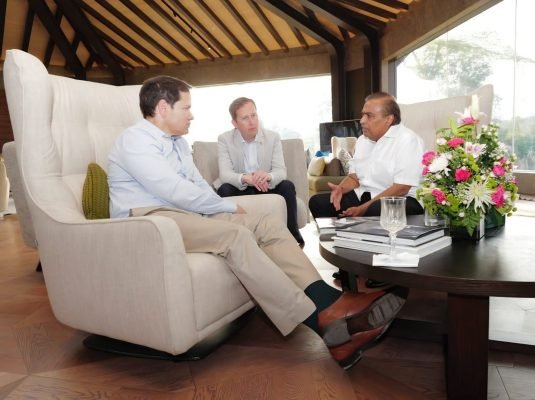
Mukesh Ambani Showcases Reliance’s Energy and Digital Vision to Marco Rubio
US Secretary of State Marco Rubio and Ambassador Sergio Gor visited Reliance Industries’ Jamnagar complex, where Mukesh Ambani and Anant Ambani showcased its refinery, New Energy giga-factories and digital infrastructure projects.
 OCT 21, 2026
Piyush Goyal Meets Former Chile President Eduardo Frei
Union Minister Piyush Goyal met former Chilean President Eduardo Frei and CAF delegates to explore new opportunities for India-Chile trade, investment and business collaboration.
 OCT 21, 2026
Marco Rubio Visits Reliance’s Jamnagar Facilities
US Secretary of State Marco Rubio visited Reliance Industries' Jamnagar facilities as US Ambassador Sergio Gor highlighted India's rising LPG imports from the United States and Reliance's planned investment in a new American oil refinery.