

Self-Defence Training for Girls to Cover 15,211 Bengal Schools
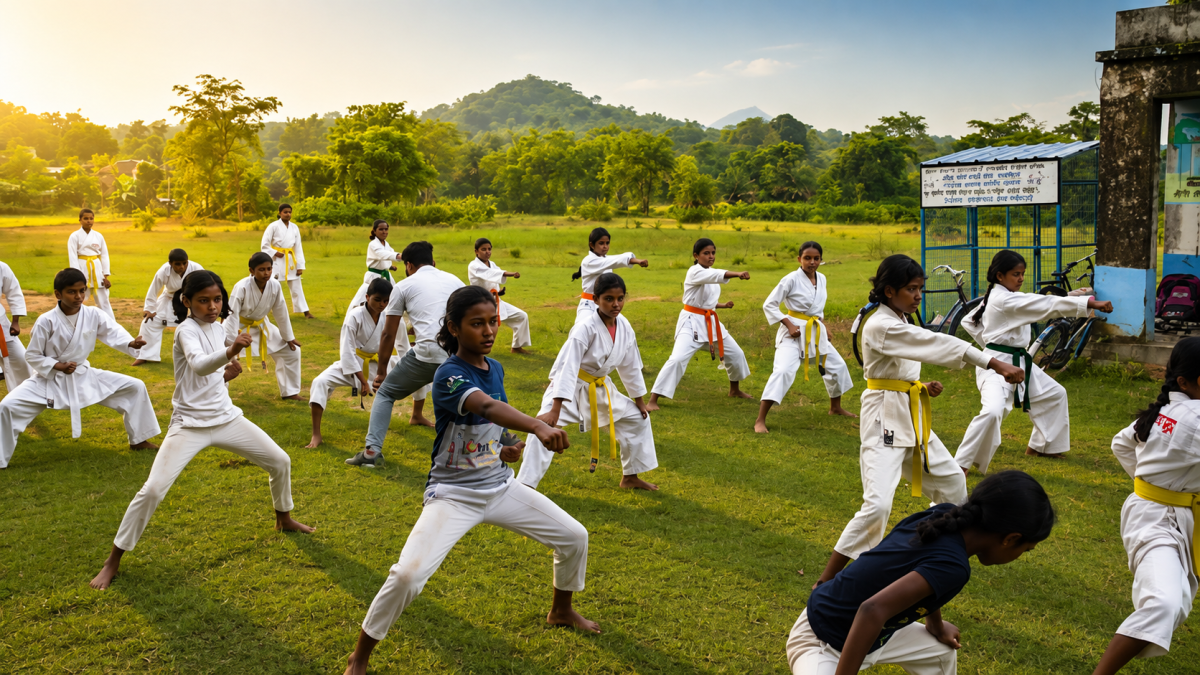
Self-defence training for girls is set to be expanded across 15,211 government and government-aided schools in West Bengal during the 2026-27 academic year. The initiative, launched by the West Bengal School Education Department under the Rani Lakshmibai Self-Defence Training programme, aims to improve the safety, confidence and self-reliance of schoolgirls across the state.
The programme will cover students from Classes VI to XII, providing them with basic self-defence techniques and helping them develop the ability to respond calmly and confidently when faced with potentially unsafe or uncomfortable situations.
Rani Lakshmibai Self-Defence Training Programme
According to guidelines issued by the West Bengal Samagra Shiksha Mission, the programme will be implemented in thousands of schools across the state. The initiative is designed not only to teach physical self-defence but also to develop students' awareness, confidence and decision-making abilities.
A total of 15,211 schools will participate in the programme during the 2026-27 academic session.
Schools Covered Under the Programme
The programme will include:
6,065 Upper Primary schools
9,146 Secondary and Higher Secondary schools
Students from Classes VI to XII
The large-scale rollout is expected to give a significant number of schoolgirls access to structured self-defence training within their educational institutions.
Focus on Safety, Confidence and Awareness
The self-defence training for girls programme will go beyond teaching basic physical techniques. Students will also be encouraged to develop situational awareness and understand how to respond appropriately in potentially difficult circumstances.
The training will focus on several areas, including:
Basic self-defence techniques
Situational awareness
Confidence building
Mental and physical control
Quick and appropriate decision-making
Developing self-reliance
The objective is to help students feel more confident about handling situations that may make them feel unsafe, while also encouraging them to seek appropriate assistance when necessary.
Training Sessions to Be Held in Schools
The guidelines allow schools to conduct the training during the time allotted for ‘Ananda Pariser’ on the last class of Saturdays. Each session is expected to last approximately 40 to 60 minutes.
Holding the sessions within school hours is intended to make the programme accessible to participating students without requiring additional arrangements outside the regular school environment.
Professional Trainers to Be Selected
District authorities will be responsible for identifying suitable professional trainers or training organisations for implementing the programme.
Where necessary, the authorities may consult the police as well as the Physical Education & Youth Welfare Department while selecting trainers and planning the training programme.
A special district-level committee will oversee the implementation process.
District Committee to Monitor Implementation
The committee will be headed by the Additional District Magistrate (Education). Its responsibilities will include monitoring the programme, selecting participating schools and trainers, and ensuring that necessary administrative arrangements are in place.
This monitoring mechanism is intended to ensure that the self-defence programme is implemented systematically across districts.
Role of Schools and Nodal Teachers
Each participating school will appoint a Nodal Teacher to coordinate the self-defence training programme.
The Nodal Teacher will act as the primary point of coordination between the school and the authorities and will report any issues arising during implementation.
Schools have also been directed to create awareness among parents and local communities about the programme. Parent and community meetings may be used to explain the objectives and importance of self-defence training for girls.
Building a Safer Environment for Schoolgirls
The initiative is aimed at creating a safer and more confident environment for girls both inside and outside the school campus. By combining practical self-defence techniques with awareness and confidence-building activities, the programme seeks to provide students with skills that can remain useful beyond their school years.
The state-wide rollout across more than 15,000 schools marks a significant expansion of structured self-defence education for schoolgirls in West Bengal.
Aims of the Self-Defence Initiative
The Rani Lakshmibai Self-Defence Training programme ultimately seeks to equip girls with practical skills while encouraging confidence, awareness and responsible decision-making.
With 15,211 schools included in the 2026-27 programme, the initiative is expected to provide a broad platform for schoolgirls to learn basic self-defence and develop greater confidence in navigating different situations.
The programme also places emphasis on coordination between schools, district administrations, professional trainers, parents and local communities, creating a wider support system around student safety.
The expansion of self-defence training for girls across 15,211 Bengal schools is aimed at strengthening safety awareness and confidence among students from Classes VI to XII. With structured training, professional trainers, school-level coordination and district monitoring, the programme seeks to give schoolgirls practical skills that can contribute to their safety, confidence and self-reliance.
Related News
 OCT 9, 2026
Trump Praises Michael Dell for Transforming Personal Computing
President Donald Trump has praised Michael Dell for transforming a $1,000 idea developed in his University of Texas dorm room into a revolution in personal computing.
 OCT 9, 2026
Trump Hails Elon Musk as ‘Titan’ of Technology
U.S. President Donald Trump has praised Elon Musk as an “industrial titan” and brilliant engineer, calling him one of the greatest technology founders ever to live. Trump also compared Musk to Thomas Edison and highlighted his contribution to American technological innovation.
 OCT 9, 2026
Trump Praises Satya Nadella for Transforming Microsoft
US President Donald Trump praised Microsoft CEO Satya Nadella for transforming the company and expanding its technological impact worldwide.
 OCT 9, 2026
Jaishankar Meets Côte d’Ivoire President Ouattara
EAM S Jaishankar met Côte d’Ivoire President Alassane Ouattara, conveying greetings from President Murmu and PM Modi and reaffirming India’s commitment to a strong bilateral partnership.