

Skin Rashes in Children: Common Causes, Warning Signs and When to Seek Medical Help
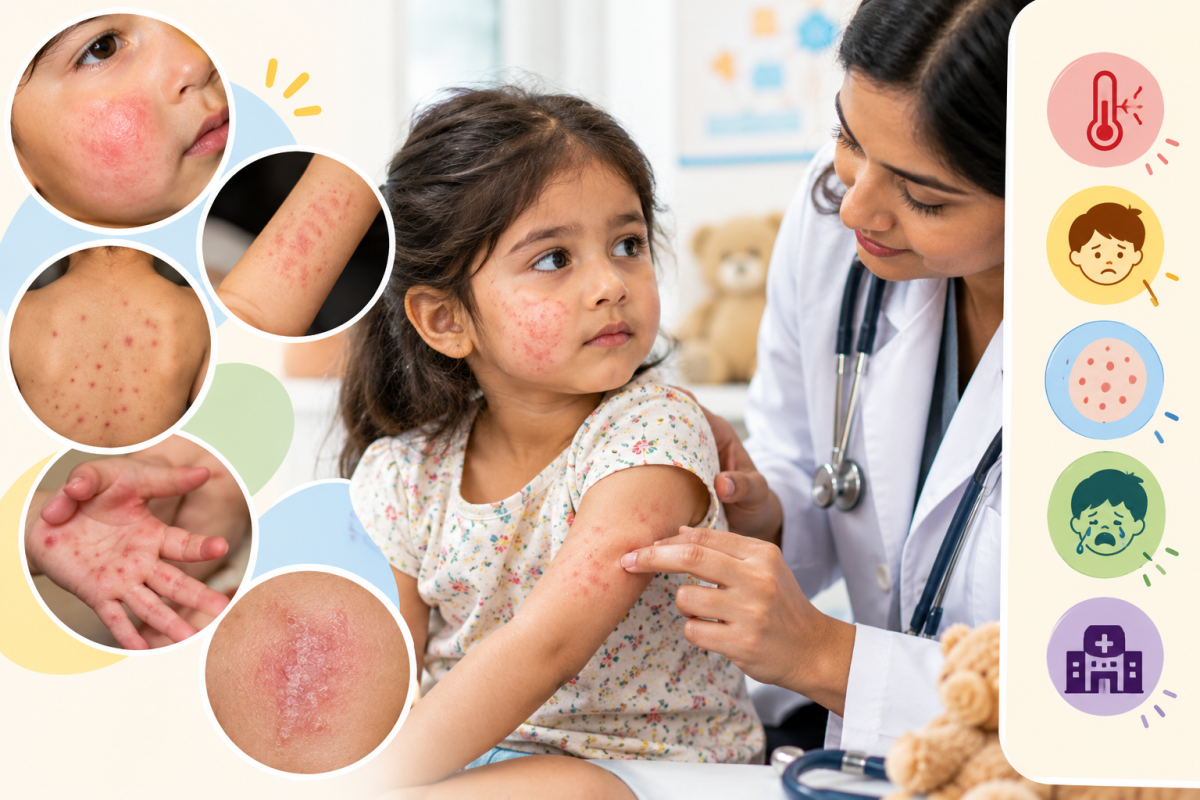
Skin rashes are common in children, but determining when they need medical attention can be challenging for parents. From viral infections and allergic reactions to eczema and heat rash, several conditions can cause changes in a child's skin. In some cases, a rash may also indicate an infection or an underlying health concern that requires prompt evaluation.
Understanding the appearance of a rash, when it develops and whether other symptoms accompany it can help parents decide when to seek medical advice.
In an interview with HT Lifestyle, Dr Prakash Vaidya, senior consultant in paediatrics at Fortis Hospital, Mulund, Mumbai, explains the common causes of skin rashes in children, their distinguishing features and the warning signs parents should not ignore.
What Are the Common Causes of Skin Rashes in Children?
According to Dr Vaidya, skin rashes are among the common reasons parents seek medical advice for their children. However, he emphasises that a rash should not be dismissed as harmless or immediately considered serious based on appearance alone.
Viral infections are a common cause of childhood rashes. These may include infections associated with influenza, dengue and hand, foot and mouth disease. Depending on the illness, a child may develop a rash before, during or after a fever.
In dengue, skin changes can vary in appearance and timing. A rash alone cannot confirm dengue or indicate a low platelet count, so medical assessment is important when dengue is suspected.
Other viral infections may cause a rash after the fever subsides. Whether the rash is itchy, where it appears and how it develops can provide useful clues to a healthcare professional.
Parents should consider the child's overall condition rather than relying on the appearance of the rash alone.
Blister-Like and Itchy Rashes: What Parents Should Know
Some childhood illnesses cause small blisters or fluid-filled skin lesions. Chickenpox and hand, foot and mouth disease are examples, although their rash patterns and associated symptoms differ.
The distribution of the rash, the presence of fever and other symptoms can help a paediatrician distinguish between possible causes.
Itchy rashes can also develop due to hives, allergic reactions or viral infections. Prurigo, another itchy skin condition, may occur following insect bites and often affects exposed areas.
Eczema and Atopic Dermatitis
Atopic dermatitis, commonly known as eczema, causes dry, itchy and inflamed skin. In infants, it may affect the cheeks and other areas, while older children may develop patches around the elbows and knees.
Regular use of a suitable moisturiser can help maintain the skin barrier and reduce dryness. If the skin becomes painful, develops crusting or appears infected, parents should seek medical advice.
Nappy Rash and Prickly Heat
Nappy rash commonly affects the skin covered by a nappy and may develop due to moisture, friction and irritation. Frequent nappy changes, gentle cleansing and appropriate barrier creams containing zinc oxide can help protect the skin.
Prickly heat, also called heat rash, occurs when sweat becomes trapped in the skin. It often appears as small, irritating bumps in hot and humid conditions, particularly in areas where sweat accumulates.
If either rash persists, worsens or appears infected, a healthcare professional should assess it.
Infectious Skin Rashes in Children
Some childhood rashes are caused by bacterial or fungal infections and may spread to other areas of the body or to other people.
Impetigo
Impetigo is a contagious bacterial skin infection that can cause sores, blisters and characteristic crusting. Children with suspected impetigo may require medical assessment and appropriate treatment to prevent the infection from spreading.
Ringworm
Despite its name, ringworm is a fungal infection rather than a worm infestation. It often appears as an itchy, ring-shaped patch on the skin and requires appropriate antifungal treatment.
Parents should avoid using prescription creams, particularly steroid-containing combination products, without medical advice. The wrong treatment can worsen or disguise certain infections.
Petechiae: Tiny Red or Purple Spots
Petechiae are tiny red or purple spots caused by bleeding beneath the skin. They can occur for different reasons, including some infections and conditions affecting platelets or blood vessels.
These spots should not be ignored, particularly if they appear alongside fever or the child seems unwell. A rash that does not fade when pressed requires urgent medical assessment, especially when accompanied by other concerning symptoms.
When Should Parents Worry About a Skin Rash?
The seriousness of a skin rash depends on several factors, including its appearance, how quickly it develops, accompanying symptoms and the child's overall health.
Dr Vaidya advises parents to seek urgent medical attention if a child develops a rash and appears seriously unwell, unusually drowsy or breathless, or has a high fever.
Parents should seek emergency care if a rash is accompanied by any of the following warning signs:
A rash that does not fade when pressed, particularly with fever or an unwell appearance.
Breathing difficulties or swelling of the lips, tongue or throat.
Unusual drowsiness, confusion or difficulty waking the child.
Rapidly spreading or rapidly worsening skin changes, particularly with severe pain or fever.
Signs of a severe allergic reaction, such as breathing problems or sudden swelling.
Do not wait for additional symptoms to appear if the child has difficulty breathing or seems seriously ill.
Even when emergency warning signs are absent, a new, persistent or unexplained rash should be assessed by a paediatrician when necessary.
How Can Parents Respond to Childhood Skin Rashes?
Parents can take a few sensible steps while arranging medical advice:
Observe when the rash started and whether it is spreading or changing.
Check for associated symptoms, such as fever, itching, pain or changes in behaviour.
Keep irritated skin clean and avoid harsh soaps or fragranced products.
Avoid scratching and do not apply prescription or medicated creams without appropriate guidance.
Seek medical advice if the rash persists, worsens or has an uncertain cause.
Photographs taken at different stages may also help a healthcare professional understand how the rash has changed over time.
The Takeaway
Skin rashes in children can have many causes, ranging from mild irritation and eczema to viral, bacterial and fungal infections. Their appearance can provide useful clues, but it is not always possible to identify the cause by looking at the skin alone.
Parents should pay attention to accompanying symptoms, the timing of the rash and changes in their child's behaviour. Recognising warning signs and seeking timely medical advice can help children receive appropriate care.
Related News
 OCT 10, 2026
How to Keep Your Gut Healthy During Festive Feasting: A Dietitian’s Guide to Food and Habits
Festive celebrations often bring rich foods, sweets and late-night gatherings. Health and fitness coach Manisha Chopra shares practical tips on portion control, regular meals and daily movement to help you enjoy festive feasts while maintaining healthy habits.
 OCT 9, 2026
Why Do We Replay Embarrassing Moments Before Bed? The Psychology of Nighttime Overthinking
Ever replay an embarrassing moment just as you are falling asleep? Discover the psychology behind bedtime overthinking, why old memories feel more intense at night, and how self-compassion and simple habits can help quiet your mind.
 OCT 9, 2026
High-Protein Pulled Lamb Pasta Salad for a Balanced Meal
High-protein pulled lamb pasta salad by The Fitness Chef delivers 42g protein per serving with lamb, pasta, tzatziki, feta, herbs and vegetables.
 OCT 9, 2026
Healthy Soya Mushroom Biryani Recipe Packed With Protein
Healthy soya mushroom biryani by Vanshika Khurana offers a protein- and fibre-rich vegetarian meal made with brown basmati rice, soya chunks and mushrooms.
Comments (0)