

Trump Questions NATO’s Role in Strait of Hormuz Security, Signals Hardline Stance on Iran
Speaking to reporters, President Trump indicated that while dialogue remains possible, a ceasefire is not currently under consideration. “We can have dialogue, but I don’t want to do a ceasefire… we’re not looking to do that,” he said, signalling a preference for continued strategic pressure rather than immediate de-escalation. The Strait of Hormuz, a narrow but crucial maritime corridor, carries nearly one-fifth of the world’s oil supply. President Trump, however, argued that the United States does not rely heavily on the route, stating that major economies such as Europe, Japan, South Korea, and China are more dependent on it and should therefore take greater responsibility in securing it.President Trump:🇺🇸🇮🇷 We can have dialogue, but I don't want to do a ceasefire...we're not looking to do that. pic.twitter.com/WfrCeG9Xsn
— Donald J Trump Posts TruthSocial (@TruthTrumpPost) March 20, 2026
PRESIDENT TRUMP on the Iranian regime:🇮🇷🇺🇸 We've been hitting them awfully hard... these are thugs, and animals, and horrible people. pic.twitter.com/383dHJrnvY
— Donald J Trump Posts TruthSocial (@TruthTrumpPost) March 20, 2026
Experts note that while U.S. direct dependence on Gulf oil has reduced, global oil markets remain interconnected, meaning any disruption in the Strait significantly impacts energy prices worldwide.President Trump:🇺🇸🇮🇷 We don’t use the Strait of Hormuz; we don’t need it. Europe, Korea, Japan, and China need it; they will have to get involved a little bit. pic.twitter.com/QTxcNgSs4j
— Donald J Trump Posts TruthSocial (@TruthTrumpPost) March 20, 2026
President Trump also criticised NATO, claiming the alliance “has gone down a long way” and has not done enough to assist in securing maritime routes. He suggested that U.S. lawmakers are increasingly frustrated with the alliance’s perceived inaction. However, analysts point out that NATO does not maintain a formal, unified mission in the Strait of Hormuz, although several member states have independently contributed naval forces to the broader region. In response to questions about his earlier remark that opening the Strait would be a “simple military manoeuvre,” President Trump acknowledged that such an effort would require significant naval resources and coordination, including ships and allied support. Military experts caution that any operation in the Strait would be highly complex and potentially escalatory, given the region’s heavy militarisation and Iran’s strategic positioning. President Trump also adopted a hardline tone toward Iran, describing its leadership in stark terms and asserting that U.S. actions have significantly weakened its capabilities—continuing his administration’s confrontational stance toward Tehran.JUST IN:🇺🇸🇮🇷President Trump says NATO ‘has gone down a long way’ for not helping with the Strait, adding that ‘a lot of Senators and Congressmen — they’re very upset with the fact that NATO has done nothing.pic.twitter.com/7eQZdUbxOe
— Donald J Trump Posts TruthSocial (@TruthTrumpPost) March 20, 2026
The remarks come amid heightened geopolitical uncertainty in West Asia, with energy security, maritime safety, and alliance politics all under renewed focus. The Strait of Hormuz remains a critical flashpoint, with any disruption posing risks not only to regional stability but also to global economic health.REPORTER: You said opening the Strait of Hormuz was a simple military manoeuvre — what did you mean by that? PRESIDENT TRUMP: You need a lot of help, you need ships, you need volume. NATO could help us but, so far, they haven’t had the courage to do so. pic.twitter.com/8ODuCTrjOq
— Donald J Trump Posts TruthSocial (@TruthTrumpPost) March 20, 2026
Related News
 OCT 19, 2026
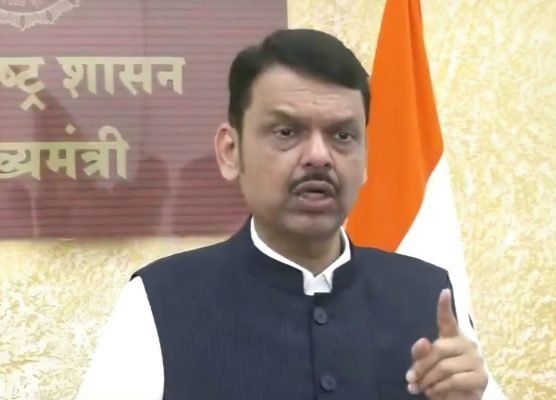
Maharashtra CM Devendra Fadnavis Says Tiger Shroff Firing Accused to Be Arrested Soon
Maharashtra CM Devendra Fadnavis says the Mumbai Police have identified suspects in the firing incident targeting Tiger Shroff and will soon arrest those involved while tracking down the alleged masterminds.
 OCT 19, 2026
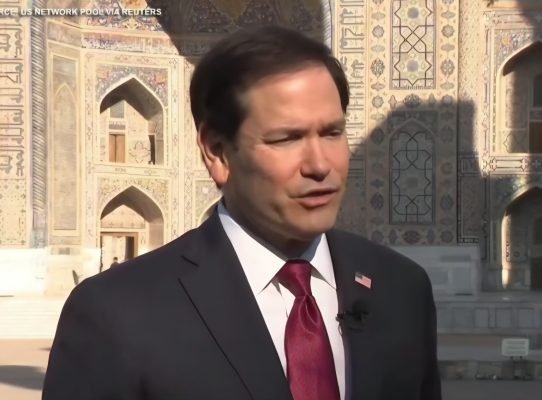
Marco Rubio Says US Is ‘Very Close’ to Finalising Trade Deal With India
US Secretary of State Marco Rubio says Washington is very close to finalising a trade deal with India, while explaining the impact of Russian oil sanctions on global energy supplies and prices.
 OCT 19, 2026
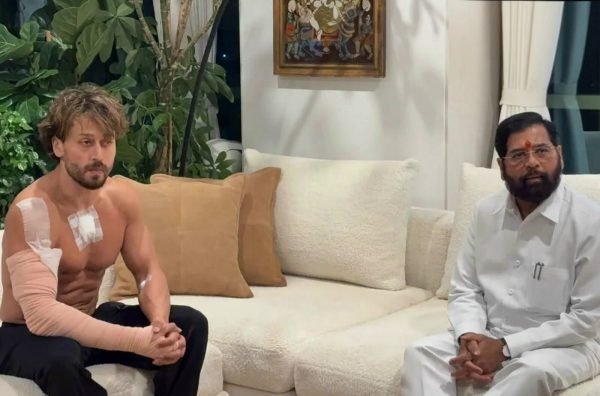
Eknath Shinde Meets Tiger Shroff After Firing, Warns Gangs of Strong Response
Maharashtra Deputy CM Eknath Shinde has vowed strict action against criminal gangs after unidentified assailants opened fire at Tiger Shroff’s car in Mumbai. The actor escaped unhurt, while two others were reportedly injured.
 OCT 19, 2026
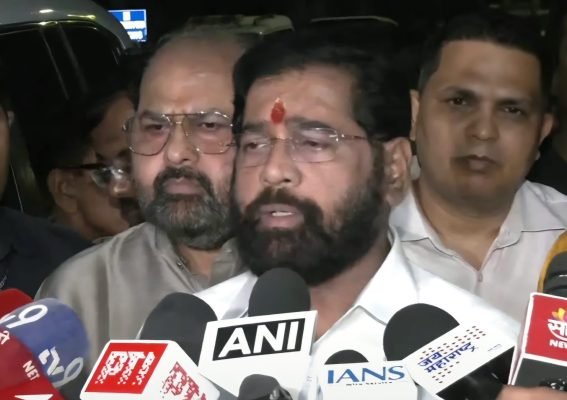
Eknath Shinde Condemns Firing Incident Targeting Tiger Shroff
Maharashtra Deputy Chief Minister Eknath Shinde has condemned the firing incident targeting Tiger Shroff’s vehicle and said Mumbai Police have formed multiple teams to apprehend those responsible.
Comments (0)