

White House Confirms Full Iran Naval Blockade: Karoline Leavitt on Strait of Hormuz Enforcement
"It has been fully implemented, and it’s being enforced against vessels of all nations entering or departing Iranian ports... This includes all Iranian ports on the Arabian Gulf and the Gulf of Oman." — Karoline Leavitt, White House Press Secretary The "Freedom of Navigation" Balance A key component of the administration's strategy is the distinction between Iranian commerce and international transit. While the blockade effectively seals off Iranian trade, U.S. forces are actively patrolling to ensure that the Strait of Hormuz remains open for ships traveling to neutral ports in the region, such as those in the UAE, Kuwait, and Saudi Arabia. Leavitt clarified that U.S. assets are "supporting the freedom of navigation for vessels that are transiting the Strait to and from non-Iranian ports," seeking to reassure global oil markets and international partners that the blockade is surgical in its target. Military Presence Escalates U.S. Central Command (CENTCOM) has reportedly deployed additional warships and aerial surveillance to monitor the Gulf of Oman and the Arabian Gulf. This enforcement follows the recent "Operation Epic Fury" objectives aimed at neutralizing the Iranian regime's ability to project power and fund regional proxies. As the blockade takes hold, maritime insurance rates are expected to fluctuate, and the international community remains on high alert for potential retaliatory actions from Tehran..@PressSec on the blockade of Iran: "It has been fully implemented, and it's being enforced against vessels of all nations entering or departing Iranian ports... This includes all Iranian ports on the Arabian Gulf and the Gulf of Oman— and our U.S. forces in the region are… pic.twitter.com/yUNKTYcuxz
— Rapid Response 47 (@RapidResponse47) April 15, 2026
Related News
 OCT 11, 2026
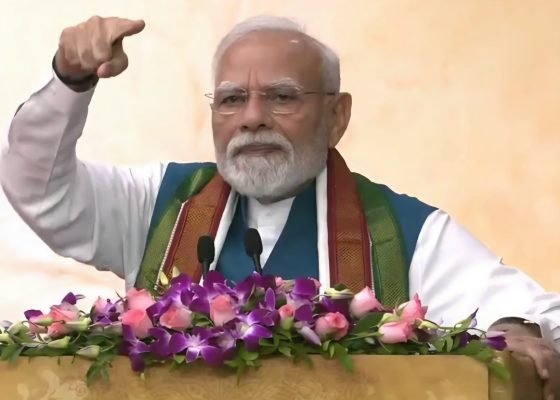
PM Modi Sets Vision for Developed India by 2047
Prime Minister Narendra Modi reaffirms his vision for a developed India by 2047, highlighting economic leadership, self-reliance, global manufacturing, hosting the Olympics and sending an Indian to the Moon, alongside Tamil Nadu's development.
 OCT 11, 2026
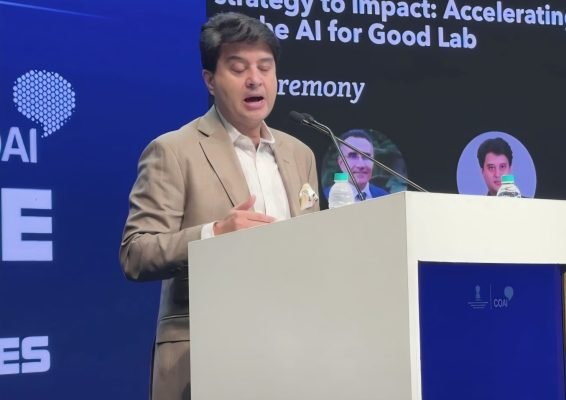
IMC 2026: Scindia Highlights India’s AI Leadership
At IMC 2026, Union Communications Minister Jyotiraditya M. Scindia highlighted India’s role in shaping the future of AI through AI-native networks, the Bharat 6G Alliance, AI for Good and trustworthy Digital Public Infrastructure.
 OCT 11, 2026
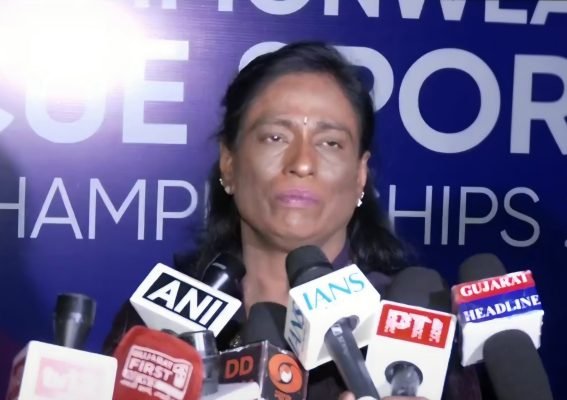
PT Usha Praises India’s Asian Games Performance
Indian Olympic Association President PT Usha has praised India’s fourth-place finish at the Asian Games, saying the performance was commendable given the participation of around 500 athletes across 36 sports.
 OCT 11, 2026
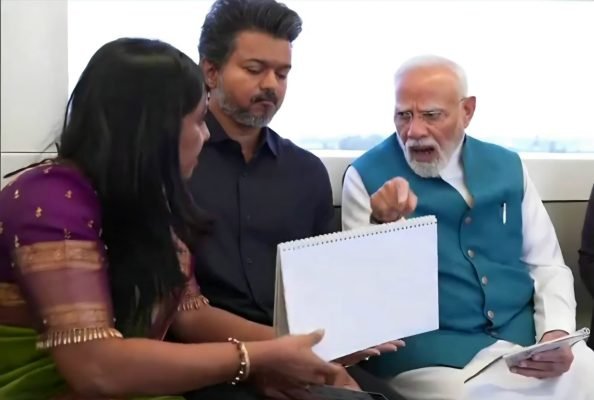
PM Modi and Tamil Nadu CM Vijay Ride Chennai Metro
Prime Minister Narendra Modi received a warm welcome from Tamil Nadu Chief Minister C. Joseph Vijay in Chennai before the two leaders travelled together on the Chennai Metro between Porur Bypass and Poonamallee Bypass stations.
Comments (0)