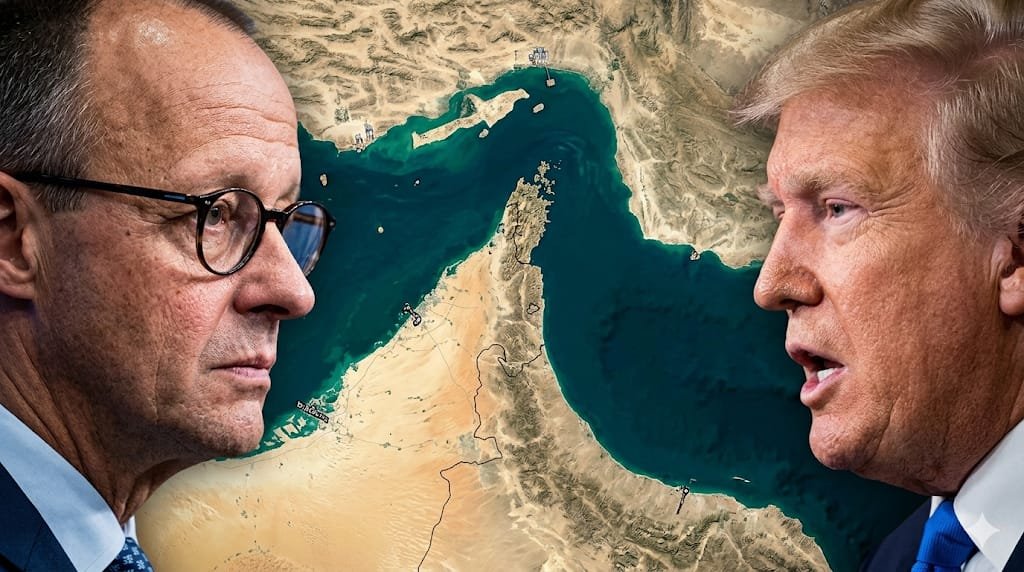
In what marks the most significant diplomatic falling-out since the start of the second Trump administration, German Chancellor Friedrich Merz has delivered a sharp rebuke to Washington regarding the ongoing military campaign in Iran.
Speaking on March 28, 2026, Merz emphasized that NATO remains a “defensive alliance, not an interventionist one,” signaling a firm boundary against U.S. expectations for European military involvement.
The “Lack of Consultation” Problem
The Chancellor expressed deep frustration over the unilateral nature of the conflict. According to Merz, neither the United States nor Israel consulted Berlin or other NATO allies before the first strikes were launched. This lack of coordination has led to a direct rejection of President Trump’s recent request for NATO naval forces to secure the Strait of Hormuz.
”Regarding Iran, there has never been a joint decision on whether or not to engage,” Merz stated. “Therefore, the question of how Germany will contribute militarily does not arise.”
Economic Anxiety and Security Risks
While Merz initially showed understanding for the objective of curbing Tehran’s regional influence, his tone has shifted toward pragmatism and caution. He warned that a protracted war in the Middle East poses “massive risks” to European energy costs and overall security.
The Chancellor’s stance is clear:
No Military Solution: Merz maintains that only a political framework can provide long-term stability.
Call for Ceasefire: Berlin is now calling for an immediate end to hostilities.
The “Day After”: Germany is demanding a concrete strategy for regional governance once the kinetic phase of the conflict ends.
A Growing Domestic Divide
While Merz has been measured, German President Frank-Walter Steinmeier took a significantly harder line. Labeling the military campaign a “politically disastrous mistake” and a breach of international law, Steinmeier’s comments suggest a growing consensus within the German government that the current U.S. trajectory is fundamentally at odds with European interests.
As energy prices fluctuate and the “rupture” in the transatlantic partnership deepens, the eyes of the world turn to the upcoming NATO summit to see if this rift can be mended—or if the alliance is facing a permanent shift in its power dynamic.