

Nirmala Sitharaman Reflects on India's Early Development Model at NCAER Lecture
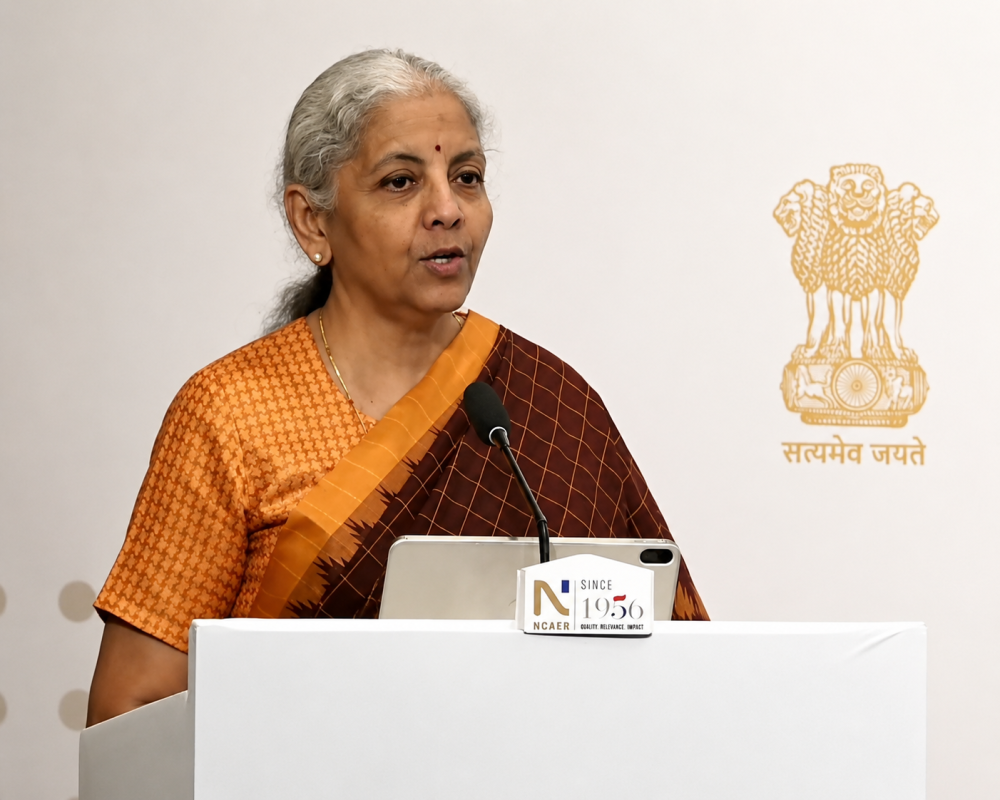
Union Finance Minister Nirmala Sitharaman on Thursday reflected on India's early post-independence industrial and developmental trajectory, highlighting the country's achievements in building world-class scientific and educational institutions while acknowledging key challenges that shaped its economic path.
Watch LIVE: Smt @nsitharaman delivers the CD Deshmukh Lecture, organised by the National Council of Applied Economic Research (@ncaer), in New Delhi. https://t.co/mogrZ3kZqm
— Nirmala Sitharaman Office (@nsitharamanoffc) August 6, 2026
Delivering the prestigious C.D. Deshmukh Lecture at the National Council of Applied Economic Research (NCAER), Sitharaman said that independent India had placed immense faith in science and technology by establishing institutions such as the Indian Space Research Organisation (ISRO), Bhabha Atomic Research Centre (BARC), Bharat Heavy Electricals Limited (BHEL) and the Indian Institutes of Technology (IITs).
She noted that these institutions were built through global collaborations, citing German assistance for IIT Madras, Russian support for IIT Bombay, American collaboration at IIT Kanpur, and British collaboration at IIT Delhi.
The Finance Minister also highlighted the government's investment in major irrigation and power projects aimed at strengthening agriculture. However, she observed that implementation was often slow, with critical infrastructure such as water distribution networks failing to reach the last mile in many cases.
Reflecting on India's economic challenges during its formative years, Sitharaman said the country remained heavily dependent on external powers. She pointed out that India relied on the United States for food grains and the Soviet Union for a significant share of its defence platforms, while insufficient attention was given to exports and strengthening India's position in global trade at a time when several East Asian economies were building export-led growth models.
Quoting the ideas of economist Friedrich Hayek, she remarked that long-term central planning assumes that conditions remain largely unchanged over time, underscoring the importance of adaptability and economic flexibility in policymaking.
Sitharaman's address offered a historical perspective on India's development journey, emphasizing both the enduring strengths of its institution-building efforts and the lessons that continue to shape the country's economic policy today.
Related News
 OCT 27, 2026
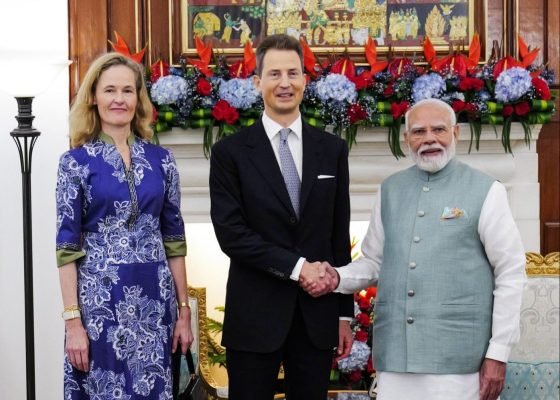
PM Modi Holds Talks with Liechtenstein Royal Leaders
Prime Minister Narendra Modi held talks with Liechtenstein's Hereditary Prince Alois and Hereditary Princess Sophie to strengthen bilateral cooperation in trade, investment, innovation, technology and multilateral reform.
 OCT 27, 2026
Ballon d’Or 2026 Awards: All Winners, Final Rankings and Key Highlights
Harry Kane and Alexia Putellas headline the 2026 Ballon d’Or winners. Explore the leading rankings and major individual and team honours in world football.
 OCT 27, 2026
Supreme Court orders Rs 6 lakh for man jailed six years before acquittal
The Supreme Court criticised investigative failures and ordered Uttar Pradesh to compensate a man acquitted after six years in custody.
 OCT 27, 2026
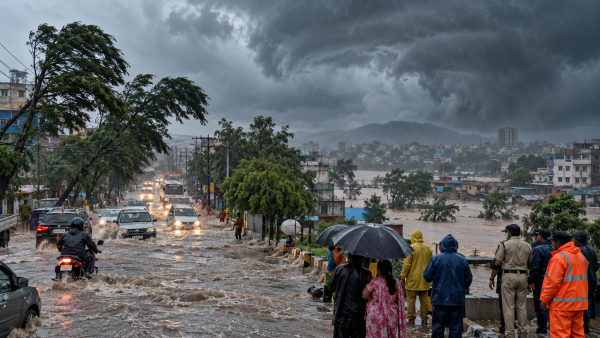
Cyclone Arnab: Jharkhand districts told to prepare for heavy rain
Heavy-rain alerts cover several Jharkhand districts from October 28 as officials prepare for possible waterlogging and flooding.