

Report: 4 in 5 Indian workers rapidly upskilling as AI transforms the workforce
A recent report by Educational Testing Service (ETS) highlights that Indian employees are experiencing far greater workplace disruption than the global average, while also showing a strong commitment to upskilling and validating their skills.
The 2026 Human Progress Report, based on a global survey of over 32,000 respondents across 18 countries, reveals that 86% of Indian workers faced major workplace changes in the past year, compared to 67% globally. These disruptions are largely driven by rapid technological advancements, evolving job roles, and rising performance expectations.
Despite these challenges, Indian professionals are actively adapting. The report notes that workers are increasingly linking career stability to continuous learning and skill development. Around four out of five employees in India are building new skills, reflecting a strong push to stay relevant in an AI-driven job market.
According to Amit Sevak, adaptability has become the most critical skill in today’s workforce. Even as many employees remain uncertain about future job roles, they are proactively upgrading their capabilities to stay competitive.
Artificial intelligence is playing a significant role in this shift. Indian workers estimate that over 42% of their tasks now involve interacting with AI tools, a higher proportion than the global average. This growing reliance on AI is increasing pressure on professionals to continuously upgrade their skill sets.
At the same time, there is a rising demand for formal skill validation. Nearly 90% of respondents believe verified credentials are essential, as employees seek reliable ways to benchmark their abilities against industry standards and peers.
The report concludes that while workplace disruption is intensifying, Indian workers remain confident in their ability to adapt. As career paths become less predictable, continuous learning, adaptability, and credible proof of skills are emerging as key factors for long-term career growth in an increasingly AI-driven economy.
Related News
 OCT 9, 2026
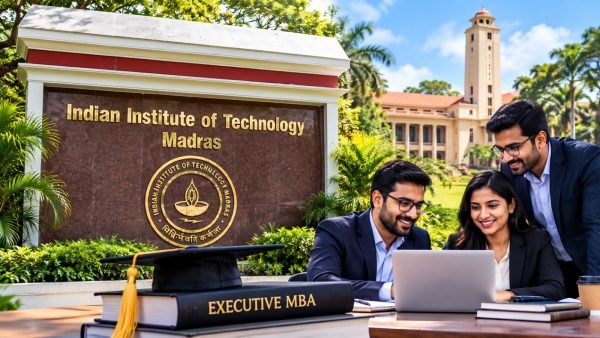
IIT Madras Opens Executive MBA Applications for Working Professionals
IIT Madras has opened applications for its two-year Executive MBA programme for mid-career working professionals. The application deadline is October 26, 2026, and classes are scheduled to begin in January 2027.
 SEP 5, 2026
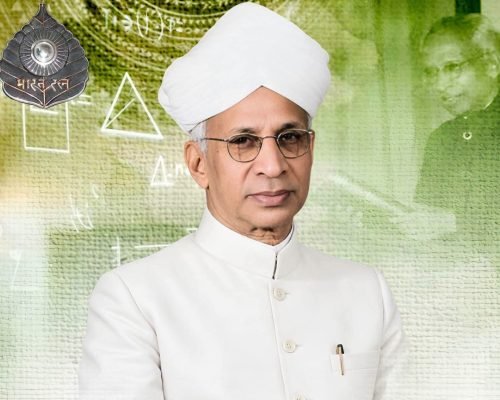
Teachers' Day 2026: Suvendu Adhikari Pays Tribute to Dr Sarvepalli Radhakrishnan
Teachers' Day 2026 is being observed with tributes to former President of India, renowned philosopher and Bharat Ratna Dr Sarvepalli Radhakrishnan. On the occasion of his birth anniversary,
 AUG 26, 2026
DeSu7: Dev Thanks Subho for Supporting His Directorial Debut
DeSu7 has become a special chapter in Dev’s career, marking his first venture as a director. Ahead of the film’s journey,
 AUG 1, 2026
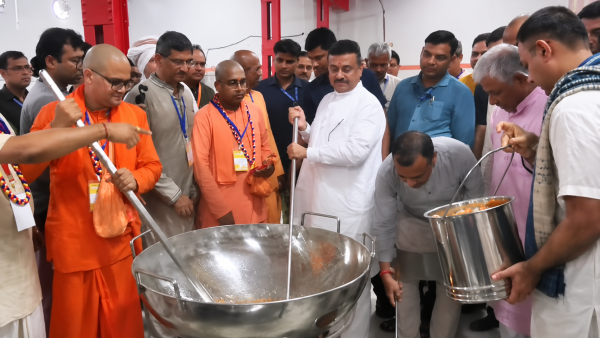
ISKCON Mid-Day Meal Begins in West Bengal Schools as Taratala Mega Kitchen Opens
ISKCON Mid-Day Meal Begins in West Bengal Schools as Taratala Mega Kitchen Opens
Comments (0)