

Bulk Waste Generators West Bengal: Nabanna Launches Waste Rules Drive
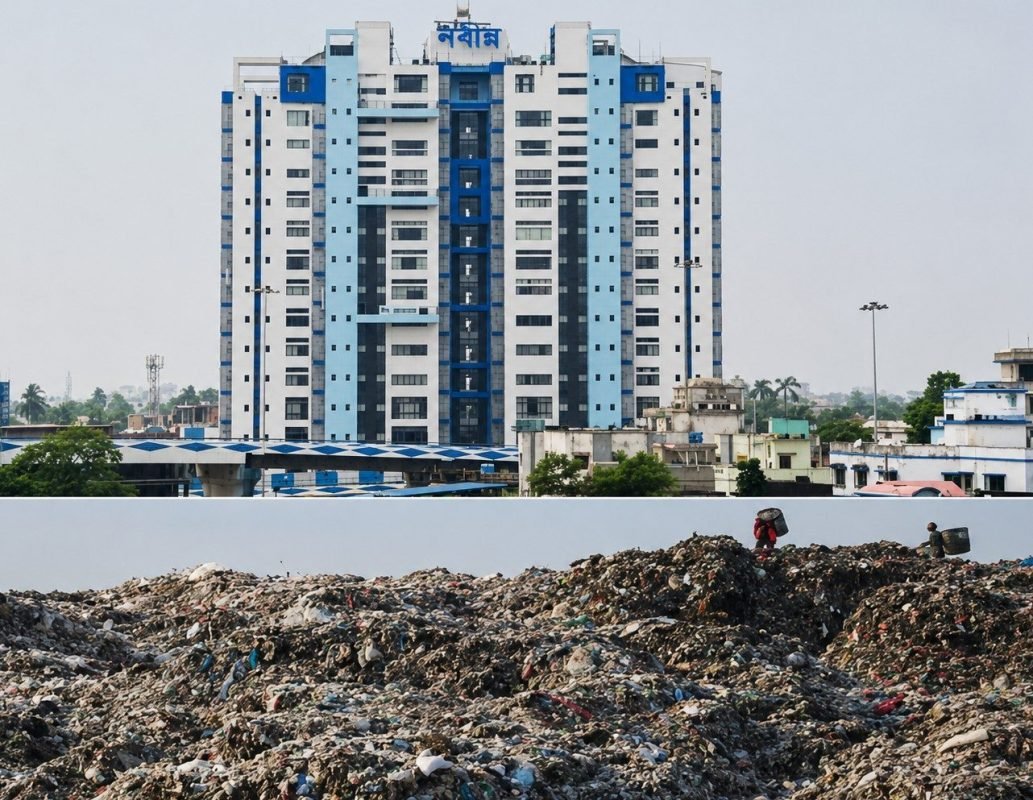
Bulk Waste Generators West Bengal are now under increased scrutiny as the state government has launched a statewide awareness and compliance campaign to ensure that large-scale waste producers follow solid waste management regulations.
The initiative has been launched by the Department of Panchayat and Rural Development, with a particular focus on identifying bulk waste generators in rural and semi-urban areas and ensuring that they take responsibility for managing the waste generated on their premises.
As part of the campaign, eligible establishments are being encouraged to register on the designated portal of the Central Pollution Control Board (CPCB) and comply with the applicable Solid Waste Management Rules.
Who Is Classified as a Bulk Waste Generator?
Under the criteria being highlighted by the government, an establishment can be classified as a Bulk Waste Generator (BWG) if it meets any one of the specified thresholds.
These include:
Generating more than 100 kg of solid waste per day.
Having a built-up area exceeding 20,000 square metres.
Consuming more than 40,000 litres of water per day.
The criteria cover a wide range of large establishments that generate substantial quantities of waste through their daily operations.
Establishments Covered Under the Drive
The campaign is expected to cover several categories of establishments, including:
Large residential complexes
Commercial establishments
Shopping malls
Hotels
Educational and other institutions
Transpfacilities
Other large-scale facilities
Such establishments are being asked to ensure that waste is properly segregated, processed and scientifically disposed of in accordance with applicable regulations.
CPCB Registration and Compliance
A key component of the Bulk Waste Generators West Bengal campaign is registration with the designated CPCB portal.
Authorities are encouraging identified bulk generators to complete the required registration and follow the updated waste management framework.
The objective is not limited to registration.
Establishments are also expected to take responsibility for the handling of waste generated within their premises, including segregation and appropriate processing.
This approach is aimed at reducing the amount of untreated waste that ultimately reaches municipal or local disposal systems.
Supreme Court Directions Behind the Drive
The state government's initiative comes against the backdrop of directions from the Supreme Court concerning enforcement of solid waste management regulations.
The court has repeatedly stressed the need for effective implementation of waste management rules and accountability among large waste generators.
Non-compliance with applicable regulations can attract penalties and other enforcement measures, depending on the relevant legal provisions.
The latest campaign therefore seeks to improve awareness while simultaneously encouraging establishments to comply with their statutory responsibilities.
Focus on the ‘Polluter Pays’ Principle
Officials at Nabanna have highlighted the importance of the "Polluter Pays" principle in the government's approach.
Under this principle, entities responsible for generating large quantities of waste should bear the financial and operational responsibility for managing that waste rather than shifting the burden to civic authorities.
Reducing the Burden on Local Bodies
Large housing complexes, hotels, malls and other establishments can generate considerable quantities of solid waste every day.
When such waste is not managed at the source, local municipal or civic bodies may have to bear the additional cost of collection, transportation and disposal.
The state government's campaign seeks to ensure that bulk generators take greater responsibility for their own waste, thereby reducing pressure on local authorities.
Why Waste Segregation Matters
Waste segregation at the source is a crucial part of effective solid waste management.
Separating different categories of waste can make recycling, composting, processing and safe disposal more efficient. It can also reduce the quantity of mixed waste reaching disposal facilities.
For bulk generators, proper waste management therefore involves more than simply handing over garbage to a collection agency. The government is emphasising responsible segregation, processing and disposal in accordance with the applicable rules.
Awareness Campaign Targets Rural Areas
Although bulk waste generation is often associated with major urban centres, the state government's campaign places particular emphasis on rural areas.
The Panchayat and Rural Development Department is working to identify establishments that fall within the bulk generator criteria and improve awareness about their obligations.
The expansion of compliance efforts into rural and semi-urban areas is significant because large residential projects, institutions, commercial establishments and other facilities have increasingly emerged outside traditional city limits.
What Bulk Generators Need to Do
Establishments falling within the prescribed criteria are being urged to:
Determine whether they meet the bulk waste generator thresholds.
Register through the designated CPCB portal.
Segregate solid waste at the source.
Process waste appropriately within their premises wherever required.
Ensure scientific disposal of waste.
Follow applicable Solid Waste Management Rules.
Take financial and operational responsibility for the waste they generate.
The government hopes that greater awareness and monitoring will improve compliance across the state.
Nabanna's Wider Waste Management Push
The Bulk Waste Generators West Bengal initiative represents an effort to strengthen accountability in the state's solid waste management system.
By identifying large waste-producing establishments and encouraging them to comply with CPCB registration and waste management requirements, the government aims to prevent the costs associated with large-scale waste generation from being transferred entirely to local civic authorities.
The campaign also reinforces the principle that establishments generating substantial quantities of waste must play a direct role in managing it responsibly.
The Bulk Waste Generators West Bengal campaign launched by the state government seeks to bring large waste-producing establishments under stricter compliance with solid waste management regulations.
With awareness activities targeting rural and semi-urban areas, the initiative aims to identify eligible bulk generators, encourage CPCB registration and ensure proper segregation, processing and disposal of waste.
The focus on the "Polluter Pays" principle could also help reduce the financial and operational burden on local authorities while encouraging large establishments to adopt more responsible waste management practices.
Related News
 OCT 17, 2026
Raj Babbar Remembers Smita Patil on Her Birth Anniversary
Raj Babbar paid an emotional tribute to Smita Patil on her birth anniversary, remembering her extraordinary acting talent, warmth and enduring legacy in Indian cinema
 OCT 17, 2026
Sandipon Garg bail granted in Zubeen case; release formalities pending
The Gauhati High Court granted bail to the suspended police officer on October 16. Release formalities remained pending, his lawyer said.
 OCT 17, 2026
Russian oil tariffs waived by Trump, easing threat to India and China
Trump waived duties and other measures under the Graham Act on national-interest grounds. Earlier sanctions on Russia remain unaffected.
 OCT 17, 2026
Canada’s Aerospace Exports to India Rise 300%
Canada’s aerospace exports to India rose 300% over the past year, according to Minister Maninder Sidhu. He highlighted the potential of an India-Canada CEPA to strengthen aerospace supply chains and expand industry collaboration.