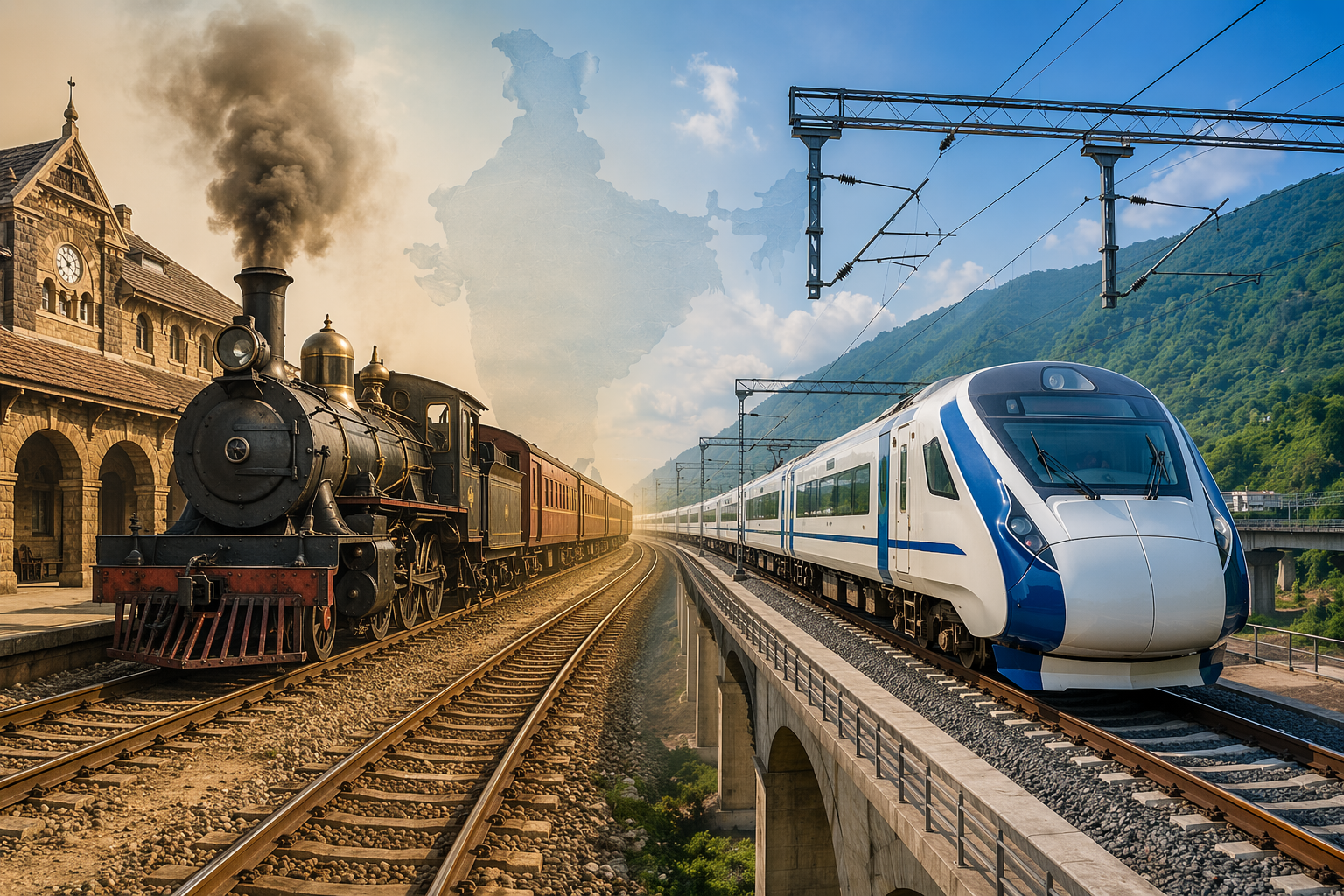
India’s railway story began on April 16, 1853, when the first passenger train ran between Mumbai and Thane, marking the birth of a transformative transport network.
Over the decades, Indian Railways has undergone a remarkable evolution—from steam-powered locomotives to one of the world’s most extensive and technologically advanced rail systems.
As of March 2026, Indian Railways has achieved an impressive 99.6% electrification of its broad gauge network, reinforcing its commitment to sustainability and efficiency. Today, the network operates nearly 25,000 trains daily, ensuring seamless connectivity across the length and breadth of the nation.
From carrying just a few hundred passengers in its early years, Indian Railways now transports an astounding 741 crore passengers annually (2025–26), making it a lifeline for millions.
In terms of safety and innovation, the indigenously developed Kavach system has been commissioned over 3,100 route kilometres, with implementation underway across an additional 24,400 kilometres, significantly enhancing operational safety.
From steam engines to high-speed aspirations, Indian Railways continues to drive India’s growth story—connecting people, powering economies, and shaping the future of mobility.