

Gyan Bharatam Mission: West Bengal Documents Over 3.5 Lakh Manuscripts
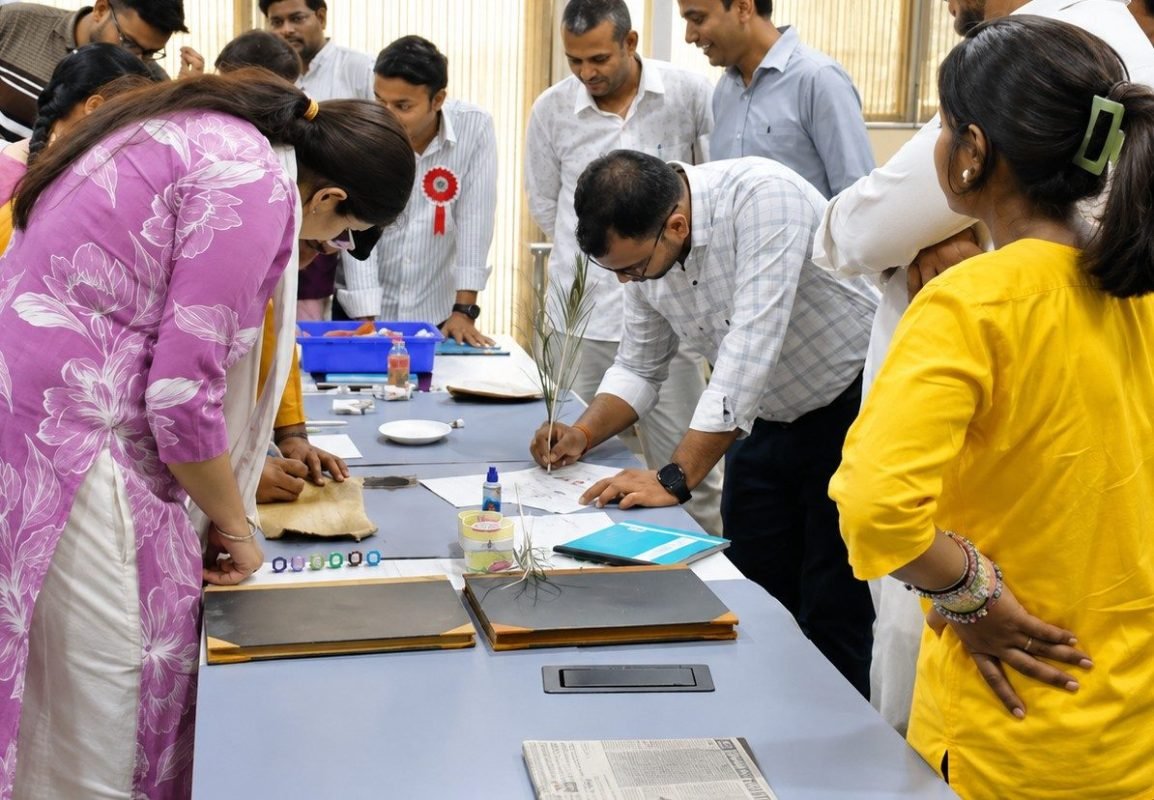
Gyan Bharatam Mission has gained significant momentum in West Bengal, with the state documenting more than 3.5 lakh manuscripts in just over two months after joining the Centre’s flagship manuscript preservation initiative.
The West Bengal Information and Cultural Affairs (I&CA) Department has been working as the nodal agency for the Union Ministry of Culture’s Gyan Bharatam Mission since May 14, 2026. According to officials, 3,50,394 manuscripts had been surveyed and documented across the state as of July 29, 2026.
The achievement places West Bengal among the major contributors to the national effort to identify, preserve, digitise and promote India’s vast manuscript heritage.
West Bengal Accelerates Manuscript Survey Under Gyan Bharatam Mission
The state’s progress was highlighted at a national workshop on manuscript digitisation held under the Gyan Bharatam Mission at Hotel Ashok in New Delhi.
Soumitra Mohan, Secretary of the West Bengal Information and Cultural Affairs Department, presented the state’s achievements at the workshop, along with details of its future roadmap for manuscript preservation and digitisation.
Officials said West Bengal adopted a broad-based approach to the survey instead of limiting the exercise to conventional repositories such as libraries, museums and archives.
Survey Teams Visit Monasteries, Temples and Private Collections
Survey teams have been visiting a wide range of locations, including:
Monasteries and temples
Educational institutions
Libraries and archives
Royal family collections
Private custodial repositories
Other institutions and individuals holding old manuscripts
The approach has helped officials identify collections that may otherwise have remained undocumented.
According to officials, the survey has already uncovered manuscripts in Sanskrit, Tibetan and Newari, among other languages. Many of these documents are considered potentially significant for historical, cultural and academic research.
Public Participation Becomes a Key Part of the Mission
The West Bengal government has also sought to involve the public in the manuscript documentation exercise.
The Information and Cultural Affairs Department published advertisements in 19 newspapers, appealing to institutions and individuals possessing old manuscripts to come forward and participate in the survey.
At the same time, field teams have been visiting different districts in coordination with District Magistrates and district Information and Cultural Affairs offices.
The objective is to locate manuscript repositories across the state and ensure that valuable documents are formally identified and recorded.
From Documentation to Digitisation and Conservation
The ongoing survey is only the first stage of West Bengal’s broader manuscript preservation strategy.
Officials said the state plans to build on the initial progress through a series of measures, including:
Systematic Registration and Cataloguing
Manuscripts identified during the survey will require systematic registration and scientific cataloguing.
Such documentation can help researchers and institutions understand the nature, age, language and historical significance of individual collections.
Conservation of Fragile Manuscripts
Many old manuscripts require specialised conservation because prolonged exposure to environmental conditions can affect their physical condition. The state plans to strengthen conservation efforts alongside documentation.
Digitisation for Long-Term Access
Digitisation is another major component of the initiative. Creating digital records can help preserve the contents of fragile manuscripts while making them more accessible for academic research and cultural studies.
The long-term objective is to establish a comprehensive digital database of the manuscripts identified across West Bengal.
Why the Gyan Bharatam Mission Matters
India has a vast and diverse manuscript tradition covering literature, philosophy, religion, science, medicine, mathematics, history and several other fields.
Manuscripts preserved in different parts of the country offer valuable insights into India's intellectual and cultural history. However, many collections remain scattered across institutions, religious establishments, private holdings and other repositories.
The Gyan Bharatam Mission seeks to address this challenge by promoting the identification, documentation, conservation and digitisation of manuscript heritage.
For West Bengal, the initiative has particular significance because of the state’s long-standing contribution to literature, education, philosophy, art and scholarship.
West Bengal Seeks Centre’s Continued Support
While highlighting the progress achieved so far, the state government has also emphasised the need for continued support from the Union Ministry of Culture.
Officials have sought assistance in several areas,
including:
Financial support
Specialised manpower
Advanced technology
Training and capacity building
Institutional collaboration
Technical expertise for conservation and digitisation
Such support, officials believe, will be important for completing the mission’s objectives within the stipulated timeline.
A Major Step Towards Preserving India’s Manuscript Heritage
The documentation of 3,50,394 manuscripts marks a significant milestone for West Bengal’s participation in the Gyan Bharatam Mission.
The state’s strategy of reaching monasteries, temples, educational institutions, royal collections and private repositories has helped expand the scope of the survey beyond traditional archival institutions.
As the programme moves forward, officials are expected to focus increasingly on registration, conservation, digitisation, research and public access.
The broader goal is not merely to preserve old documents but also to ensure that India’s literary and intellectual heritage remains available to researchers and future generations.
With continued surveys and digitisation efforts, West Bengal is positioning itself as an important contributor to the national campaign to safeguard the country’s manuscript heritage.
Related News
 OCT 3, 2026
Neeraj Chauhan Wins Recurve Bronze at Asian Games 2026
Neeraj Chauhan defeated compatriot Dhiraj Bommadevara 6–4 to win bronze in Men’s Individual Recurve, helping India complete a nine-medal Asian Games 2026 archery campaign.
 OCT 3, 2026
Suvendu Adhikari Claims No Fracture in Mamata Banerjee’s 2021 Injury, Announces CID Probe
Suvendu Adhikari has raised fresh questions over former West Bengal Chief Minister Mamata Banerjee’s leg injury during the 2021 Assembly election campaign in Nandigram, claiming that a medical report from March 2021 showed no evidence of a “fracture or dislocation”.
 OCT 3, 2026
Asian Games 2026 Cricket Gold: India Beat Pakistan in Final
Asian Games 2026 Cricket Gold became a major highlight for Indian cricket as the Indian men’s cricket team defeated Pakistan in the final to secure the gold medal. The victory also allowed India to retain its Asian Games men’s cricket title.
 OCT 3, 2026
India Defeat Pakistan by 19 Runs to Win Asian Games Cricket Gold
India defeated arch-rivals Pakistan by 19 runs in a thrilling Asian Games 2026 cricket final to win the gold medal and successfully defend their T20 title.