

High Heart Rate After a Workout: Cardiologist Explains
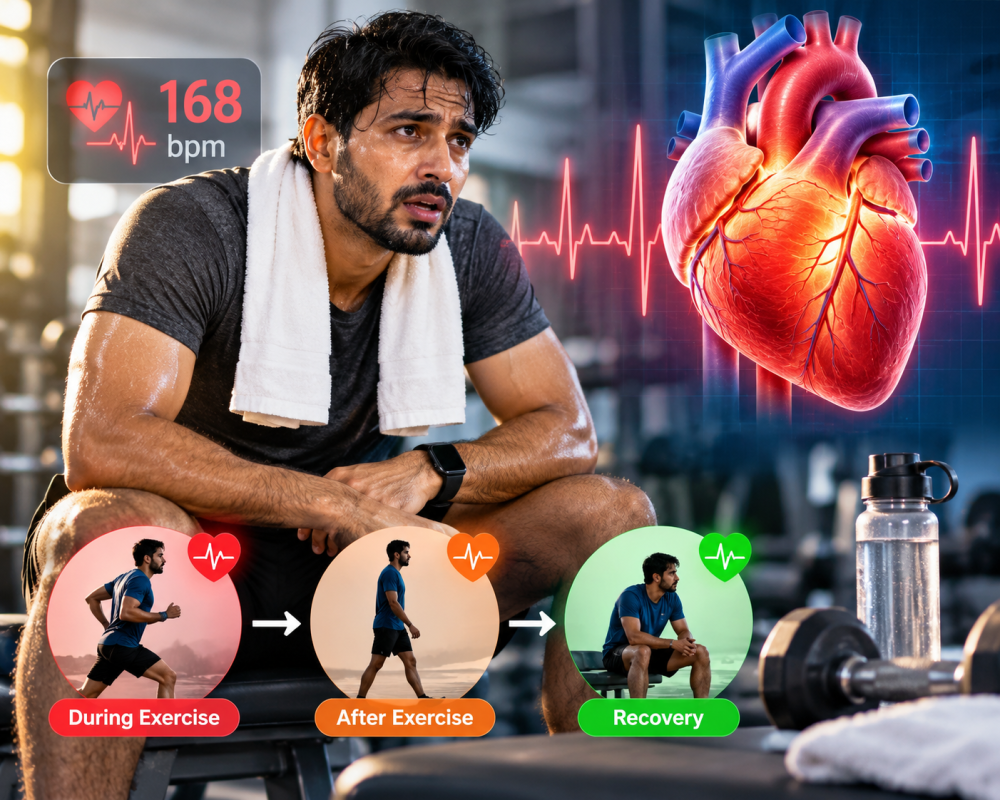
It is normal for the heart to beat faster during exercise. But after a workout ends, the heart rate does not always return to its resting level immediately. For some people, particularly after strenuous exercise, it can take several minutes for the heart rate to gradually settle.
According to cardiologist Dr Akhil K Rustagi, a temporarily elevated heart rate after exercise does not necessarily indicate a health problem.
“During exercise, the heart pumps more blood to the muscles to meet their increased demand for oxygen. As a result, the heart rate rises with the intensity of physical activity. When you stop exercising, it does not immediately return to your resting heart rate. The body needs some time to gradually return to its normal state,” he explained.
Why does heart rate stay high after exercise?
During physical activity, the muscles require more oxygen and nutrients. To meet this demand, the heart pumps blood faster, causing the heart rate to increase.
Once exercise stops, the body gradually transitions back to its resting state. Therefore, the heart rate should generally fall gradually rather than immediately returning to the resting level.
How quickly it decreases can depend on several factors, including exercise intensity, fitness level, age and overall health.
When is a high heart rate after exercise normal?
A temporarily elevated heart rate is generally expected after activities such as:
- Running
- Cycling
- Strength training
- High-intensity workouts
- Other vigorous physical activities
The harder and longer a person exercises, the more time it may take for the heart rate to return toward its normal level.
Other factors can also temporarily influence heart rate, including dehydration, heat, stress, lack of sleep and caffeine.
For many adults, moderate-intensity exercise is generally around 50–70% of age-predicted maximum heart rate, while vigorous exercise is around 70–85%. These are general guidelines and individual targets can vary.
Can a cool-down help lower heart rate?
Yes. A gradual cool-down after strenuous exercise can help the body transition back to its resting state.
Instead of stopping suddenly, walking slowly for several minutes can allow heart rate and breathing to decrease gradually.
When can a high heart rate after exercise be concerning?
A heart rate that stays unusually high for longer than expected, particularly following relatively light exercise, may warrant medical evaluation.
It is also worth discussing with a doctor if:
- It happens repeatedly.
- Your heart rate is significantly higher than usual during the same activity.
- You experience an unusually fast or irregular heartbeat.
- You develop other concerning symptoms.
Warning symptoms to watch for
According to Dr Rustagi, symptoms are particularly important when assessing whether an elevated heart rate needs medical attention. These can include:
- Chest pain or pressure
- Unusual shortness of breath
- Dizziness
- Feeling faint
- Extreme weakness
- Fast or irregular heartbeat
If these symptoms occur during or after exercise, seek prompt medical attention rather than assuming they are simply part of a normal workout response.
What is heart rate recovery?
Heart rate recovery (HRR) refers to how much the heart rate decreases after exercise. It can provide useful information about cardiovascular fitness and overall heart health.
However, there is no single heart-rate recovery number that is ideal for everyone. Recovery can vary depending on age, fitness level, type and intensity of exercise, medications and underlying health conditions.
When should you speak to a cardiologist?
A heart rate that gradually decreases after exercise is generally expected. However, repeated episodes of an unusually high heart rate or symptoms such as chest pain, dizziness or difficulty breathing should not be ignored.
As Dr Rustagi explains, the important point is not to panic simply because the heart continues beating faster immediately after exercise. What matters is whether the heart rate gradually comes down and whether any concerning symptoms occur.
Related News
 OCT 12, 2026
FIFPRO Report Finds 49% of Women Footballers Consider Leaving Football Early
A new FIFPRO report highlights the challenges facing women's football, with 49% of surveyed players considering an early exit. Financial pressures, mental health concerns, limited employment contracts and unequal access to player protections remain major issues despite the sport's growing commercial success.
 OCT 12, 2026
How New Medical Technologies Are Transforming Heart Surgery and Improving Heart Health
Advances in cardiac imaging, minimally invasive procedures and multidisciplinary care are transforming heart treatment. Discover how modern heart surgery technology helps doctors diagnose valve disease, personalise treatment and monitor recovery.
 OCT 12, 2026
How Gummies, Wellness Shots and Oils Are Transforming India’s Wellness Habits
Gummies, wellness shots, oils and powders are reshaping India's wellness habits. As consumers seek convenient daily routines, transparency, product quality and informed choices are becoming increasingly important.
 OCT 10, 2026
Psychologists Explain Why “Stop Overthinking” Doesn’t Work and What You Should Do Instead
Being told to “stop overthinking” rarely helps when your mind keeps replaying conversations and imagining worst-case scenarios. Psychologists explain why repetitive thinking happens and share practical strategies to manage anxious thoughts, tolerate uncertainty, and regain control.