

Jitendra Singh Says India Emerging as Global Healthcare Powerhouse Through Innovation
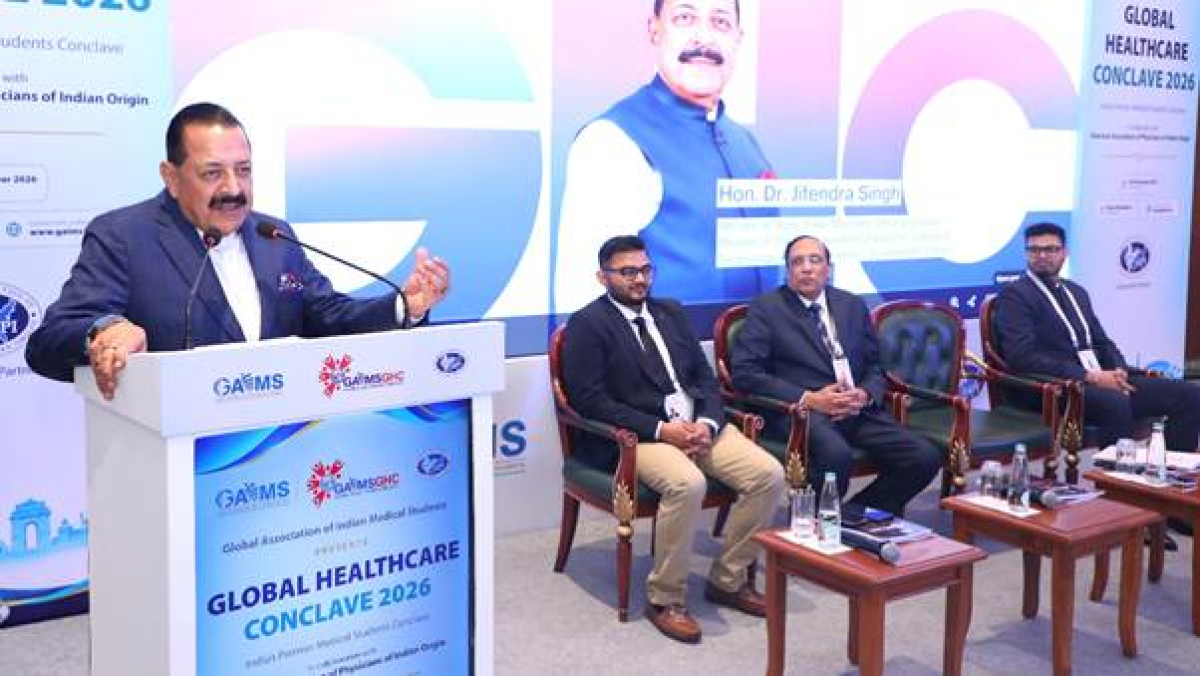
Union Minister Dr Jitendra Singh on Saturday said India is rapidly transforming into a global healthcare powerhouse through indigenous research, technological innovation and wider access to advanced treatment at more affordable costs.
Speaking at the Global Healthcare Conclave 2026 in New Delhi, Singh called for a judicious balance between traditional clinical medicine and increasingly technology-driven healthcare practices. The conclave listed him as its Chief Guest.
Indigenous Research Driving Healthcare Transformation
Singh said India’s expanding scientific capabilities, large genomic diversity and growing strength in indigenous medical research were creating new possibilities in diagnostics, treatment and disease prevention.
He highlighted programmes and breakthroughs including the Indian Genome Programme, indigenous antibiotics, HPV vaccination, gene therapy and CAR-T cell treatment as examples of India’s increasing capabilities in advanced medical science.
AI and Precision Medicine to Shape Future Healthcare
The Minister said artificial intelligence, precision medicine and preventive healthcare would play a defining role in India’s healthcare journey towards Viksit Bharat 2047.
He stressed, however, that technology should complement rather than replace clinical judgement, arguing that effective healthcare requires both strong medical fundamentals and responsible adoption of new tools.
Genomics Opens New Frontiers
Singh said India’s genomic diversity gives the country a unique opportunity to develop more precise and population-relevant approaches to healthcare.
Genomics can support better understanding of disease risks, personalised treatment and early intervention, while India’s large research ecosystem offers significant potential for scaling such technologies.
CAR-T Cell Therapy and Gene Therapy Highlighted
Among the advanced treatment areas cited by the Minister were CAR-T cell therapy and gene therapy, both of which are increasingly associated with highly specialised treatment for certain serious and previously difficult-to-treat diseases.
Singh presented India’s indigenous work in these areas as part of a wider shift towards domestic innovation and reduced dependence on imported high-cost medical technologies.
Focus on Affordable Advanced Treatment
The Minister said India’s healthcare transformation was not only about scientific sophistication, but also about making cutting-edge treatments more accessible and affordable.
He argued that indigenous innovation could reduce treatment costs while expanding access to advanced therapies for a larger section of the population.
Young Medical Students Urged to Embrace Technology
During the conclave, Singh interacted with young medical students and encouraged them to familiarise themselves with emerging technologies.
He said future doctors would need to understand tools such as AI, genomics, digital diagnostics and precision medicine while maintaining the clinical reasoning, ethics and patient interaction that remain central to medical practice.
Official Souvenir of Global Healthcare Conclave Released
Singh also released the official souvenir of Global Healthcare Conclave 2026 during the event.
The conclave, being held in New Delhi on November 28 and 29, brings together medical professionals, researchers, educators and students to discuss healthcare innovation, clinical practice and emerging technologies.
Preventive Healthcare to Gain Greater Importance
The Minister also emphasised the importance of preventive healthcare, arguing that future healthcare systems must focus increasingly on early diagnosis, risk assessment and disease prevention.
AI-assisted screening, genomic analysis and precision medicine can potentially help identify health risks earlier and improve targeted interventions.
India Seeks Larger Role in Global Healthcare
Singh said India’s combination of scientific talent, technological capabilities, pharmaceutical strength and cost-effective healthcare could give the country a larger role in the global medical ecosystem.
He presented the country’s progress in genomics, vaccines, indigenous drugs and advanced therapies as part of a broader transition from being primarily a provider of affordable healthcare services to becoming an important source of healthcare innovation.
Related News
 NOV 28, 2026
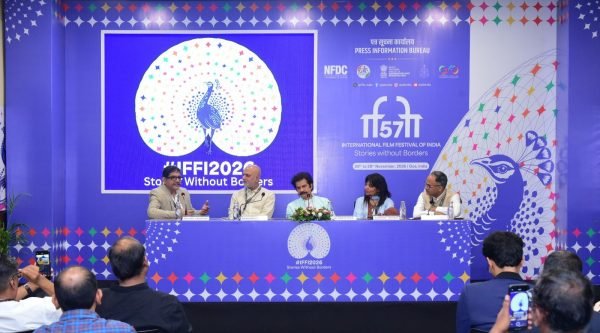
IFFI OTT Awards Jury Says Digital Platforms Are Breaking Language Barriers and Expanding Creative Opportunities
The IFFI OTT Awards Jury said streaming platforms are transforming storytelling by widening opportunities for creators and helping audiences discover content across languages.
 NOV 28, 2026
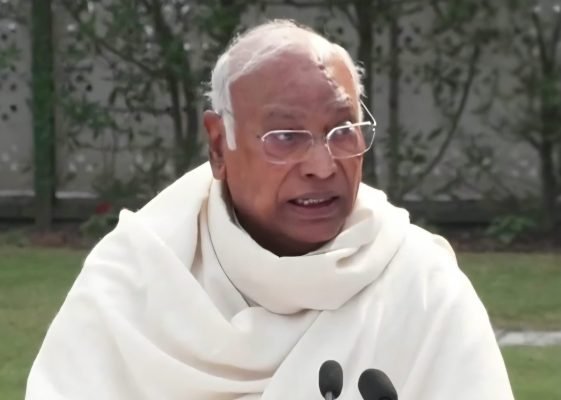
Kharge Questions EC's Role in Delimitation Process
Mallikarjun Kharge questions the Election Commission's role in delimitation, alleging risks of manipulation and arbitrary constituency reclassification.
 NOV 28, 2026
Vice-President C.P. Radhakrishnan Releases Thirukkural in 50 Languages at Kashi Tamil Sangamam
Vice-President C.P. Radhakrishnan released the Thirukkural in 50 languages at Kashi Tamil Sangamam 5.0, highlighting India’s linguistic diversity and Kashi-Tamil cultural ties.
 NOV 28, 2026
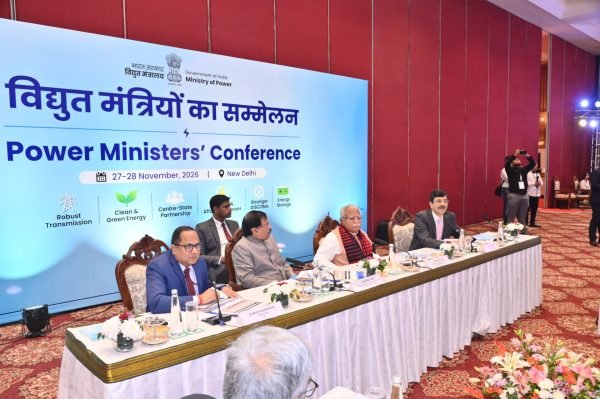
Manohar Lal Reviews Power Sector Priorities With Group-IV States and UTs
Union Power Minister Manohar Lal chaired the Group-IV review on Day 2 of the Power Ministers’ Conference, discussing storage, transmission and DISCOM viability.