

J&K Agencies Intensify Network-Centric Crackdown on Drug Trafficking at State-Level JCC Meeting
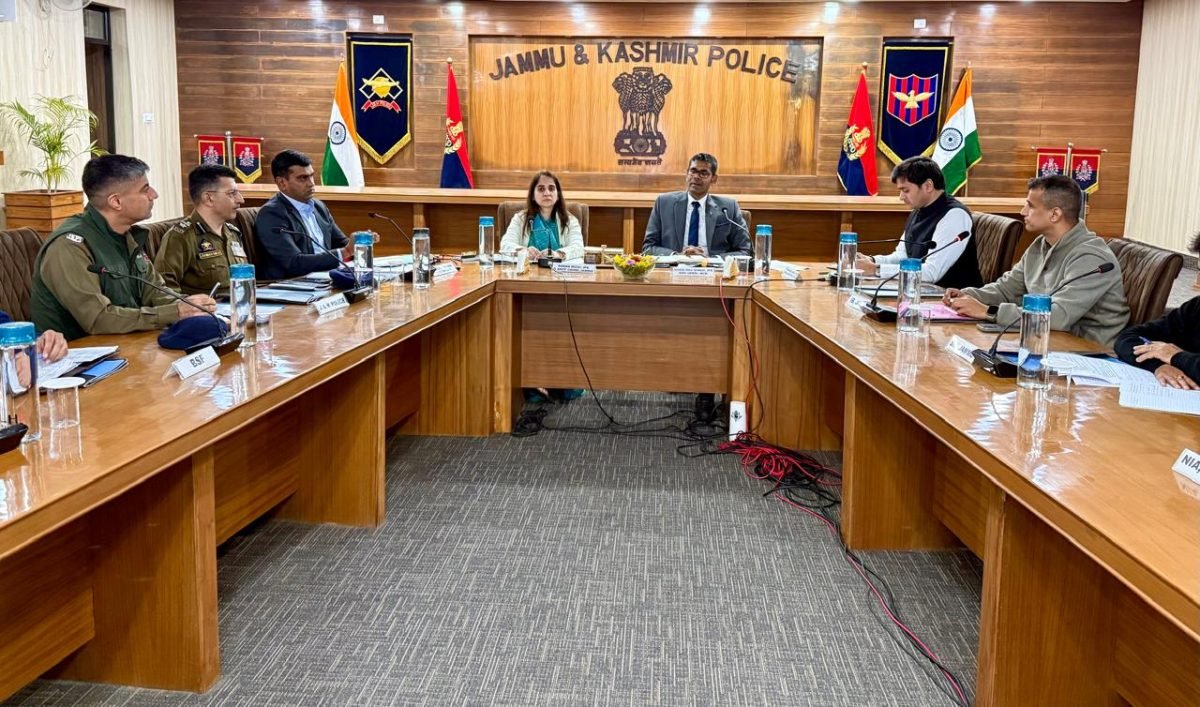
A quarterly state-level Joint Coordination Committee (JCC) meeting for Jammu and Kashmir was convened in Jammu to strengthen inter-agency coordination against drug trafficking, with officials focusing on a shift from seizure-based enforcement to dismantling entire narcotics networks.
The meeting brought together representatives from the Narcotics Control Bureau, Jammu and Kashmir Police, Enforcement Directorate, National Investigation Agency, R&AW, Directorate of Revenue Intelligence, Border Security Force, Railway Protection Force, Anti-Narcotics Task Force, State Investigation Branch and Drug Control Department.
Focus Shifts From Seizures to Entire Drug Networks
A major theme of the meeting was implementation of the Vision Document on Narcotics Control 2026–2029, which calls for enforcement agencies to move beyond individual seizures and arrests and instead target the full trafficking ecosystem.
The Ministry of Home Affairs says the roadmap prioritises intelligence-led investigations against financiers, handlers, facilitators, logistics providers and international linkages, with the objective of dismantling organised drug networks at their roots.
360-Degree Investigations and Financial Probes Emphasised
Officials discussed the need for 360-degree investigations in major narcotics cases, including tracing financial flows and identifying the proceeds of crime.
The national narcotics roadmap also calls for financial investigations in commercial-quantity cases, freezing and confiscating illicit assets and greater coordination with financial intelligence agencies.
50 Priority Network-Centric Cases to Be Identified
The meeting also deliberated on identifying 50 priority network-centric cases for focused investigation.
Three such cases were presented by the Anti-Narcotics Task Force and Jammu and Kashmir Police during the session, illustrating how agencies are attempting to map larger trafficking chains rather than treating individual seizures as isolated incidents.
Narco-Terror and Cross-Border Links Discussed
Officials reviewed cases involving narco-terrorism and cross-border trafficking linkages, an issue of particular concern in Jammu and Kashmir because of its international border and Line of Control.
Government records show that the JCC mechanism was established specifically to coordinate investigations into major drug seizures and uncover connections with other crimes, including narco-terrorism.
Extradition of Narco-Fugitives on Agenda
The meeting also discussed the extradition of accused persons and fugitives linked to international narcotics networks.
The 2026–2029 Vision Document places strong emphasis on transnational trafficking, international linkages and coordinated action among central agencies, state police and Anti-Narcotics Task Forces.
Model ANTF Framework Discussed
Participants deliberated on the formulation of a Model Anti-Narcotics Task Force, aimed at strengthening specialist state-level enforcement capabilities.
The Ministry of Home Affairs says dedicated ANTFs have now been constituted across all 36 states and Union Territories to support intelligence gathering, investigation, coordination and preventive measures against narcotics trafficking.
PITNDPS Act to Be Used Against Habitual Traffickers
Effective use of the Prevention of Illicit Traffic in Narcotic Drugs and Psychotropic Substances Act, or PITNDPS, was another focus area.
The government’s narcotics strategy encourages preventive detention in appropriate cases involving habitual traffickers as part of efforts to disrupt organised drug networks and their financial infrastructure.
Clandestine Drug Labs and Intelligence Sharing Reviewed
The meeting also covered dissemination of Requests for Information on clandestine drug laboratories and stronger intelligence sharing among agencies.
The national roadmap calls for a more integrated narcotics intelligence architecture using systems such as CCTNS 2.0, NIDAAN 2.0 and the Intelligence Data Fusion Centre to facilitate real-time information sharing and network analysis.
J&K Already Uses Multi-Agency Anti-Drug Framework
Jammu and Kashmir already operates under a layered anti-narcotics coordination structure.
According to the Ministry of Home Affairs, the Union Territory held four state-level NCORD meetings and 199 district-level NCORD meetings during 2025. A state-level Joint Coordination Sub-Committee has also been used to monitor significant narcotics investigations, while the NCB has taken over selected cases from local police to pursue wider trafficking chains.
Whole-of-Government Approach at Centre of Strategy
The latest JCC meeting reflects the Centre’s broader Whole-of-Government approach to narcotics control.
Under the Vision Document, responsibilities are distributed across ministries, central agencies, state governments and district administrations, with measurable targets and periodic reviews intended to support the goal of a drug-free India.
The Jammu meeting therefore placed particular emphasis on coordinated intelligence, financial disruption, cartel identification and cross-border investigations rather than simply measuring success through the quantity of drugs seized.
Related News
 NOV 28, 2026
Samik Bhattacharya Says ‘Build in West Bengal, Build for World’ as State Pushes New Industrial Strategy
Samik Bhattacharya said West Bengal is seeking to attract investment, bring back skilled talent and build new capabilities in AI, GCCs, semiconductors and advanced manufacturing.
 NOV 28, 2026
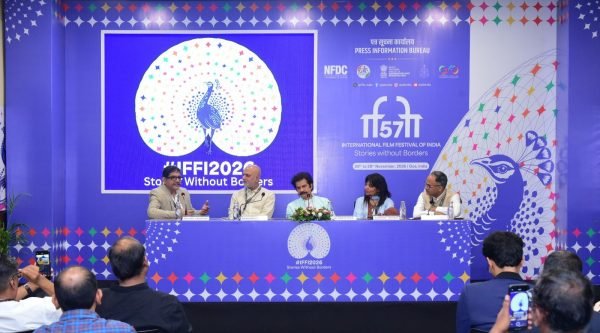
IFFI OTT Awards Jury Says Digital Platforms Are Breaking Language Barriers and Expanding Creative Opportunities
The IFFI OTT Awards Jury said streaming platforms are transforming storytelling by widening opportunities for creators and helping audiences discover content across languages.
 NOV 28, 2026
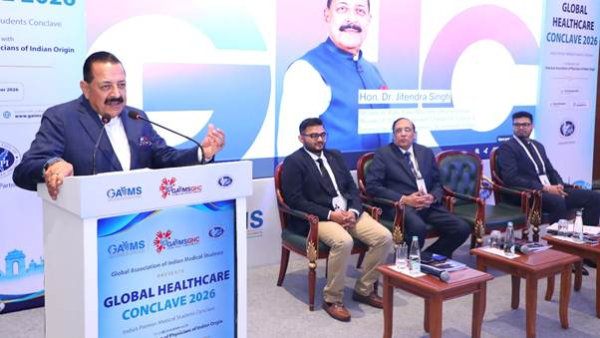
Jitendra Singh Says India Emerging as Global Healthcare Powerhouse Through Innovation
Union Minister Jitendra Singh said India’s growing capabilities in genomics, indigenous medical research, AI and advanced treatments are opening new frontiers in global healthcare.
 NOV 28, 2026
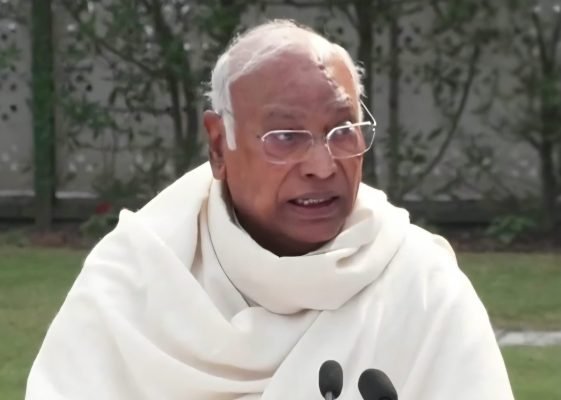
Kharge Questions EC's Role in Delimitation Process
Mallikarjun Kharge questions the Election Commission's role in delimitation, alleging risks of manipulation and arbitrary constituency reclassification.