

“Nothing is Eternal”: The Heartbreak, the Tears, and the Soul of Pep’s Final Speech
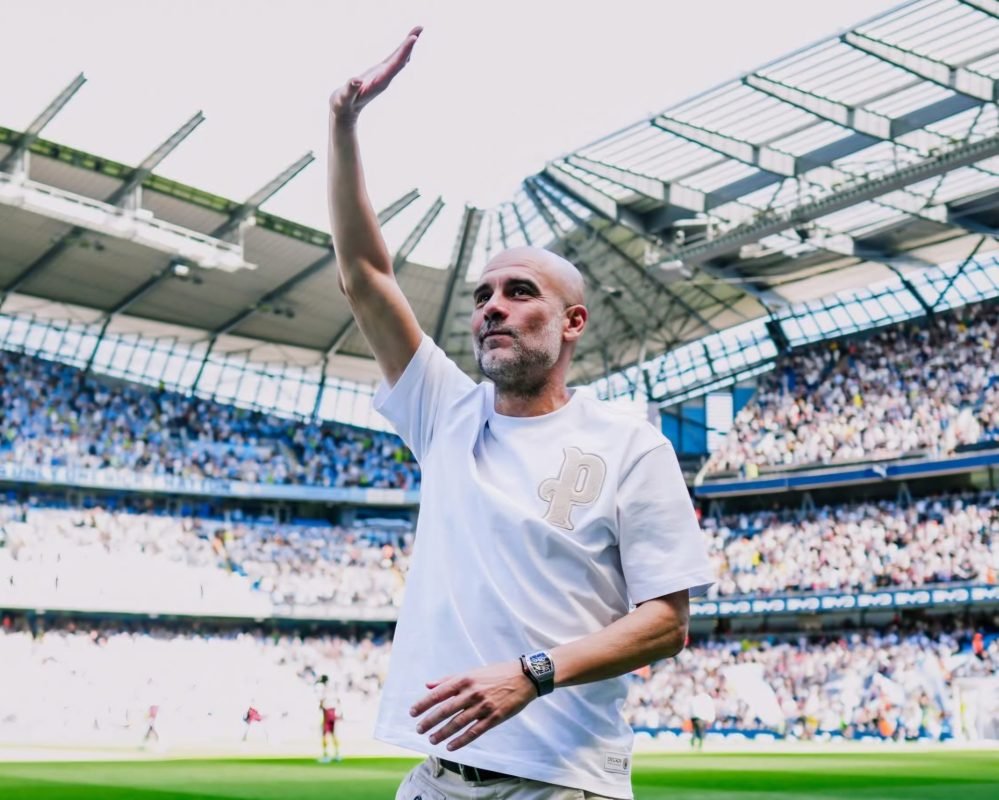
The sky over the Etihad Stadium wasn't just its usual shade of blue—it felt heavy, saturated with a decade's worth of history, genius, and tears.
When the final whistle blew, the scoreline instantly dissolved into irrelevance. The thousands of fans frozen in their seats weren't grieving a ninety-minute football match; they were mourning the end of an era. After ten years, countless major trophies, and a fundamental rewiring of English football, Pep Guardiola has walked the touchline for the very last time.
The man who arrived in 2016 as a tactical philosopher leaves as an adopted Mancunian, a permanent fixture of the city's rich, industrial fabric.
"Nothing is Eternal"
Guardiola’s exit, though whispered about for months, still sent shockwaves through the football world when the final day arrived. It was a departure grounded in something deeply human, far removed from the cold statistics of his success.
“Don't ask me the reasons I'm leaving. There is no reason, but deep inside, I know it's my time,” Pep admitted, his voice cracking during his farewell address to a captivated stadium.
“Nothing is eternal... Eternal will be the feeling, the people, the memories, the love I have for my Manchester City.”
For a manager notorious for his obsessive, frantic energy on the touchline, his final afternoon was defined by raw vulnerability. Pep confessed to weeping when he looked into the stands, seeing the faces of the fans who had defended him, sung his name, and shared in a decade of unprecedented euphoria.
Pep looked around a stadium where his name will forever echo, and where a statue will eventually mirror his likeness, and spoke not of tactics, but of the soul of Manchester:
“This is a city built from work. From graft. You see it in the colour of the bricks... The factories. The music. We worked. We suffered. We fought. And we did things our own way.”
The Footprint of a Genius
It is impossible to overstate what Guardiola built in East Manchester. He transformed City from an ambitious project into a terrifyingly efficient, beautiful footballing machine. Critics will always point to the immense backing and the pressures of the modern game, but no amount of wealth could buy the soul, the discipline, and the poetic rhythm Pep injected into his squads.
The Guardiola Decade: A Monumental Legacy
10 Unforgettable Seasons of Innovation
6 Premier League Titles (including an unprecedented four-in-a-row)
1 Historic European Treble to conquer the continent
100 Points in a single, mythical season (The Centurions)
A Complete Revolution of how the English game is played
He went out on his own terms, having pushed his players to the absolute limit of human capability. He didn't just win; he altered the DNA of football, from ball-playing goalkeepers to inverted full-backs, leaving an indelible blueprint that coaches will study for generations.
The apartment Pep lived in is already being packed away, signaling a clean, definitive break. He has made it clear that after a decade of carrying the emotional weight of a global powerhouse, he needs to rest his mind, to breathe, and to step away from the relentless pressure of the technical area.
The daunting task of succeeding the irreplaceable now looms over the Etihad. Whoever steps into those shoes inherits a kingdom, but also the impossible shadow of a giant. Guardiola, ever the class act, has offered only love and solidarity for the future of the club, urging the fans to wrap their unconditional support around the next era.
As Oasis tracks echoed over the Etihad PA system long after the fans should have gone home, the feeling of finality truly set in. Manchester City will continue to play, win, and fight for silverware. But the beautiful, manic, romantic era of Pep's footballing poetry has reached its final stanza.
Thank you, Pep. The game will never be quite the same.
Related News
 OCT 24, 2026
“History Created at Aichi-Nagoya 2026”: Mansukh Mandaviya Celebrates India’s 114 Medals
India achieves its highest-ever Asian Para Games medal tally with 114 medals at Aichi-Nagoya 2026. Sports Minister Mansukh Mandaviya credits Khelo India and TOPS for empowering para-athletes.
 OCT 24, 2026
Asian Para Games 2026: India Wraps Up Historic Campaign with Record 114 Medals
India concluded its Asian Para Games 2026 campaign with a record 114 medals, including 30 gold, 35 silver and 49 bronze. Day 5 featured a world-record sprint by Sandeep Kumar, Sumit Antil's javelin gold, para-badminton triumphs and para-archery success, marking India's best-ever performance at the competition.
 OCT 23, 2026
Sheetal Devi Shines with Three Medals at the Asian Para Games
Indian para-archery star Sheetal Devi signs off from the Asian Para Games with two gold medals, one silver and three record milestones—one world record equalled and two new world records set—celebrating a journey of resilience, belief and pride in India.
 OCT 23, 2026
India Soars on Day 4: Historic Medal Rush Propels Nation to 88 Medals at Asian Para Games 2026!
India delivered a spectacular performance on Day 4 of the Asian Para Games 2026, winning 26 medals across multiple disciplines. With 21 gold, 26 silver and 41 bronze medals, India reached 88 medals overall and climbed to fourth place in the standings.