

RBI Repo Rate Hike: Benchmark Rate Raised to 5.50%
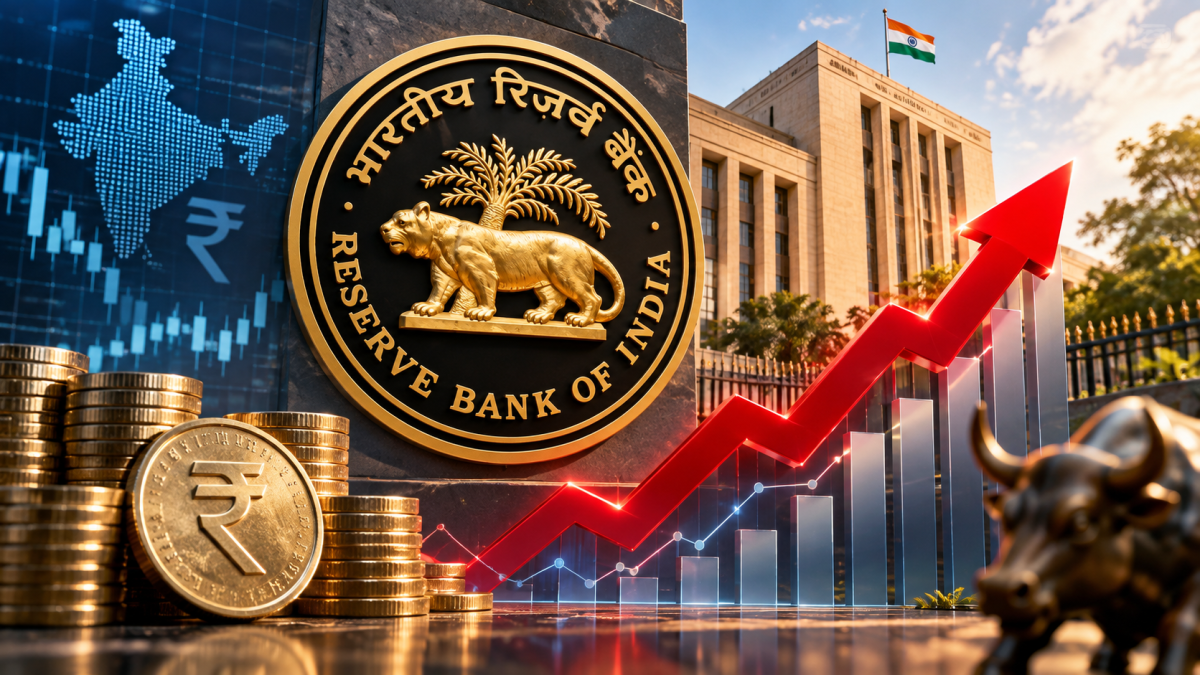
The RBI repo rate hike has taken India’s benchmark interest rate to 5.50% after the Reserve Bank of India raised the policy rate by 25 basis points on Wednesday, marking its first increase in nearly four years. The move comes as inflation pressures broaden and the rupee remains under pressure.
The six-member Monetary Policy Committee voted unanimously for the increase and also shifted its stance from “neutral” to “calibrated tightening”, signalling that rate cuts are unlikely in the near term.
RBI Shifts to ‘Calibrated Tightening’
Governor Sanjay Malhotra said future policy action would depend on how inflation and growth evolve.
“Rate cuts are off the table in the near term and policy action ahead can only be a rate hike or a pause, depending on the evolving conditions and the outlook.”
The change in stance suggests that the RBI is now giving greater weight to inflation risks after a period of relatively accommodative policy.
Inflation Pressures Drive Policy Change
The RBI repo rate hike comes as consumer inflation has remained above the central bank’s 4% medium-term target.
Consumer price inflation rose to 4.82% in August, remaining above the target for a third consecutive month. The RBI also pointed to broader price pressures from food, fuel and international crude oil markets.
Weak monsoon conditions linked to El Niño have added to concerns over food inflation, while elevated oil prices have increased pressure on India’s import bill and domestic prices.
RBI Raises FY27 Inflation Forecast
The Reserve Bank now expects headline inflation to average 5.2% in FY27.
It also expects inflation to remain elevated in the later part of the financial year, with price pressures influenced by food, fuel and global uncertainty.
The RBI said inflation risks were less benign than they had been a year earlier, prompting the shift toward tighter monetary policy.
Further Rate Hikes Could Follow
While the RBI has not committed to another immediate increase, Malhotra made it clear that the next move could either be another hike or a pause.
The timing and scale of further tightening will depend on incoming inflation data, economic growth and whether supply-side pressures begin to spread more broadly across the economy.
Weak Rupee Adds to Policy Pressure
Currency weakness has also emerged as an important factor.
The rupee has been trading near record lows amid foreign capital outflows and higher global yields. Higher interest rates can help support the currency by making rupee-denominated assets relatively more attractive, although exchange-rate movements depend on several factors.
India Joins Global Tightening Trend
With the RBI repo rate hike, India has joined other major central banks that have moved toward tighter monetary policy in response to renewed inflationary pressures.
Higher oil prices, geopolitical uncertainty and strong domestic demand have contributed to the change in the policy environment.
The 25-basis-point increase marks a significant shift in India’s monetary policy direction, with the central bank now focused on containing inflation while preserving economic growth.
Related News
 OCT 27, 2026
Ballon d’Or 2026 Awards: All Winners, Final Rankings and Key Highlights
Harry Kane and Alexia Putellas headline the 2026 Ballon d’Or winners. Explore the leading rankings and major individual and team honours in world football.
Arunachal dam protests spread to Daporijo; two security personnel hurt
A bandh opposing the Menga dam turned violent in Daporijo as authorities sought talks over widening hydropower protests.
Rahul Gandhi rally: Delhi traders seek postponement or venue change
CTI has urged Congress to delay the November 1 rally or move it away from commercial areas, citing traffic and festive trade concerns.
UP MLC polls: ECI orders six suspensions and action against 21 others
The Election Commission has ordered suspensions and disciplinary proceedings after polling irregularities in the Agra Teachers’ Constituency.