

Dilip Ghosh on Vande Mataram: ‘Society Has Become Aware and Will Sing the Full Song’
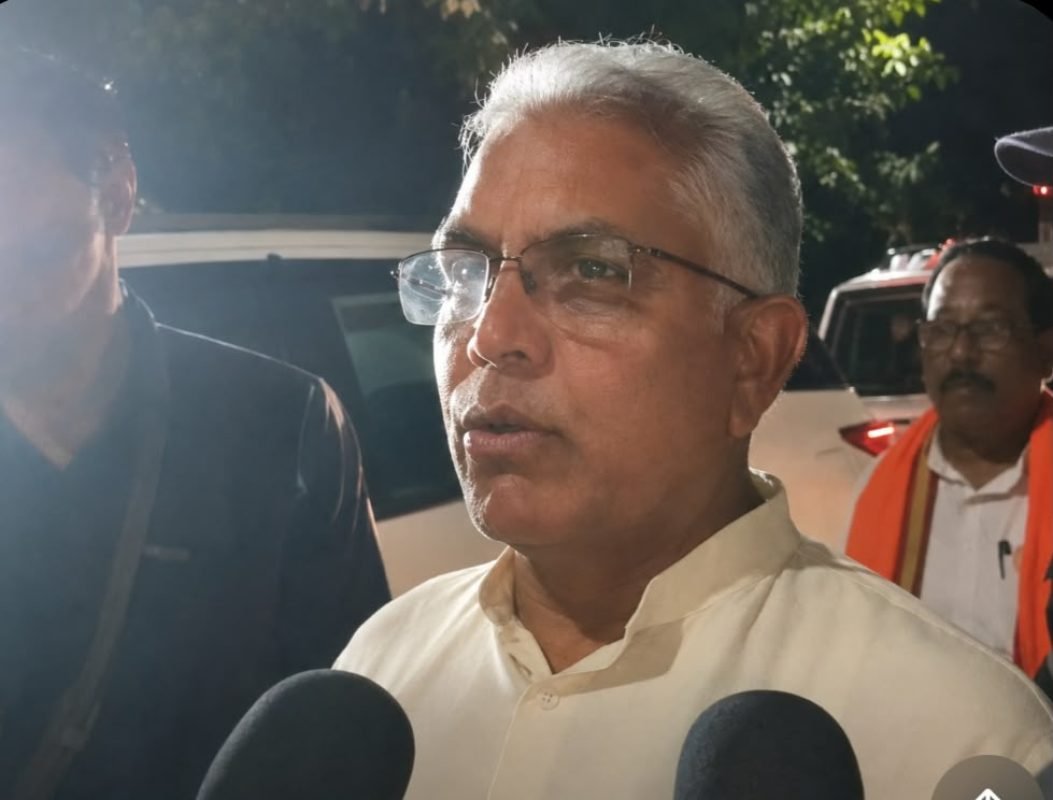
Dilip Ghosh Vande Mataram remarks have triggered a fresh political debate after the state minister criticised the Congress and said that society has now become aware of the historical significance of the national song.
Speaking on the issue, Ghosh alleged that Congress had played a role in dividing the nation and society.
He also referred to Vande Mataram, asserting that the time had come for people to recognise its full significance.
According to Ghosh, society has become more aware and will now sing the complete version of Vande Mataram.
Dilip Ghosh Criticises Congress
In his remarks, Dilip Ghosh targeted the Congress over what he described as its political legacy.
He alleged that the party had contributed to divisions within the country and society. Ghosh further said that the political circumstances of the past had changed and that people were now more conscious of the historical and cultural significance of national symbols.
His comments came amid renewed political discussions surrounding Vande Mataram and its place in India's national consciousness.
‘Society Has Become Aware’, Says Ghosh
Ghosh said that the time of the political forces he criticised had passed and claimed that society had become more aware.
He stated that people would now sing the full version of Vande Mataram, presenting it as a reflection of changing public awareness.
The remarks are likely to add to the ongoing political debate over the national song, its history and the way it has been treated in India's public life.
Vande Mataram and India’s Freedom Movement
Vande Mataram, written by Bankim Chandra Chattopadhyay, occupies an important place in India's freedom movement. The song became a powerful symbol of the nationalist movement during the struggle against British rule.
Over the years, Vande Mataram has remained closely associated with India's cultural and political history.
The song's historical significance continues to be discussed in political, cultural and educational contexts.
National Song of India
Vande Mataram holds the status of India's national song, while Jana Gana Mana is the national anthem.
The two have played distinct but important roles in India's national history. Vande Mataram, in particular, became strongly associated with the freedom movement and the emergence of Indian nationalism.
Political Debate Over Vande Mataram
The remarks by Dilip Ghosh come at a time when political parties continue to debate issues surrounding national symbols and India's historical legacy.
Different political groups have interpreted the history and public use of Vande Mataram in different ways. The song has therefore remained a recurring subject of political discussion.
Ghosh's latest comments reflect the broader ideological debate over nationalism, history and cultural identity.
Congress and the Historical Debate
By directly referring to Congress, Ghosh linked the discussion over Vande Mataram to the country's political history.
His criticism of the party is part of a wider political contest in which parties frequently differ over the interpretation of events surrounding India's freedom struggle, Partition and the development of the country's national identity.
The Congress has historically been one of the central political forces in India's independence movement and post-Independence politics. Its role and legacy remain subjects of continuing political debate.
Full Vande Mataram Becomes Centre of Discussion
The question of singing the complete version of Vande Mataram has gained renewed attention in political discourse.
Ghosh's statement that society will now sing the full song adds another layer to the discussion. His remarks suggest that he views wider acceptance of the complete song as an expression of greater public awareness.
The issue is likely to remain part of the broader conversation around India's national symbols and historical heritage.
The Dilip Ghosh Vande Mataram remarks have brought the national song and its historical significance back into the political spotlight. Ghosh criticised Congress, argued that society has become more aware and said people would now sing the full version of Vande Mataram.
His comments have also highlighted the continuing political debate over India's history, nationalism and the role of national symbols in public life.
Related News
 OCT 23, 2026
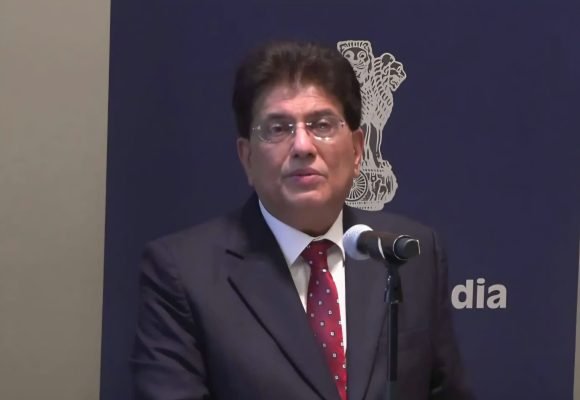
Piyush Goyal Honours Kerala Nurses for India-Germany Ties
Piyush Goyal has praised 6,000 Kerala nurses who worked in West Germany during the 1960s, saying their contribution helped build lasting trust between India and Germany.
 OCT 23, 2026
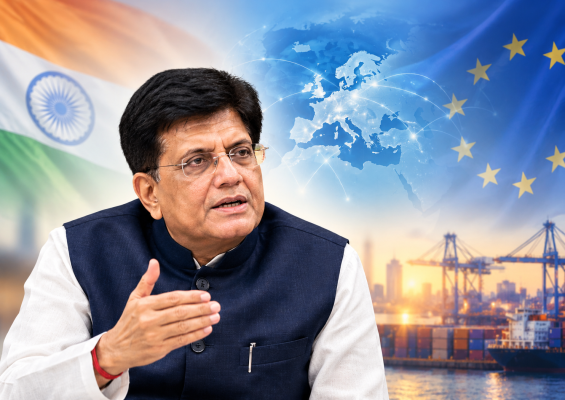
Piyush Goyal Calls India-EU FTA a Landmark Win-Win Deal
Piyush Goyal calls the India-EU FTA a landmark win-win agreement, highlighting access to a 27-country market, economic complementarities and stronger trade ties.
 OCT 23, 2026
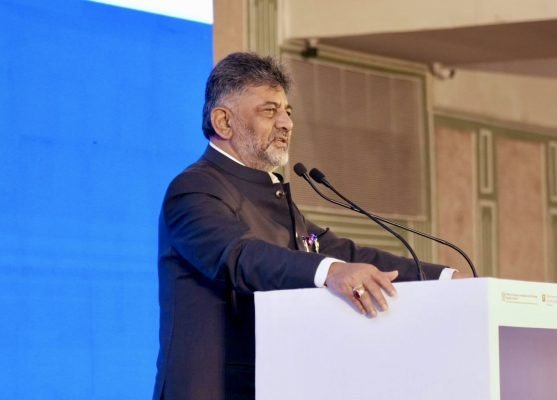
“Karnataka Ready to Deepen Poland Ties Through Investment, Innovation and Job Creation”: CM DK Shivakumar
Karnataka has invited Polish companies to invest in AI, healthcare, advanced manufacturing and green energy, highlighting TZMO Group's proposed ₹80-crore project in Kolar and the proposed Karnataka–Katowice Digital and Gaming Corridor.
 OCT 23, 2026
India, Poland Eye Deeper Ties in AI and Aerospace
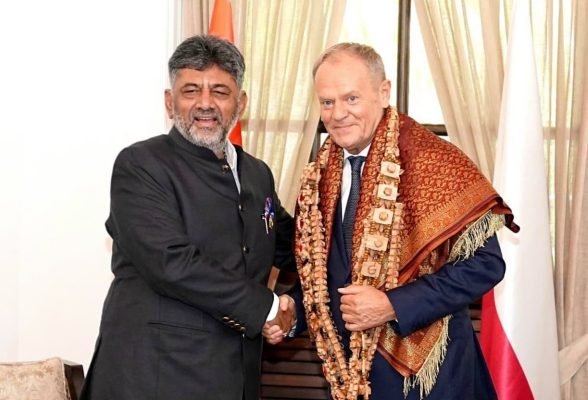
Karnataka Chief Minister D.K. Shivakumar welcomed Polish Prime Minister Donald Tusk to Bengaluru, where he called for India and Poland to deepen cooperation in AI, aerospace and technology and turn their strategic partnership into joint ventures.