

Nandan Nilekani Proposes Question Bank to Prevent NEET Paper Leaks
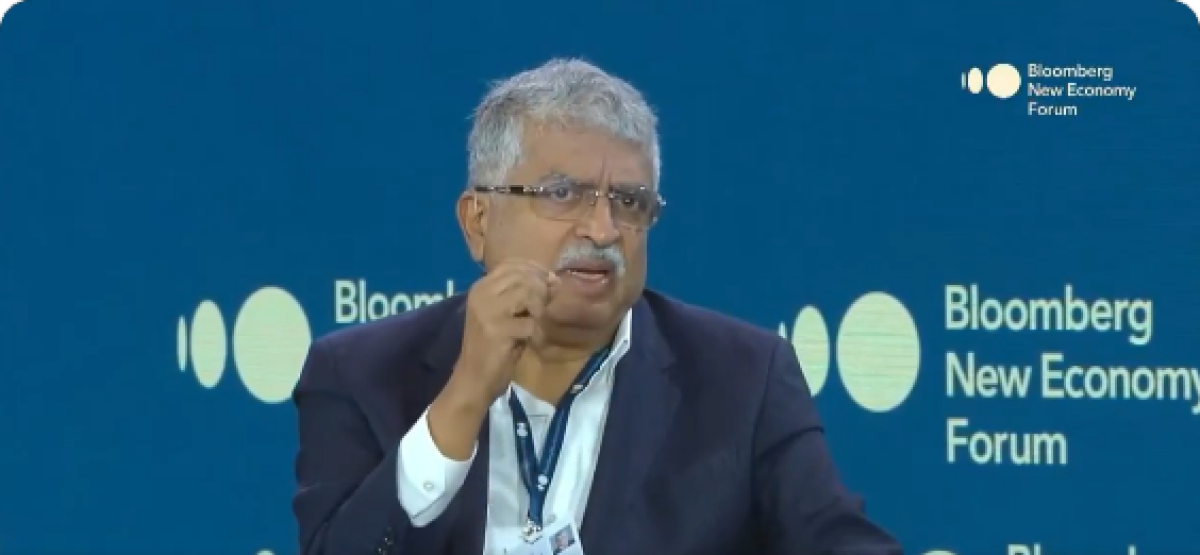
Infosys co-founder Nandan Nilekani has proposed creating a massive question bank and generating examination papers at the last minute to address concerns over paper leaks, including the NEET controversy. He also called for expanding computer-based testing infrastructure across India to strengthen the examination system.
Nilekani said the current practice of preparing a specific question paper can create financial incentives for people seeking to obtain and sell it before an examination. He argued that a system based on a large pool of questions could help reduce this risk.
Massive Question Bank Could Reduce Paper Leak Risks
Explaining his proposal, Nilekani questioned the need to rely on a single, pre-prepared question paper.
He suggested maintaining a large bank of questions and generating the paper for each examination at the last minute. According to him, this approach could reduce the economic incentive associated with obtaining and selling a particular question paper in advance.
The proposal focuses on changing the examination process itself rather than relying solely on measures taken after a leak is detected.
Nilekani Calls for Expansion of Computer-Based Testing
Nilekani also highlighted the need to move towards computer-based testing for examinations.
He said such a transition would require a wider network of testing locations to ensure that students across the country can access examination facilities.
Referring to the existing infrastructure, he cited around 150,000 locations where young candidates could take tests and said the network needed to be expanded further.
A broader testing infrastructure would be an important part of implementing computer-based examinations at scale, according to his remarks.
Committee to Address Systemic Examination Issues
Nilekani said these were systemic issues that would be addressed by the committee he referred to in his statement. He added that the Prime Minister was keen to implement the committee’s decisions.
His proposals centre on reducing opportunities for paper leaks through last-minute question paper generation and strengthening the infrastructure needed for computer-based examinations.
The suggestions come amid concerns over examination integrity and the need for reliable systems that protect fairness for candidates. The implementation of any proposed changes would depend on the committee’s recommendations and the steps taken by the relevant authorities.
Related News
 OCT 13, 2026
CII Global MSME Summit Highlights Opportunities and Challenges
New Delhi: Shreekant Somany, Chairman and Managing Director of Somany Ceramics Ltd., called for stronger collaboration between micro, small and medium enterprises (MSMEs), the government and industries to capitalise on opportunities emerging from global economic changes. Speaking at the 23rd CII Global MSME Business Summit in Delhi, he highlighted challenges related to tariffs, rising costs and access to finance.
 OCT 13, 2026
India-UK CETA Opens New Business and Investment Opportunities
The India-UK Comprehensive Economic and Trade Agreement (CETA) has been highlighted as a significant milestone in strengthening economic ties between India and the United Kingdom. Addressing the Joint Economic and Trade Committee (JETCO) Business Plenary alongside UK Business and Trade Secretary Jonathan Reynolds, the Indian representative emphasised opportunities for businesses in both countries to expand collaboration, deepen investments and build new partnerships.
 OCT 13, 2026
Kolkata Rally Celebrates Victories in Nandigram and Rejinagar
Kolkata: A large gathering of party workers and supporters took to the streets of Kolkata to celebrate the reported victories in Nandigram and Rejinagar. The victory rally was held at Murlidhar Sen Lane, with the event highlighting the party’s message of public trust and support for a “double-engine government”.
 OCT 13, 2026
PM Modi Says Reforms Are India’s Conviction, Not Compulsion
New Delhi: Prime Minister Narendra Modi said India views economic reforms as a matter of conviction rather than compulsion while addressing the Bloomberg New Economy Forum. He highlighted the country’s economic growth, foreign exchange reserves and banking system, saying these strengths provide confidence and stability amid global uncertainties.