

Piyush Goyal Meets Danish Foreign Minister Lars Løkke Rasmussen, Discusses Trade and Investment
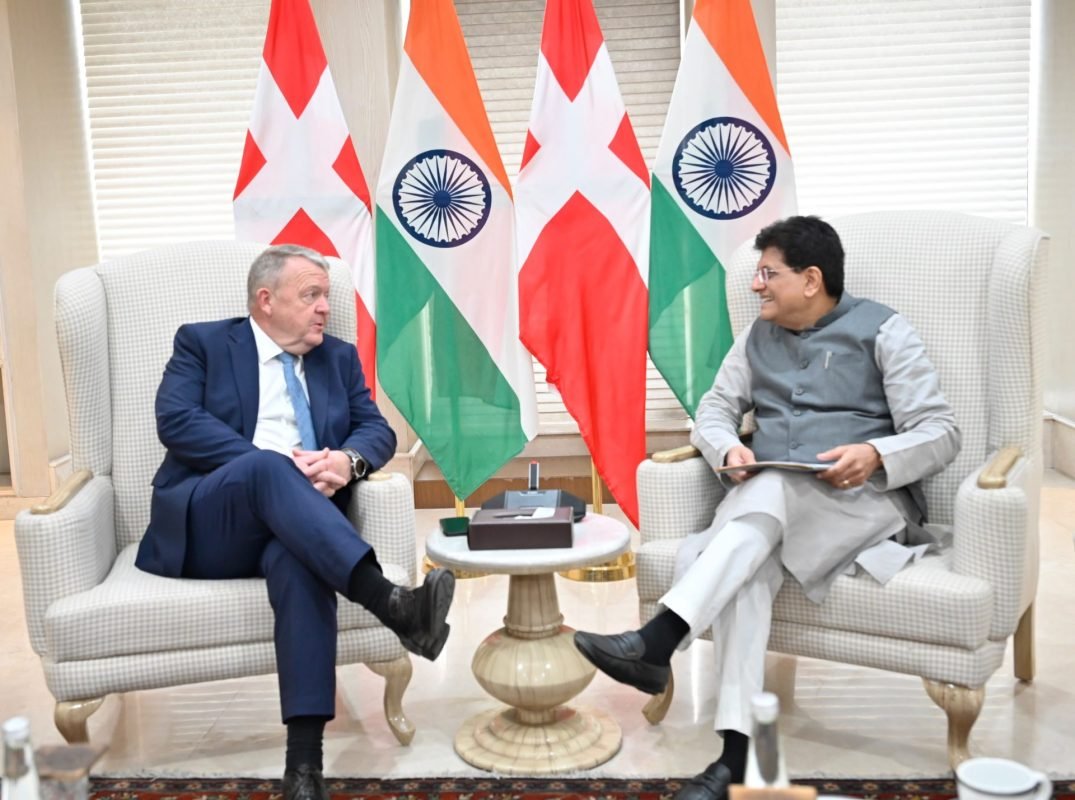
Union Commerce and Industry Minister Piyush Goyal on Saturday met Denmark’s Foreign Minister Lars Løkke Rasmussen, with the two sides discussing ways to deepen bilateral trade, economic cooperation and business engagement.
The Piyush Goyal Denmark trade meeting also explored new areas of collaboration aimed at strengthening the wider India-Denmark partnership at a time when both countries are expanding cooperation beyond traditional sectors such as renewable energy.
Trade and Business Ties in Focus
Goyal said the discussions covered strengthening bilateral trade and economic cooperation, improving business ties and identifying new areas of mutual interest.
The engagement coincided with Rasmussen’s November 27–28 visit to India, during which he held a series of meetings focused on trade, technology, innovation, space, defence and the Green Strategic Partnership.
India-Denmark Economic Relationship Expanding
India and Denmark have been steadily broadening their commercial relationship.
Official government data shows that bilateral trade in goods reached around $2.05 billion in 2025, while services trade stood at about $4.25 billion. Around 200 Danish companies are present in India across sectors including shipping, renewable energy, agriculture, food processing and smart urban development.
Indian investment in Denmark is estimated at about $560 million, with roughly 40 Indian companies operating there in areas such as IT, engineering and renewable energy.
Green Strategic Partnership Remains Key Pillar
Rasmussen’s visit also included the fifth India-Denmark Joint Commission Meeting, co-chaired with External Affairs Minister S. Jaishankar.
The two sides reviewed cooperation under the Green Strategic Partnership in water, shipping and renewable energy, while also discussing food processing, healthcare, education, skilling, trade, science and technology, space, industry and security.
Joint Action Plan 2026–2031 Adopted
India and Denmark also adopted a Joint Action Plan for 2026–2031, intended to provide a framework for bilateral cooperation over the next five years.
The two sides exchanged agreements covering cultural exchange, skill development, vocational education, entrepreneurship and financial-sector cooperation.
Emerging Technologies Create New Opportunities
Rasmussen’s India visit also included engagements in Bengaluru with Indian technology and research organisations, including ISRO, HAL, C-CAMP and QpiAI.
The discussions covered space technology, quantum technologies, defence, innovation and opportunities for Danish companies to work more closely with Indian firms and research institutions.
Danish Companies Play Growing Role in India
India has increasingly encouraged Danish companies to expand investment and manufacturing operations in the country.
Jaishankar said during the Joint Commission meeting that India values the contribution of Danish companies and wants to see a larger business presence in both directions.
Goyal’s meeting with Rasmussen builds on that economic agenda by placing greater emphasis on direct commercial ties and opportunities for companies from both countries.
Partnership Expands Beyond Clean Energy
While clean energy and sustainability have traditionally been central to India-Denmark cooperation, recent engagements show the partnership moving into new sectors.
Trade, industrial collaboration, emerging technologies, defence, mobility, skills, digital technologies and space are now becoming increasingly prominent areas of bilateral cooperation.
India and Denmark Seek Deeper Economic Integration
Goyal’s meeting with Rasmussen reflects a broader push by both countries to convert political and strategic engagement into stronger commercial outcomes.
With the Joint Action Plan 2026–2031 now providing a longer-term framework, India and Denmark are seeking to expand investment flows, strengthen business-to-business connections and create new opportunities across technology, manufacturing and services.
Related News
 NOV 28, 2026
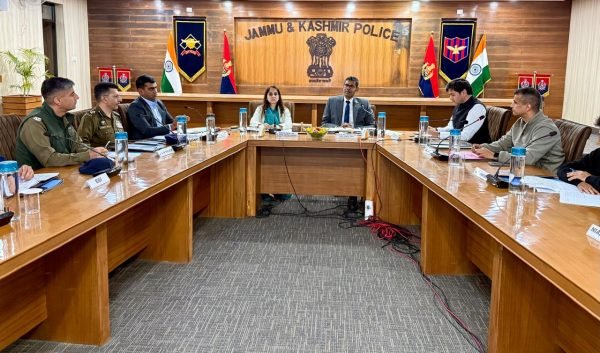
J&K Agencies Intensify Network-Centric Crackdown on Drug Trafficking at State-Level JCC Meeting
Jammu and Kashmir’s quarterly state-level JCC meeting brought together multiple security and enforcement agencies to strengthen coordination against drug trafficking networks.
 NOV 28, 2026
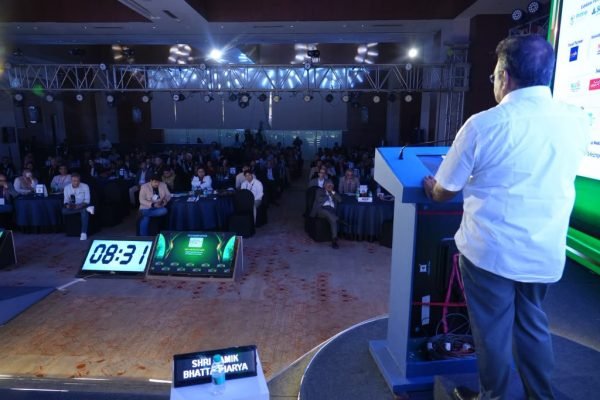
Samik Bhattacharya Says ‘Build in West Bengal, Build for World’ as State Pushes New Industrial Strategy
Samik Bhattacharya said West Bengal is seeking to attract investment, bring back skilled talent and build new capabilities in AI, GCCs, semiconductors and advanced manufacturing.
 NOV 28, 2026
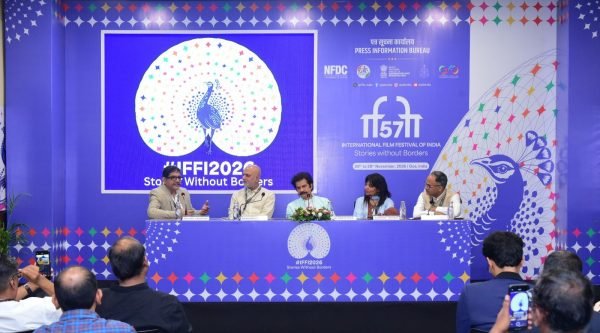
IFFI OTT Awards Jury Says Digital Platforms Are Breaking Language Barriers and Expanding Creative Opportunities
The IFFI OTT Awards Jury said streaming platforms are transforming storytelling by widening opportunities for creators and helping audiences discover content across languages.
 NOV 28, 2026
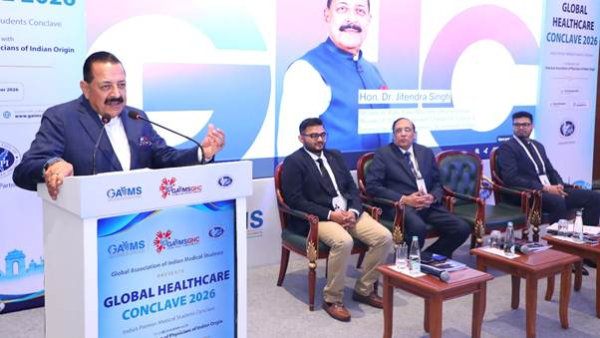
Jitendra Singh Says India Emerging as Global Healthcare Powerhouse Through Innovation
Union Minister Jitendra Singh said India’s growing capabilities in genomics, indigenous medical research, AI and advanced treatments are opening new frontiers in global healthcare.