

Modi Hails India's Railway Electrification Milestone
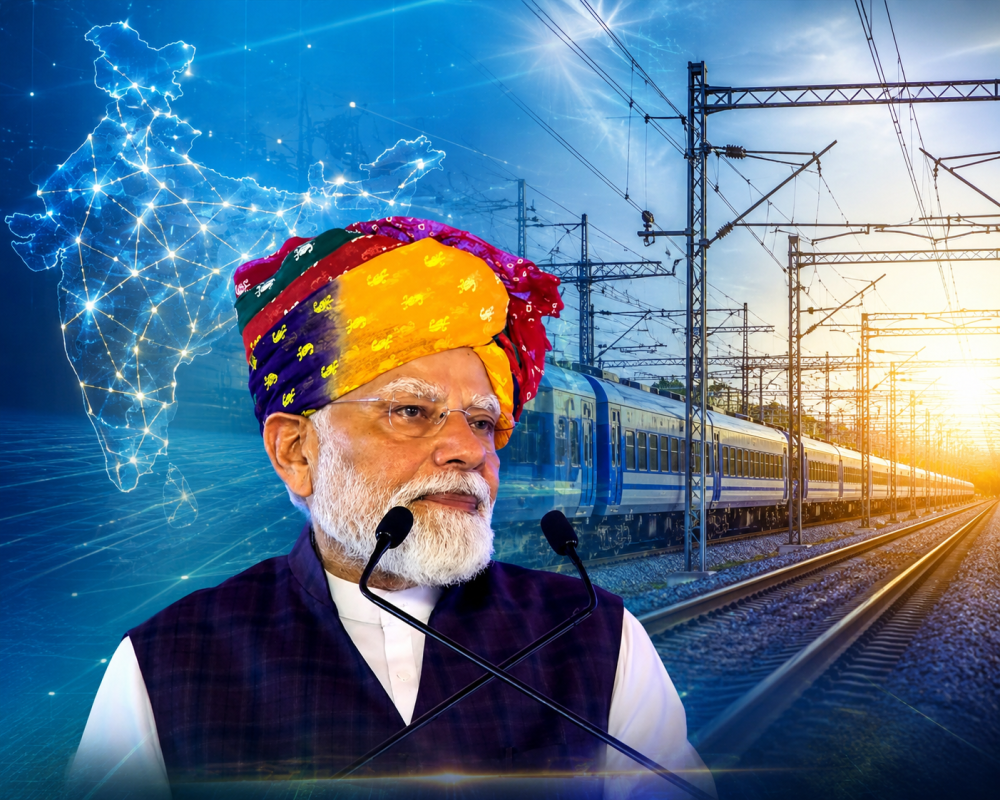
Prime Minister Narendra Modi on Friday highlighted India's rapid railway transformation, stating that nearly 99% of the country's railway network has been electrified over the past 12 years, a major leap from the pace seen before 2014.
आज अगर 2014 से पहले की स्थिति होती तो वैश्विक तेल संकट से भारत की रेल व्यवस्था ठप पड़ जाती। लेकिन हमारी सरकार बहुत पहले सोचती भी है और समस्या का समाधान भी जमीन पर उतारती है, जिसके सुपरिणाम देश देख रहा है। pic.twitter.com/DYRAb4tUEy
— Narendra Modi (@narendramodi) July 17, 2026
Addressing a public gathering in Haryana, the Prime Minister said that if India had remained dependent on diesel-powered railways as it was before 2014, the recent global oil crisis could have severely disrupted railway operations.
Also Read:PM Modi Flags Off India's First Hydrogen-Powered Train
"The situation today is not what it was before 2014. Our government thinks far ahead and implements practical solutions on the ground. That is why, despite the global oil crisis, India's railways have not stopped, and the train of India's development has not stalled," PM Modi said.
The Prime Minister recalled that railway electrification began in 1925, but from 1925 to 2014—nearly 90 years—only about 30% of the rail network had been electrified, leaving around 70% dependent on diesel.
He contrasted that with the progress achieved during his government, stating that almost the entire national railway network has now been electrified. He also noted that Haryana has achieved 100% railway electrification, strengthening the state's transport infrastructure.
According to PM Modi, this extensive electrification has reduced India's dependence on imported fuel, improved energy security, lowered operating costs, and ensured uninterrupted rail services even during international conflicts and volatile oil markets.
The Prime Minister said the modernization of Indian Railways reflects the government's long-term vision for a self-reliant and resilient transport network that supports the country's economic growth and the vision of Viksit Bharat.
Related News
 OCT 27, 2026
PM Modi Says ₹24,000 Crore Committed to India Research and Development in One Year
Prime Minister Narendra Modi said India secured ₹24,000 crore in new research and development commitments in one year while urging scientists to use AI without compromising independent thinking.
 OCT 27, 2026
Harry Kane Reflects on Unforgettable Ballon d’Or Triumph
Harry Kane calls his Ballon d’Or triumph an evening he will never forget, thanking his teammates, staff, family, friends and fans for their support.
 OCT 27, 2026
Madan Mitra Targets BJP Over Gaighata Police Encounter
Democratic Trinamool Congress leader Madan Mitra criticised the BJP after the accused in the Gaighata rape-murder case was killed in a police encounter in North 24 Parganas.
 OCT 27, 2026
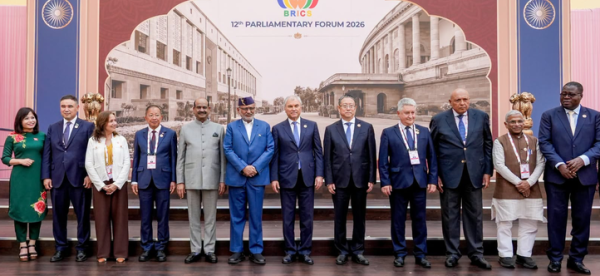
Om Birla Calls for Peace, Justice at BRICS Parliamentary Forum 2026
Lok Sabha Speaker Om Birla said global peace must ensure security, dignity and justice for all as the 12th BRICS Parliamentary Forum concluded in New Delhi.